
Yesterday was my birthday, which I celebrated with friends by winning a sailboat race at Cedar Point Yacht Club, followed by a nice post-race gathering on what turned out to be a balmy late-summer evening. Earlier in the day, I had hoped to attend an event in New York hosted by J. Press, but a busy day at my office in New Haven prevented that from happening.
It turns out I missed quite a lot. In conjunction with the New York event, J. Press sent out a press release which I have reposted below announcing that they would be offering a line of womenswear.
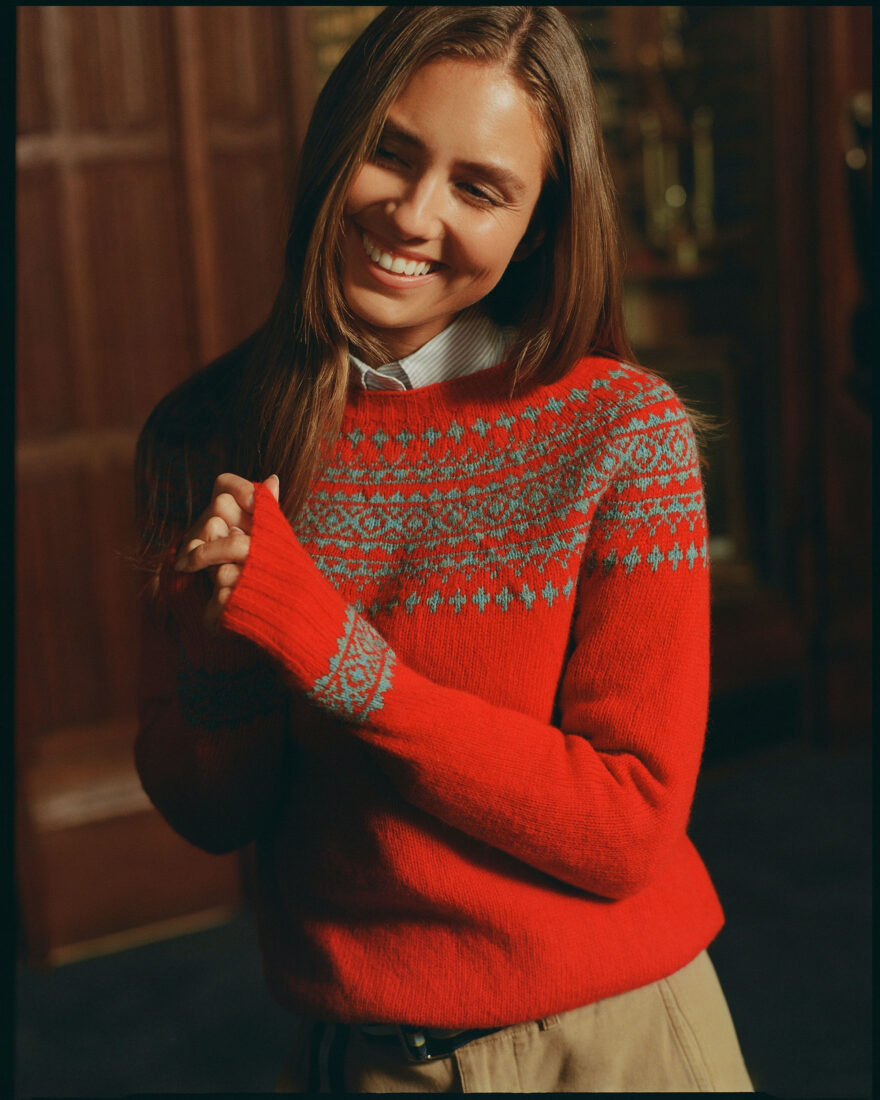
My wife reacted positively to the news, as did hundreds of followers on my social media pages. It seems that many women have been waiting for this moment. I will be interested to see what Ivy Style readers have to say. In the meantime, I will share a few thoughts of my own.
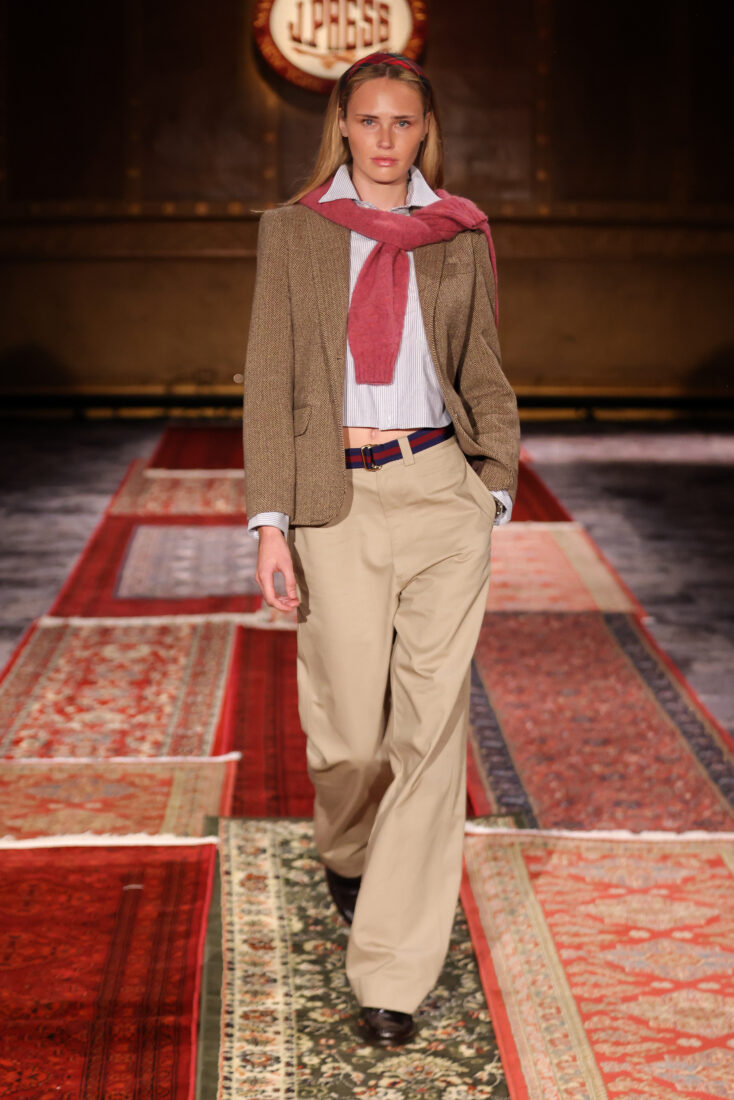
I applaud Jack Carlson for expanding the J. Press footprint. Even the most traditional brands – and J. Press is certainly one of them – need to evolve. There is clearly a demand for J. Press womenswear. Why continue to ignore it? While at first glance this may seem like a radical departure from tradition, there is actually a longstanding precedent.

Let’s take a longitudinal view. The style we know today as the “Ivy League look” has long had a feminine counterpart. The best example of it is “Seven Sisters style” which is chronicled beautifully in a book titled Seven Sisters Style: The All-American Preppy Look (2014) by Rebecca C. Tuite. The book examines how students at the prestigious Seven Sisters colleges—Barnard, Bryn Mawr, Mount Holyoke, Radcliffe, Smith, Vassar, and Wellesley—shaped women’s fashion from the early 20th century onward.
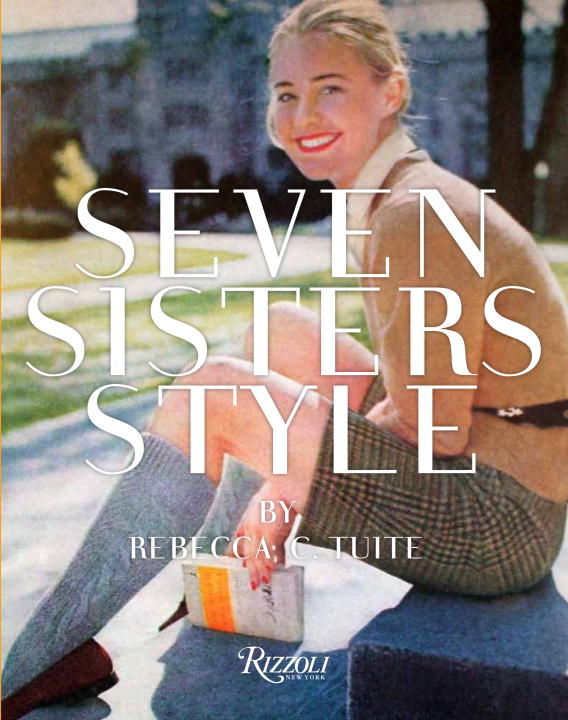
Seven Sisters Style explores casual weekday wear (oxford cloth button down shirts, cuffed jeans, Bermuda shorts, and saddle shoes) and polished weekend attire (dresses, heels, cashmere cardigans, and pearls). Two years ago, Ivy Style contributor Sarah Bogart Cooney offered an in-depth look at Seven Sisters style, commenting on “how ‘borrowed from the boys’ paired with pearls turned into a unique and enduring all-American aesthetic”:
While a great many pieces in a trad woman’s wardrobe are often directly purchased from the men’s department, there are so many pieces that are unique to women’s style. The combination of borrowed clothing and feminine staples led to a completely new and enduring all-American style: what fashion historian Rebecca Tuite calls “Seven Sisters Style.”
The Official Preppy Handbook offers this description of J. Press circa 1980:
J. Press has catered, since 1902, to ultraconservatives of the Old Guard who feel Brooks Brothers is too trendy and women’s departments are an abomination.
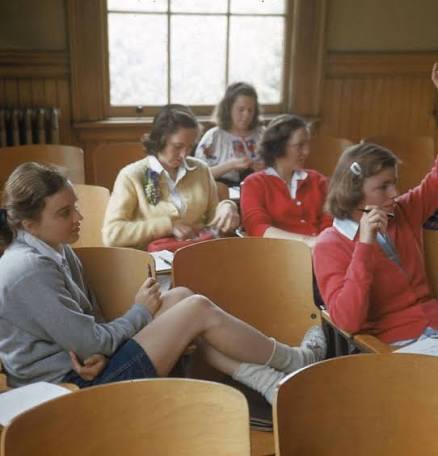
And yet – despite the perception of a women’s department as “an abomination” – the idea of “borrowing-from-the-boys” was already well-established among the most traditionalist elements of American society by the time of the book’s publication.
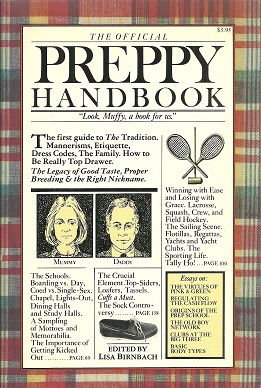
The Official Preppy Handbook addresses this topic in Chapter 4: Dressing The Part, offering a list of “Ten Underlying Principles for Men and Women.” Principle 10 Androgyny, perhaps a vestige of the prep school uniform and mid-20th century collegiate style, asserts that men and women may “dress as much alike as possible.” The chapter includes a section titled “Mummy Knows Best: The Look for Women.” Item 1 Men’s Clothes is described as follows:
Either actual garments from the man’s wardrobe (button-down shirts, Shetland sweaters, anything from L.L. Bean), or near imitations. The blue blazer, the khaki skirt, and the gray flannel suit are cornerstones of the female Prep’s wardrobe. Some women go so far as to shop in the boy’s department at Brooks, and have things (slightly) altered.

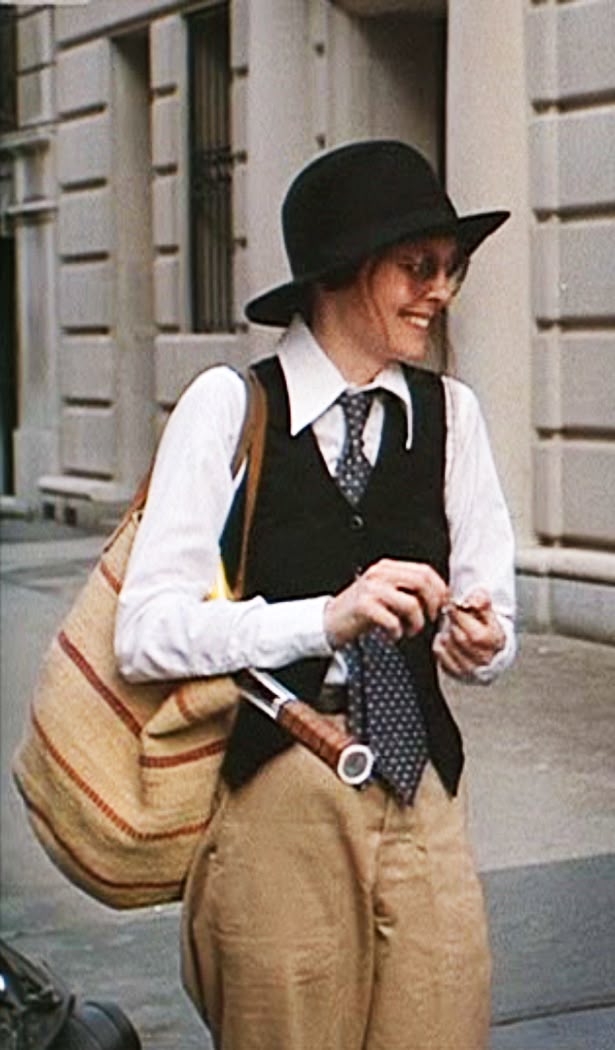
Some of the most stylish and iconic women have embraced this aesthetic, from Grace Kelly and Audrey Hepburn to Jackie Kennedy and Diane Keaton.
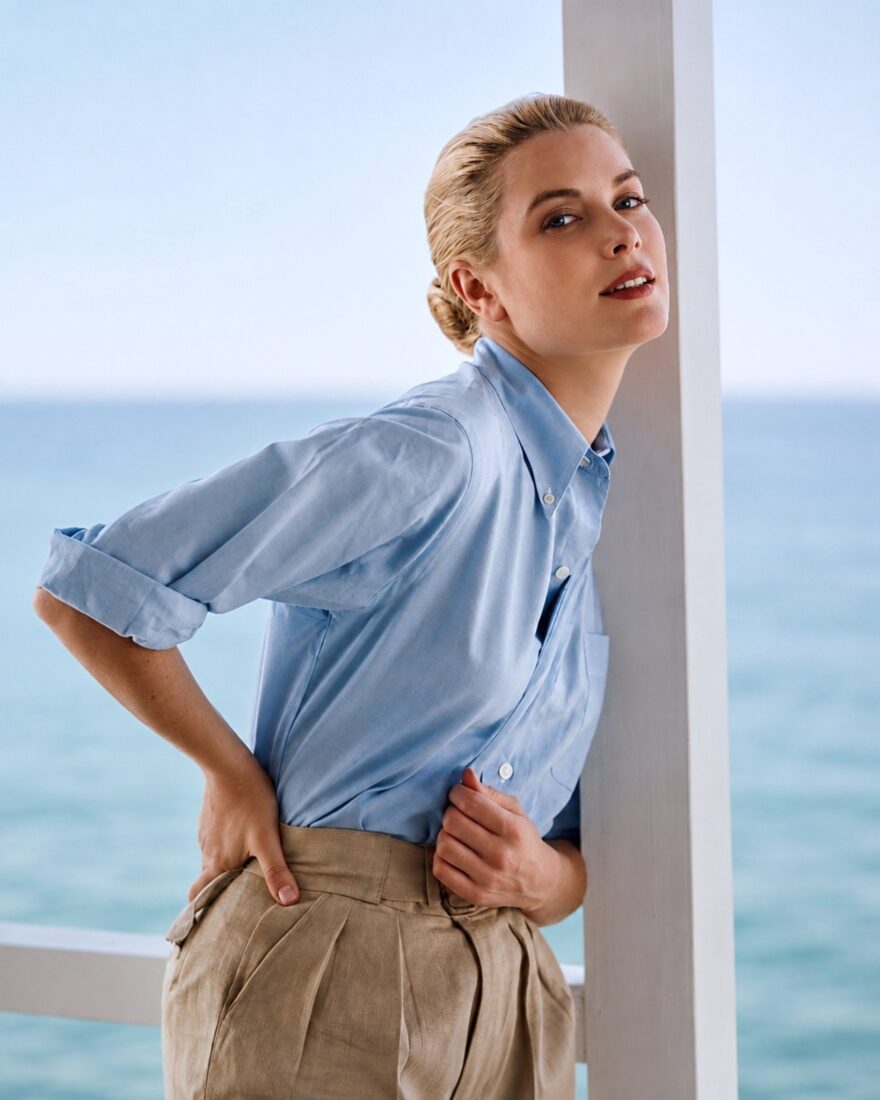
Which brings us back to the new J. Press collection for women. Many women have shopped at J. Press for years, picking up an oxford cloth button down shirt or a Shaggy Dog sweater here and there to complement their wardrobes. Now they have the option of purchasing items made for women.
Perusing the new collection, I found a few items that I especially like.
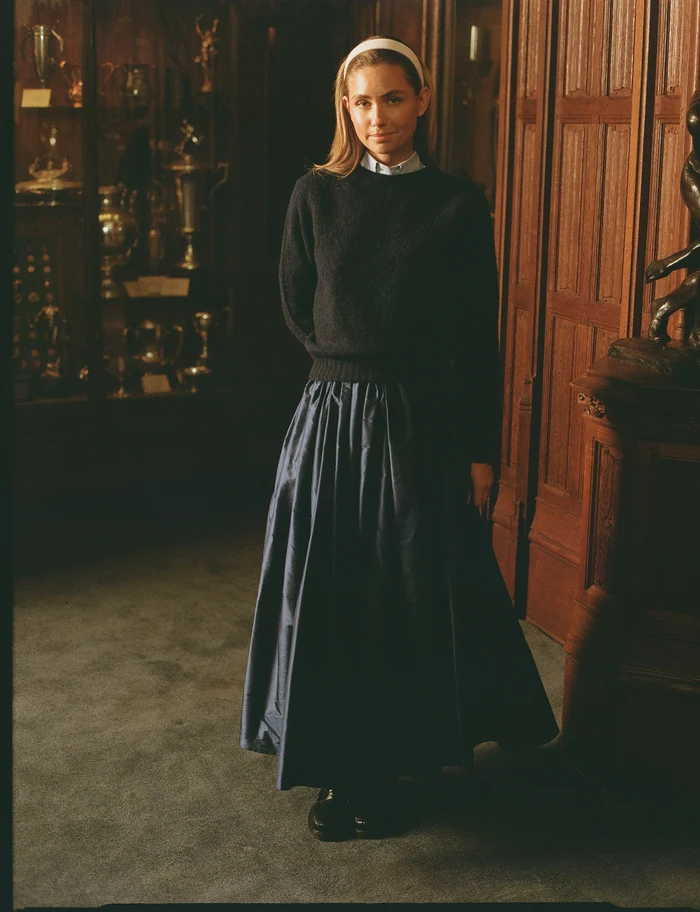
Made-in-USA Women’s Navy Silk Taffeta Skirt
This item from American fashion designer Steven Stolman comes in navy (shown here), sea glass, and zinnia.
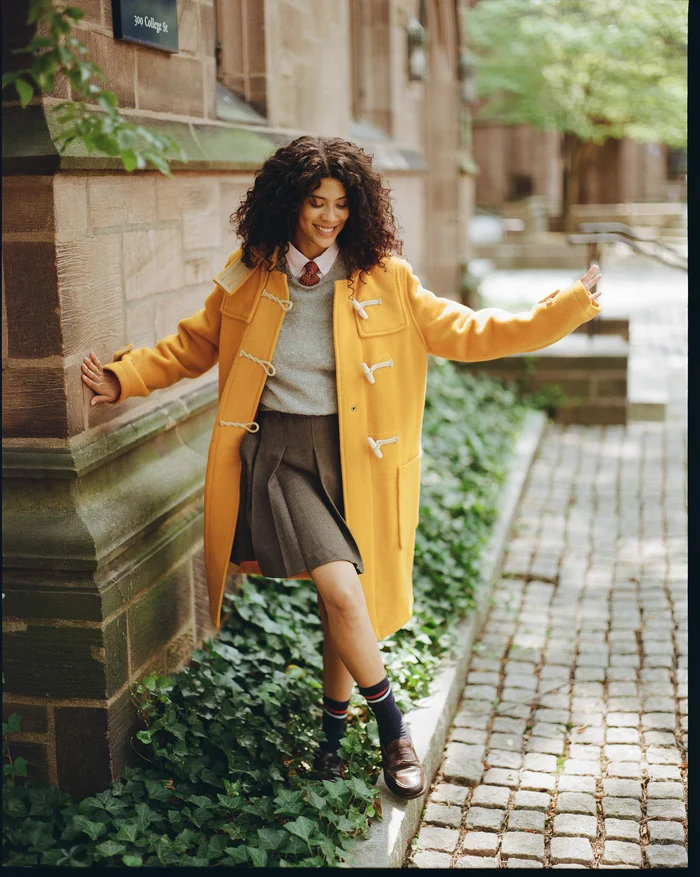
Made-in-England Women’s Yellow Original Monty Duffle Coat
The item from British duffle coat maker Gloverall comes in yellow (shown here), natural, and navy.
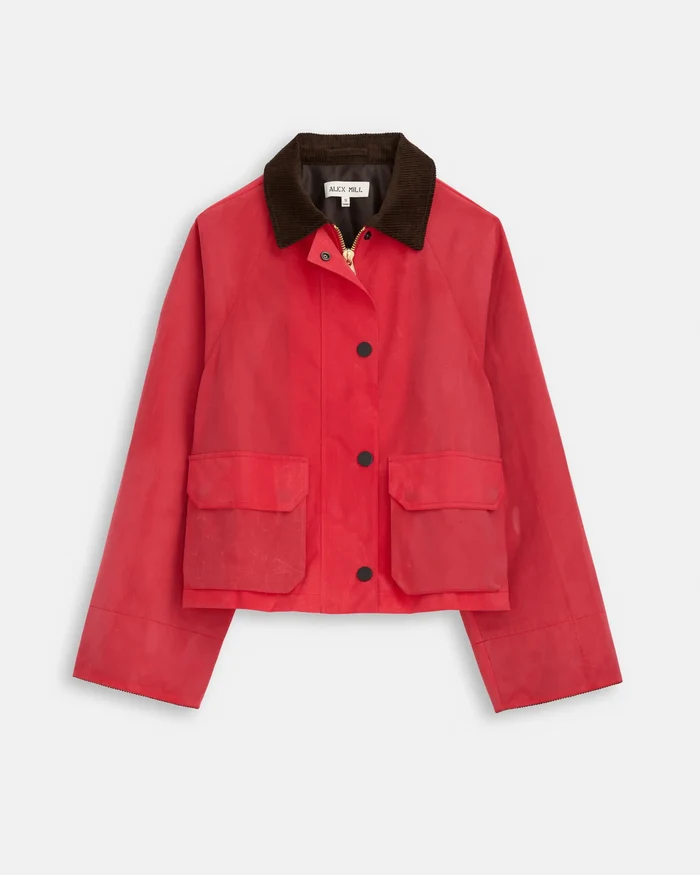
Women’s Red Cropped Chiltern Jacket
This item from American clothing brand Alex Mill comes in red (shown here) or khaki.
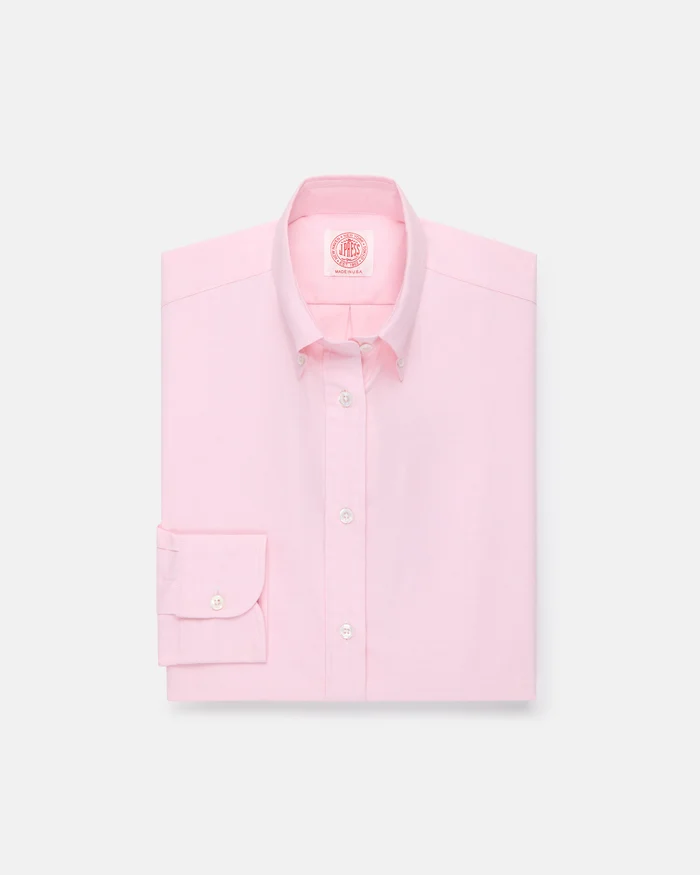
Made-in-USA Women’s Oxford Cloth Button Down Sport Shirt
This item, shown here in pink, also comes in blue, white, and a blue university stripe.
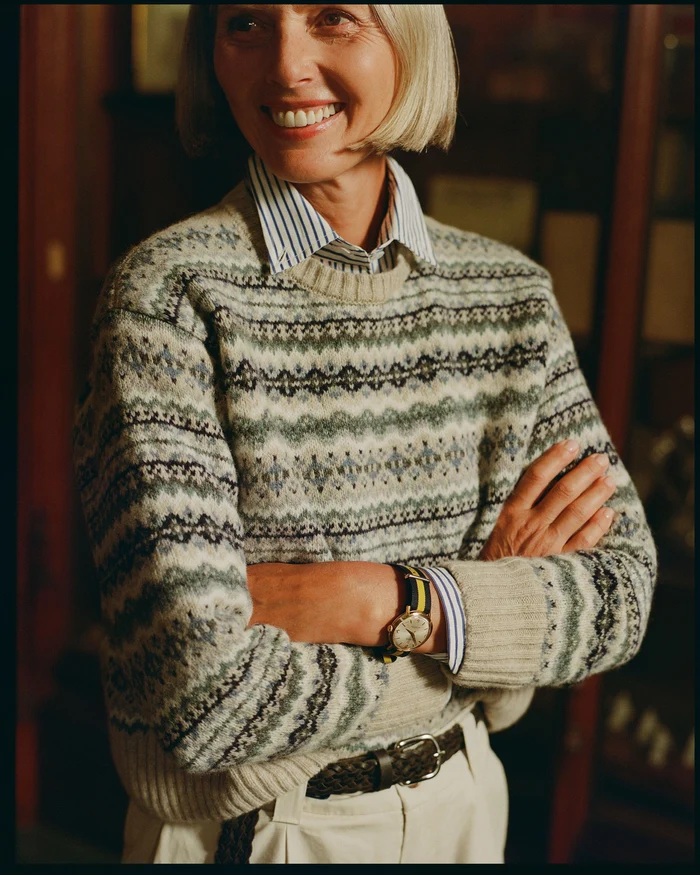
Made-in-Scotland Women’s Light Blue Fair Isle Crew Neck Sweater
This crew neck has a saddle shoulder and a cropped fit. Perfect to pair with the OCBD.
I look forward to seeing more of this new collection in person next week at the grand opening of the new J. Press flagship store at 340 Madison Avenue in Manhattan. The brand returns home to 44th and Madison Avenue, the iconic corner where J. Press first opened in 1932.
****************************************
September 9, 2026 (New York, NY) J. Press, the heritage American label founded at Yale in 1902 and widely credited with creating the look known as “Ivy style,” is launching women’s.
Since American designer Jack Carlson took the creative helm at J. Press one year ago, he has leaned into many of the things with which J. Press made its name in the first place: the brand’s famous Shaggy Dog sweaters, handmade in the Shetland Islands in the North Sea; its iconic O.C.B.D. (Oxford cloth button-down) shirts, still made in the U.S.A.; and its longstanding relationship with Harris Tweed and historic British mills.
Now, J. Press is launching a women’s capsule that includes many of those categories. This marks only the second time in the brand’s nearly 125 years of history that J. Press has created a women’s collection for the American market: the last time J. Press offered women’s was in the 1960s.
The hero pieces are, of course, Shaggy Dog and Fair Isle sweaters made in Scotland, and American-made Oxford shirts, blazers, and tweed jackets, all cut for women. These are supplemented by tailored outerwear in wool, camelhair, and waxed cotton; taffeta skirts; and trousers in chino twill and denim. The capsule includes collaborative pieces produced in collaboration with Gloverall, Alex Mill, Paraboot, and designer Steven Stolman.
Creative Director Jack Carlson writes: “Since I joined J. Press a little over a year ago, I’ve been asked to launch women’s almost daily. J. Press makes the best Oxford shirts, navy blazers, and tweed sport coats in the world. And the J. Press Shaggy Dog sweater is an icon in its own right. So why not make them in women’s? These things are for everyone. They look great on everyone.”


Great news! My wife has quite a time trying to find simple things like all-cotton oxford cloth shirts that used to be commonly available from numerous stores and catalogs. And the tweed sport coats look great. Perhaps some early Christmas shopping is in order.
The blazers alone will be sought after. My wife can’t find one in a traditional styler at any price. We’ve sent several back to Brooks, Tucker, etc.
I think this is a splendid move. A heritage brand with an enviable reputation for quality and customer care selling into an underserved market segment. I quickly browsed their women’s offerings and the trusted made in USA garments are present, along with some Scottish and other countries of origin goods. Today is a good day for those who care about American heritage brands.
I’m pleased about this, but they need a size guide and measurements for sleeve length, bust/waist, and top length. S M L XL is meaningless for women’s clothing; is XL a 14 or an 18?
Burned too many times! Currently wearing a women’s LL Bean vintage OCBD with the sleeves rolled up because they’re too short. Some of us are 5’10” with hips.
Hear! Hear! I remember when Brooks took this step. I foolishly bought a few things for my wife, not understanding that if you were not built pretty much the same as their mannequin, the fit would be atrocious. As everyone who knows anything about clothing says, fit is far and away the most important aspect, in fact essential.
To add…I see the sweaters do have measurements, but the shirt I peeped didn’t!
There is no industry standardization, Val. Everything, including Made to Measure, (which doesn’t exist anymore), is, was, an approximation. There are no more tailors, nor are there dressmakers, unless, perhaps, one is a world traveler, and have one on salary on your personal staff. (Perhaps wedding dresses are the exception, but I wouldnt know). Even in New York, one must schedule an appointment with a traveling tailor, and wait a year or more for your commissioned piece to arrive. There is no supply because there is no demand, and vice-versa. And because fashions are fleeting. 60 or so years ago, the down-town department store, or the specialty shops next door to it, would have been able to accommodate.
Everything is an approximation. Patently false, but cool take. There are tailors and dressmakers in New York and elsewhere, you just don’t know who they are.
I stand corrected on the availability of Made to Measure. This is a recent development, within the last 30 days or so. There is no indication as to who does the making.
If this is well executed, it will be successful.
It is interesting that about 6 months ago Maggie Mercer David Mercer’s daughter has started a women’s line of the famous “baggy is better” Mercer OCBD shirts. Check it out on the Mercer web site under women.. It’s called MaggiexMercer.
Sandy- excellent news. A couple of years ago, my wife tried to get a Mercer shirt cut for her, but they weren’t set up to do it. We’re delighted by this new development.
Great news for the J Press brand. It is constantly evolving. and long may it last. A true American treasure.
It’s about time!
Just surprised my wife with Shaggy Dog in a women’s size (it’s her birthday). Although she loves to steal mine, she’s thrilled to have one that fits perfectly.