
By James Moore
Ivy Style contributor James Moore is the English Department Chair and Director of Squash Programs at Blair Academy in Blairstown, New Jersey. Jim is a graduate of Cornell University where he was a member of the squash team, the glee club, and the Delta Chi fraternity.
In this article, Jim suggests that the natural shoulder is the defining characteristic of the Ivy League look. Do you agree?
Sometimes, it is nice to know that you can get exactly what you want. Such was the case last month, when, in pursuit of a tan poplin suit constructed in strict Ivy fashion, I headed west on Interstate 90 to O’Connell’s in Buffalo, New York. Whatever they had on offer would sport the three-roll-two closure, the undarted front, the Sack silhouette, the center hook vent, a couple of buttons on each sleeve, and, of course, a natural shoulder. The only decision I would have to make was which particular shade of tan I preferred. The deal was done in a matter of minutes, and I spent the rest of my visit considering breaking the bank on a pair of pebble grain Alden chukkas.
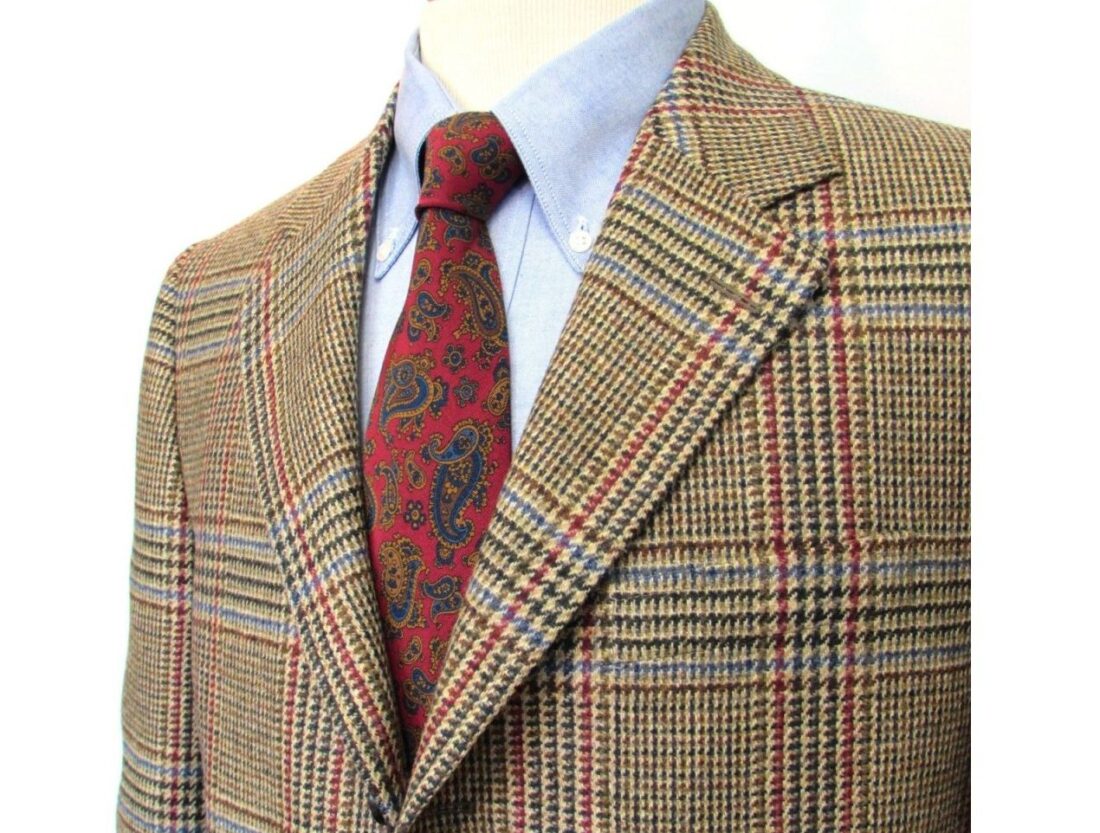
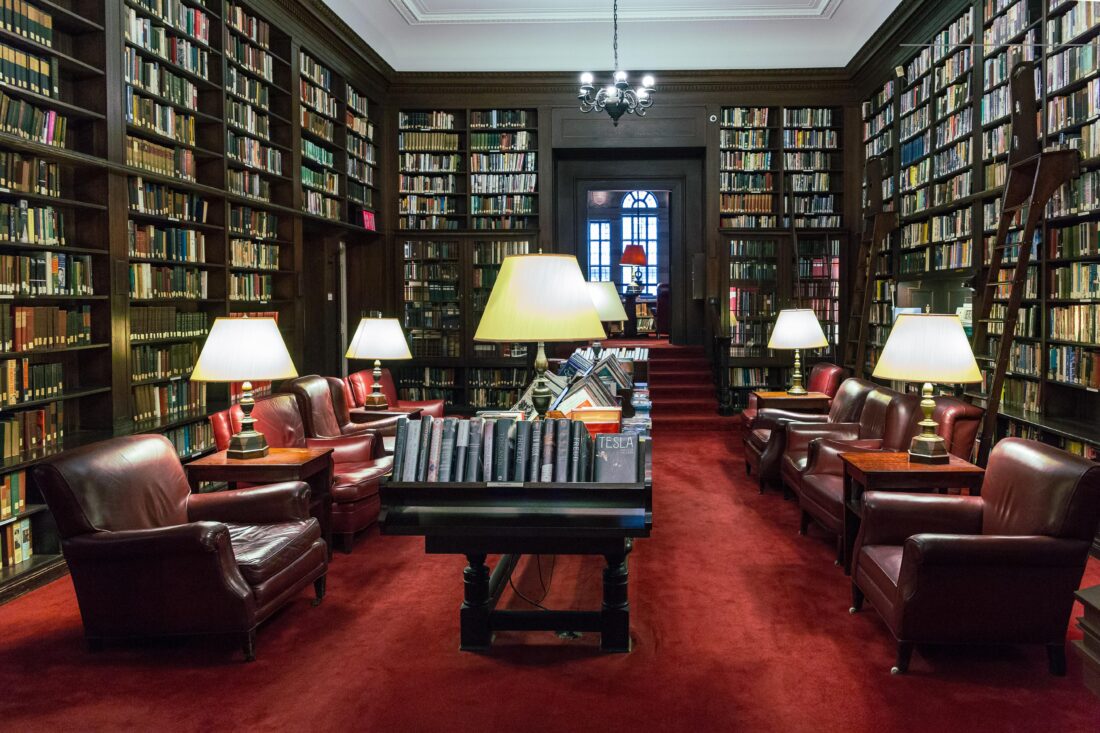
Sometimes, though, we are at someplace other than O’Connell’s, where there are things to consider beyond the difference between, say, “Sand” and “British Khaki.” What of Sid Mashburn’s Virgil No. 3 model, whose undarted three-button front is accented by a spiffy, but not particularly Ivy, ticket pocket, and a deftly executed spalla camicia sleevehead, straight out of Napoli? J. Press last summer offered darted hopsack coats in a range of fetching patterns. Almost all of the coats from Ben Silver are cut on a two-button “American” model, some with two vents. And yet none of these options would raise an eyebrow, except in approbation, in the Reading Room of any club designed by McKim, Mead, and White.
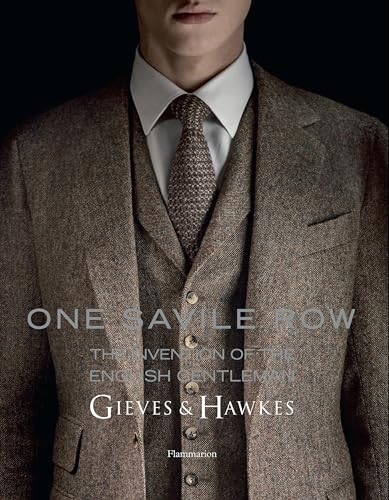
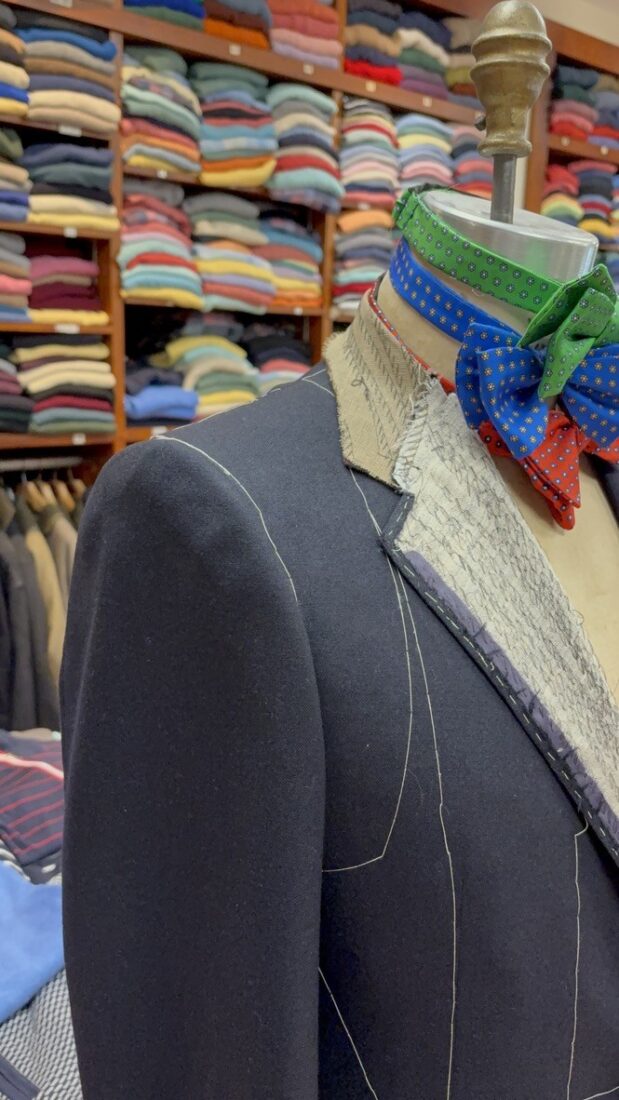
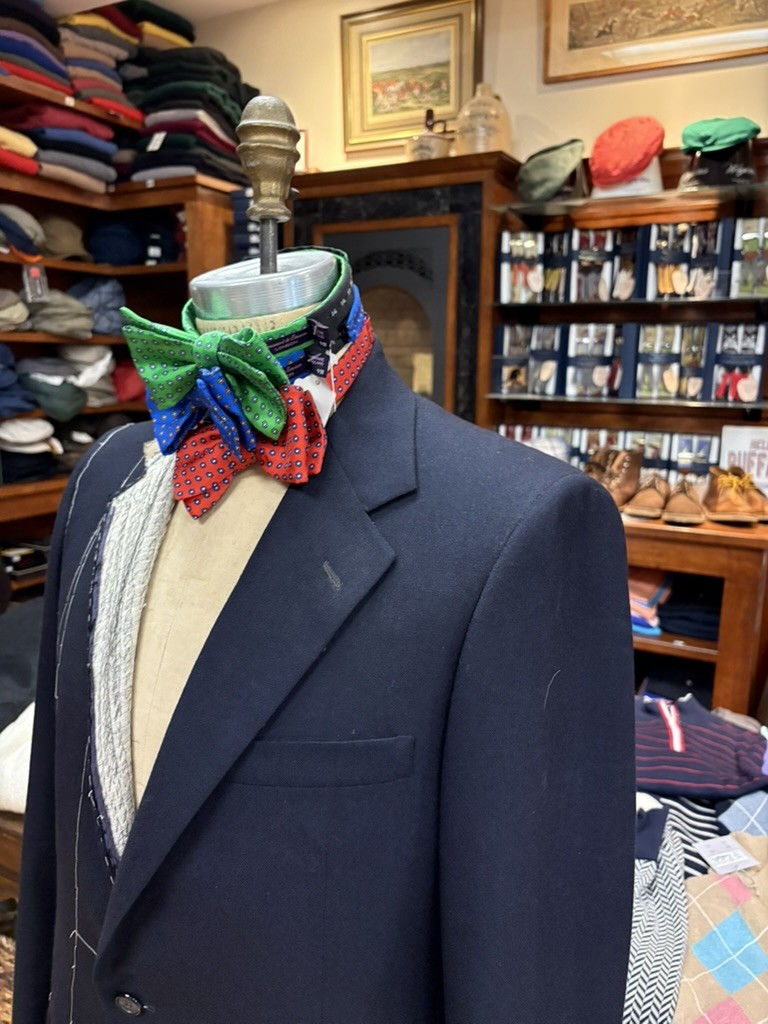
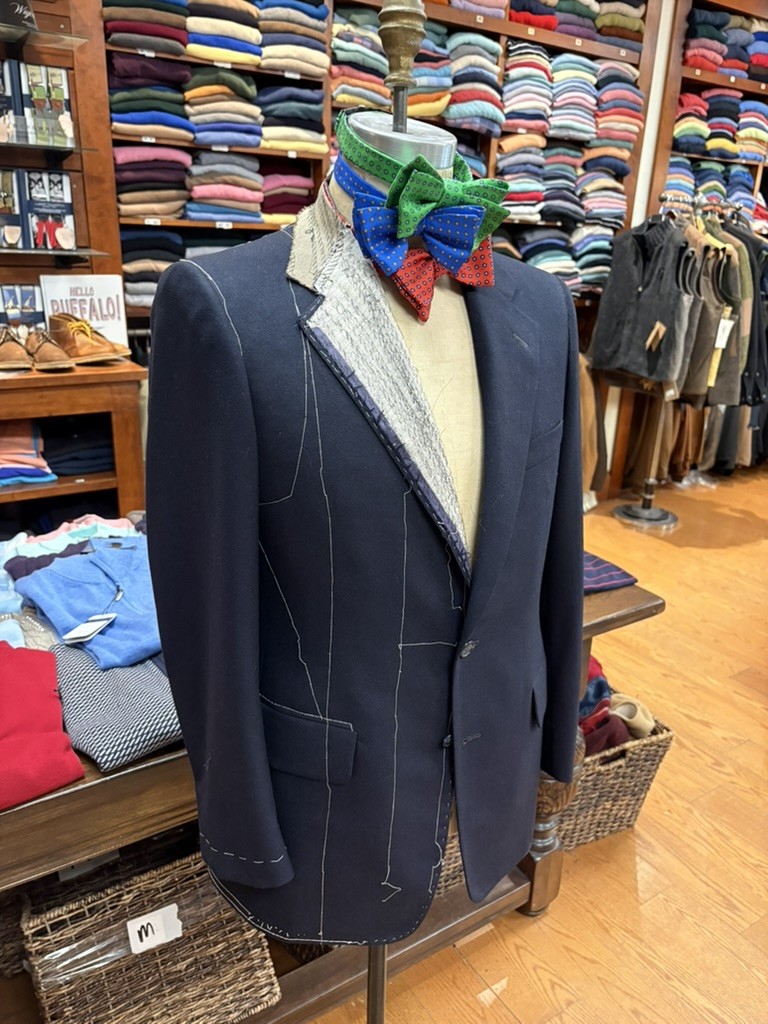
How is it, then, that all these coats would be not only acceptable but lauded in the most Ivy contexts? I submit that the common element is the natural shoulder, from which all Ivy sartoriality descends, and without which any attempt to affect our style violates its gestalt. Indeed, the natural shoulder, whose lack of structural artifice allows us to wear all manner of woolens, cotton, and even silk to their best effect, alone facilitates this. While we might admire the military bearing of a Gieves & Hawkes or Huntsman shoulder, or the architectural roping on a Cifonelli coat, silhouettes limit the opportunity for the balance between rectitude and expression so fundamental to the Ivy aesthetic.
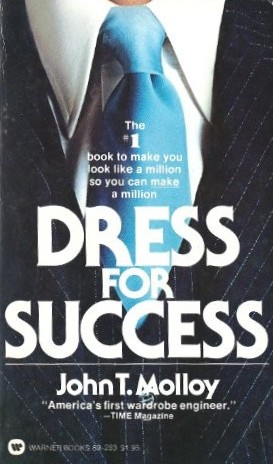
This brings us to the conundrum we face when we shop, well, anywhere but O’Connell’s; we are, after all, aware of slippery slopes. If, for example, we neglect to cuff our trousers, what comes next? Peaked lapels? White-soled “dress” sneakers under tailoring? But by the same token, if, in our pursuit of something that delights us, we reject anything that doesn’t hew entirely to the Ivy orthodoxy, we risk reducing our sartorial interests to a checklist, which, given the origins of our style, is hardly the thing. Remember Molloy’s handbook for the uninitiated, Dressing for Success? In its attempt to help its readers avoid faux pas in the business world, it made them all look the same, much like the writing tool Grammarly, whose risk-averse guidance, in the name of clarity, makes everyone sound the same.
As the sonnet form affords poets, Ivy style offers its practitioners latitude within a well-defined framework; it allows us to wear a bow tie with a racquet motif, or a sober navy Churchillian dotted four-in-hand with either Madras or hard-finished worsted, as long as the coats are built on a natural shoulder. And while the natural shoulder does justice to all manner of collars, save for the ultra-formal English cutaway, it is the only construction that is unimpeachably correct with the Ivy component that is perhaps even more fundamental to a proper wardrobe: the graceful roll of the Oxford cloth button-down.*
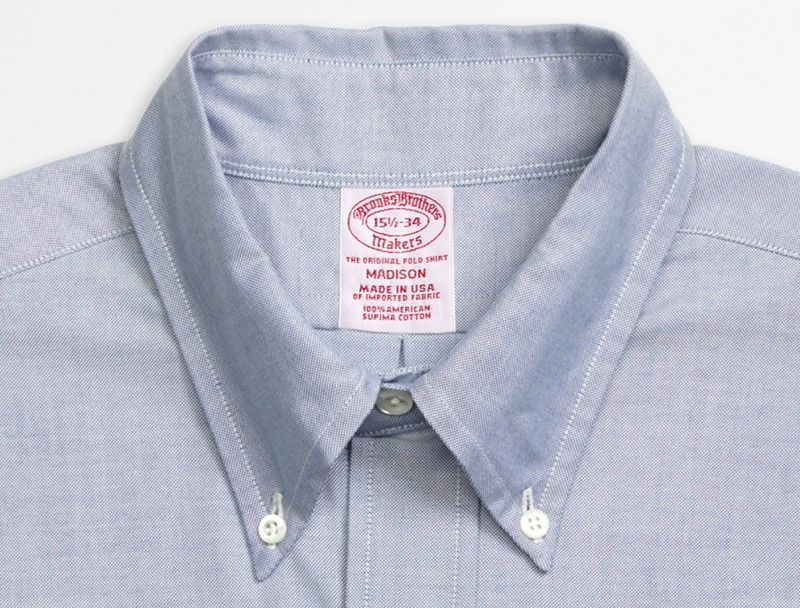
*It is true that Gianni Agnelli, the Italian sportsman and industrialist who bought armloads of OCBD’s from the Brooks Brothers flagship on Madison Avenue, wore them with his strongly structured Milanese tailoring. But L’Avvocato could get away with things– the unbuttoned collars, the wristwatch worn over the shirt cuff– that would simply look affected on the rest of us.
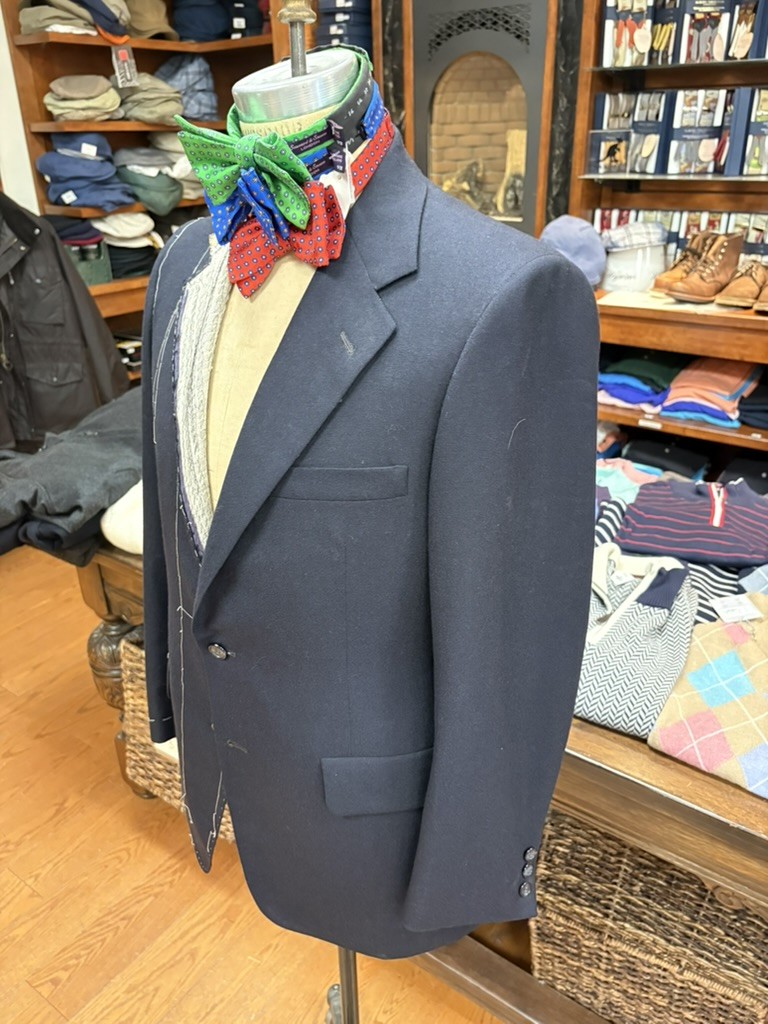
Some photos from O’Connell’s of a natural shoulder coat under construction courtesy of James Moore.






I’ve still got my 50 year old copy of Dress For Success. I still look like a million. I never MADE the million.
I like O’Connell’s. TNSIL.
I have a quibble. With “anywhere but O’Connell’s,” you leave the impression that J. Press has gone totally 2-button darted. That’s incorrect and unfair to them. I just checked and 22 of their suits are classic 3/2 sacks and only 4 are 2-button darted. Perhaps this oversight could be corrected.
The true natural shoulder the best was made by Soutwick. Norman Hilton next . Natural shoulder or some call a soft shoulder is very hard to make and only a few could do it right. Yes the soft/natural shoulder is the cornerstone of the tradition /Ivy wear. A very comfortable look. Whether 3/2 or 2 button Southwick did it right. Charlies Davidson started doing the 2 button double vents back in the 60’s with Southwick and 95 %of his MTM clothing was 2 button with or without darts but still soft/natural shoulder. Brooks shoulder was not as soft unless it was from the 346 shop which was Southwick . their own make was not as natural However all still traditional well made conformable wearing clothes.
True about Southwick.
I don’t think that my observation that J. Press carried a small collection of darted hopsack coats last summer suggests that the firm “has gone totally 2-button darted”. My point is that O’Connell’s, whose coats are built solely according to the strict Ivy model, doesn’t ask us to make decisions about off-the-rack cut or details, and J. Press, by adding some darted coats to its offerings, does. While all of my J. Press suit coats and odd jackets– there are five in total– are 3/2 undarted sacks, were I interested in acquiring one of the darted coats, the natural shoulder would give me the confidence to do so.
“This brings us to the conundrum we face when we shop, well, anywhere but O’Connell’s; we are, after all, aware of slippery slopes.”
How else could someone read this?
Couldn’t it have been: “This brings us to the conundrum we face when we shop, well, anywhere but O’Connell’s and J.Press; we are, after all, aware of slippery slopes.”
Dress for Success was my gateway into the style, way back when. I suddenly recognized what I had seen around me, but had never understood. Molloy’s approach was to do scientific / psychological testing, which has fallen out of fashion (pun intended) these days and has been replaced by what we might call “hacks.” The short cut, the code. I read the book as a young man and believed it.
Yes, Molloy said that if I showed up at an office in Manhattan wearing a beige raincoat instead of a black one, I might be taken more seriously and ushered in to see the client right away, while the guy in the black raincoat was told to wait. Who knows? And how many people still wear beige raincoats in the current sartorial apocalypse?
I went to a conference recently where one of the speakers said that all those attending were “elites” (except me, and the security and wait staff, though we weren’t called out by name). Most men were wearing navy blazers that looked two sizes too small, sans tie. The women’s fashions were more varied. With few exceptions, the men could have benefited from a little Molloy to distinguish them from the hoi polloi.
Back then, the OCBDs and khakis were comfortable to wear, made me feel good as a young man trying to find his way in the world. I left the style in my late 20s, as I worked in the trades and my last Lacoste polos grew threadbare and were replaced with T-shirts and my barn jacket was replaced with a tough-as-nails Carhartt jacket. I returned to the style in my 50s, and as you point out in your article, by being strictly Ivy Style, we risk reducing our sartorial interests to a checklist. A little workwear mixed in, now and then, can’t hurt, right??
Huh?
A follow up to my post on soft/natural Ivy Style shoulder clothing.
The Bristol ModelConstruction: Completely un darted.Fit: Features a classic, relaxed traditional sack-style silhouette with a signature soft, natural shoulder.The Dorset ModelConstruction: Darted through the front.Fit: Tailored with a slight waist suppression rather than a straight boxy hang, offering a cleaner, more shaped profile while keeping the soft shoulder.I These were all 2 button models at the Andover Shop along with it’s 3/2 model Warwick . all soft/shoulder construction from Southwick in the late 1960’s
Yes. Latter day Southwick offered the Douglas, a 3-button sack staple throughout the 80s and 90s, and the Cambridge.
Ah, Sandy- I was hoping you’d weigh in. I’m about to head to the GVC pool for one last swim before I have to return to NJ for the beginning of school. I’ll give Genaro your best. Jim
Mr. Moore: I probably saw the same O’Connell’s advertisement you saw regarding the tan poplin 3/2 sack suits. I was sorely tempted — I mean really SORELY tempted — to purchase one. O’Connell’s is the only store I know who actually stock my size — 46 Extra Long. I could have bought the suit and had it delivered the next week. But I am 81 years old, and since I have always purchased suits and sport coats to last twenty to thirty years, I decided not to pull the trigger. But top marks to O’Connell’s for stocking Extra Long sizes when almost no one else does.
Mr. Grant-
O’Connell’s is a remarkable place; I’m not at all surprised they stock an 46 Extra Long in a tan poplin. Furthermore, they have probably sold a couple in that size this season.
I wonder if that suit still has your name on it, regardless of what the actuarial tables say about the wisdom of buying tailoring at your age. About twenty years ago, I had lunch in a retirement home dining room with a college classmate of my grandfather’s; they had graduated from Cornell in 1930, so he was about 97. Dressed in a manner of which we all would have approved, he asked where I had purchased the tie I was wearing.
“A place in Charleston,” I said. “Ben Silver.”
He nodded. “I thought so. I just bought four ties from their catalogue.
A 97-year-old man had just spent what was at the time about four hundred bucks on ties.
I am 63 years old, and I still want to be that guy when I grow up.
A beautiful plaid on the sports jacket at the top of this post. Classes begin for the fall semester here on August 31st with a few of the obligatory faculty and all-college meetings during the next couple of weeks. Not cool enough for tweed, corduroy, and flannel just yet, but time to trade the summer gear for dressier attire. Happy days indeed!
Kind Sunday Afternoon Regards,
H-U
Early (late 60s/early 70s) PoloRL blazer and sport jacket shoulders were notable for being sloping, rounded, and, as important as the padless construction, narrow. The shoulder (point to point) width was modest, the sleevehead landing at the deltoids. Works of art. Impossible to find off-the-rack/on-the-hanger (in stock) nowadays, even at the aforementioned retailers. This plus the lower button stance are the Achilles’ heels that persist.
“(Ralph) and Joe Barrato, his friend from Brooks Brothers, had been lunching out regularly ever since Barrato got out of the army and joined Corbin, a trouser company, in 1963. In the mid-sixties, the well-dressed Traditional customer wore Rivetz ties, Corbin pants, Southwick natural-shoulder jackets, Gant shirts, a Canterbury belt, and Bass Weejuns. Ralph told Joe he wanted to bring them all together…”
– Genuine Authentic: The Real Life of Ralph Lauren, Michael Gross, 2003
Those were the days.
Very nice piece, very nice indeed and the photo of the jacket of the top was beautiful. But not to miss a chance to criticize present day Brooks Brothers, the Madison OCBD, they now refer to as ‘traditional fit’ is hardly that, being avail since the early 2000s. I suppose that only the full-fit traditional would be considered Ivy, at least in my opinion.
Jim
Please give him my best
Sandy
S E
Very sad day when Southwick sold to Brooks. For the money they made the BEST sport coats and suits.
Truth.
Thank you, Mr. Moore. The natural shoulder is certainly the capstone of the Ivy look. And, as Heinz-Ulrich has pointed out, the O’Connell’s sport coat at the top is indeed beautiful, and perfectly complemented by the shirt and tie.
My suits and sport coats from the past couple of decades are all 3/2 sacks, from J. Press, but my closet still has a number of examples of older Brooks Brothers suits, which still look remarkably good. And I must confess to a few items from Polo, and even a double-breasted chalk stripe from Gieves and Hawkes from the 1990s. It’s fun to break ranks with the strict Ivy rules once in a while, although I do it only rarely.
Yesterday, by surfing, I happened upon an informative article here on Ivy Style, written by you. I’ve tried again today to find it, with no luck. Any ideas?
Loved Southwick. I only wore M2M Southwick suites in my younger days.
And I also would like to see more coverage of O’Connell.
As a proud alumnus of Blair Academy, I am delighted to read this work. Based on his CV- it appears Mr. Moore and I missed crossing paths by a mere calendar year. The school released a hardcover book, “Ever Always”, filled with pictures and testimonials in the late 90’s. Flipping through its pages rewards the reader with dozens of pictures displaying immaculate style. I believe only several of the then-faculty featured in that book remain at the School. It is good to know Mr. Moore carries the torch.
Richard– I was at Blair from 1990-97 and then returned in 2006. My copy of “Ever Always” is on the shelf next to me as I write; the photo of Dennis Peachey captures his personality beautifully. Did you graduate in 1989– Chan Hardwick’s first year– or in 2005, just before I rejoined the faculty? You are correct: most of the folks in that book have retired or gone on to their reward. I did have dinner with Marty Miller just this evening; retired at 80, he still lives in the area and stops by campus a couple of times a week.
Shoot me an email if you like at moorej@blair.edu. I’d love to hear from you.
Jim Moore
This idea, that I sometimes find propagated here at IS, is the notion that the proper Southwick or Hilton style, (and Samuelsohn), is just too difficult to replicate, is total baloney. It may be a bit more time consuming and expensive, but it, as they say, ain’t rocket science. The fact is, “they” will not make the style because “they” don’t like the style. It’s too masculine and it says “establishment”, therefore it is deemed politically incorrect.
Also, they are only interested in mass production.
This was not meant to be a reply to Sandy, just a general observation.
Bop: “They” just don’t like suits or “tailoring” in general of any style for the exact reasons you specify, especially the former. Suits, blazers, sportcoats, collared shirts, ties etc. Ivy or otherwise, natural-shouldered or not, exude disciplined, civilized masculinity like nothing else, which is troubling to many in modern society. “They” would rather see men pathetically stumbling around like overgrown boys in shapeless gym clothes with cartoon characters printed on them.
There is a glitch in the “Reply to or new comment” prompts.
By “too masculine” and “too establishment” I mean the true, mature TNSIL is contrary to the gospel according to Molloy.
The Malloy book was given by my older brother as I was about to complete undergrad. I devoured it and still have my copy. Brown shoes with a brown slacks, black with everything else. Dark brown leather dress gloves, never black. Light blue shirt when on TV as white fades out. I later bought his sequel, ‘Malloy’s Live for Success,’ also very helpful to a young guy looking to make his way in the business world, including a wonderful teaching about the nonverbal and subconscious signals we send to others. Not sure how to post the cover shot of that. Would not follow many of Malloy’s attire suggestions today, but it was invaluable at a time in life.