Tucker Mscisz, Chief Operating Officer of The Andover Shop
Matthew: Thank you for taking the time to talk with Ivy Style. Let’s start with a bit of history. The Andover Shop was founded in 1948 by Charlie Davidson in Harvard Square. When did your family take over the business? What is the story behind that acquisition?
Charlie Davidson, founder of The Andover Shop
Tucker: We acquired the business in 2018. My family had been longtime customers of The Andover Shop, and we always admired its rich history, the quality and craftsmanship of its clothing, and the exceptional service we experienced with every visit. Our goal was to preserve that legacy while building upon the foundation that Charlie and Virgil established. Charlie appreciated this as we were the only prospective buyers with this objective.
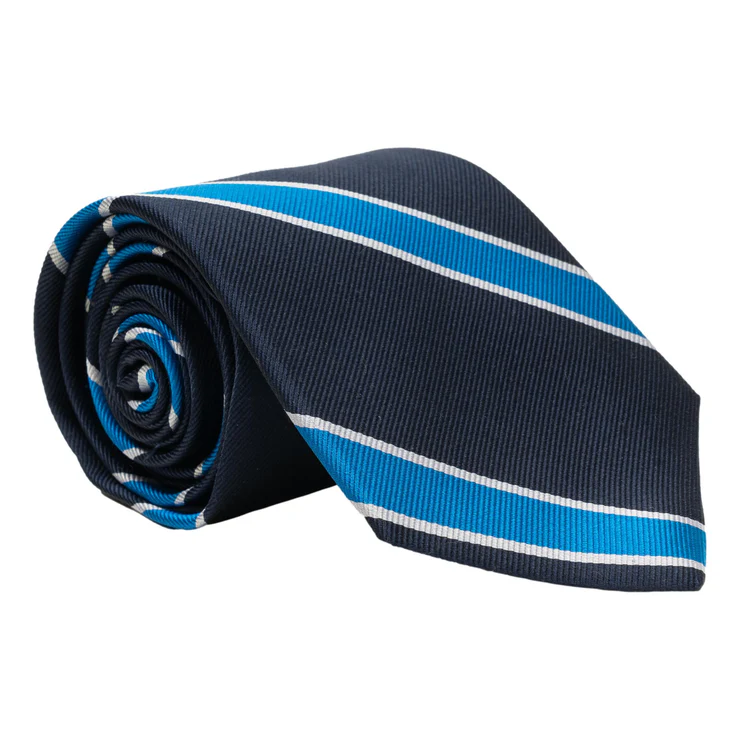
Phillips Academy Repp Tie from The Andover Shop
Matthew: The Andover Shop is located near two prestigious academic institutions in Massachusetts, Phillips Academy in Andover and Harvard University in Cambridge. Do students, faculty, and staff comprise much of your customer base? Or is The Andover Shop selling more to out-out-town visitors and online shoppers?
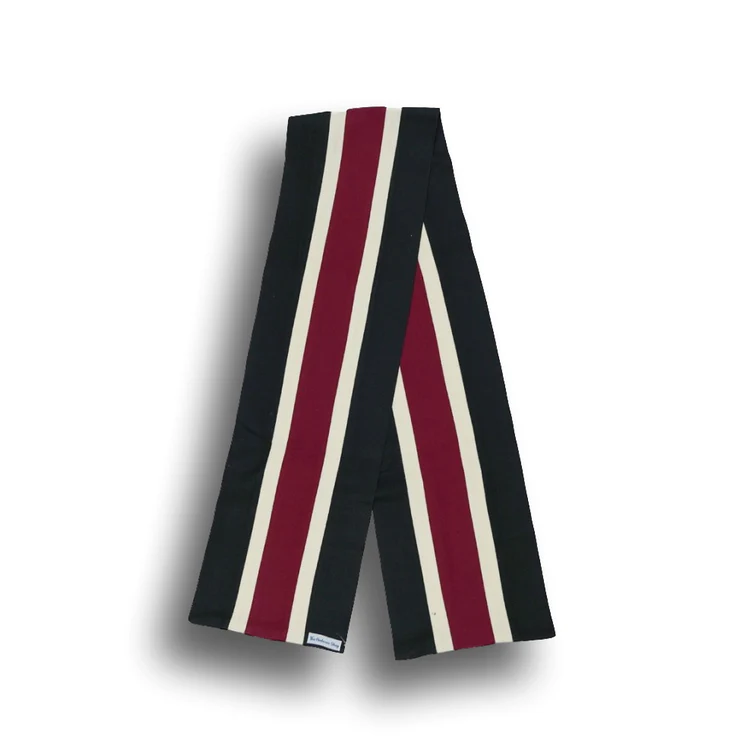
Harvard Rowing Scarf from The Andover Shop
Tucker: Yes, absolutely! We have a strong customer base of students, faculty, and alumni from both Phillips Academy and Harvard. We continue to make ties for Phillips Academy and the clubs at Harvard. We also craft rowing blazers for the Harvard crew team as well as other New England collegiate teams. The relationship continues to be strong with both institutions. As our online business has grown, we’ve been able to reach an even broader audience while also making it easier for our Phillips and Harvard customers to stay connected with us after they graduate and relocate.
Rowing blazers for Harvard University, Trinity College, and Union Boat Club at The Andover Shop
Matthew: For other Ivy Style clothiers, 3/2 roll sack suits, blazers, and sport coats are the signature items. Am I correct that The Andover Shop specializes in two button suits, blazers, and sport coats? What would you describe as the signature items for The Andover Shop?
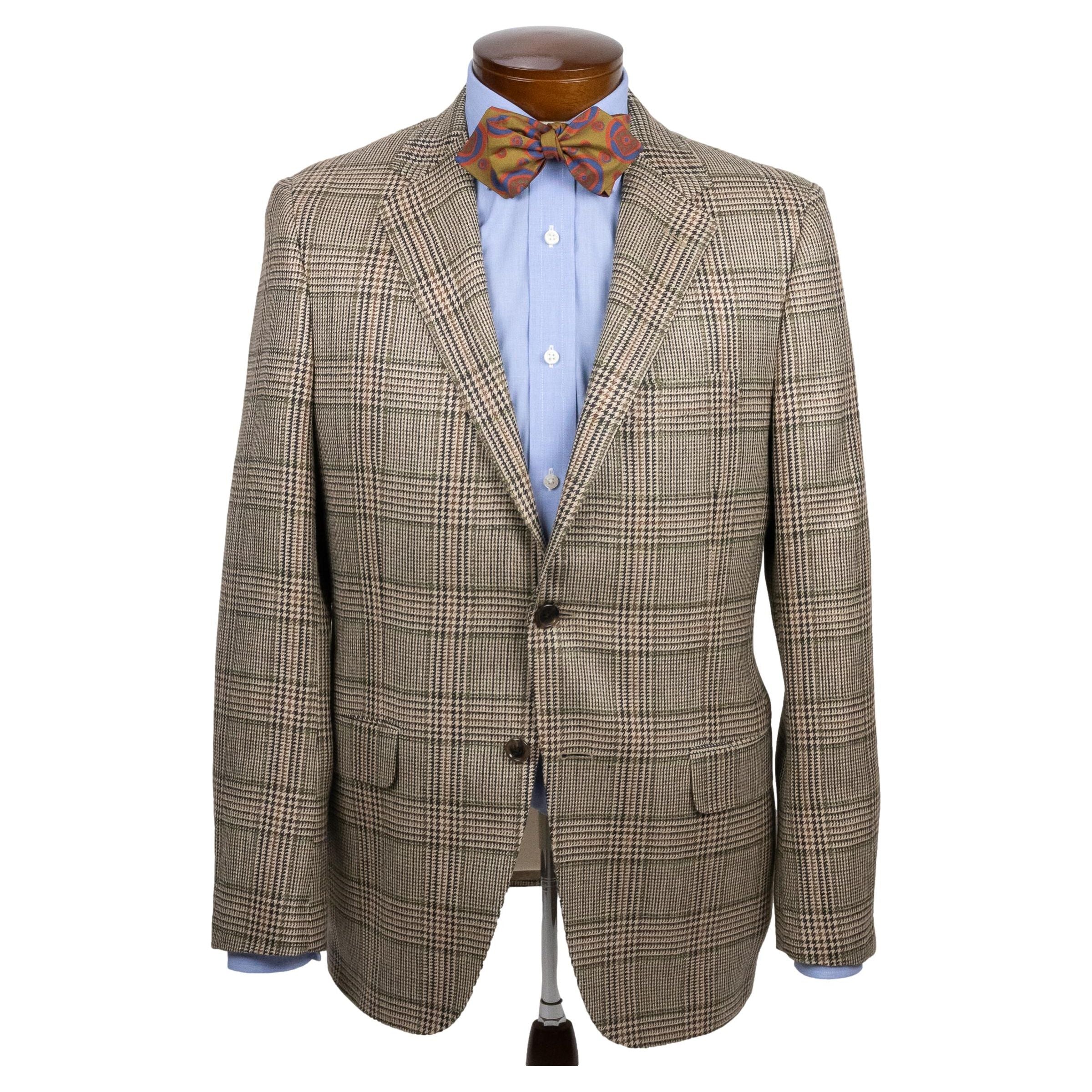
Earth Plaid Wool, Silk, and Linen Sport Coat from The Andover Shop
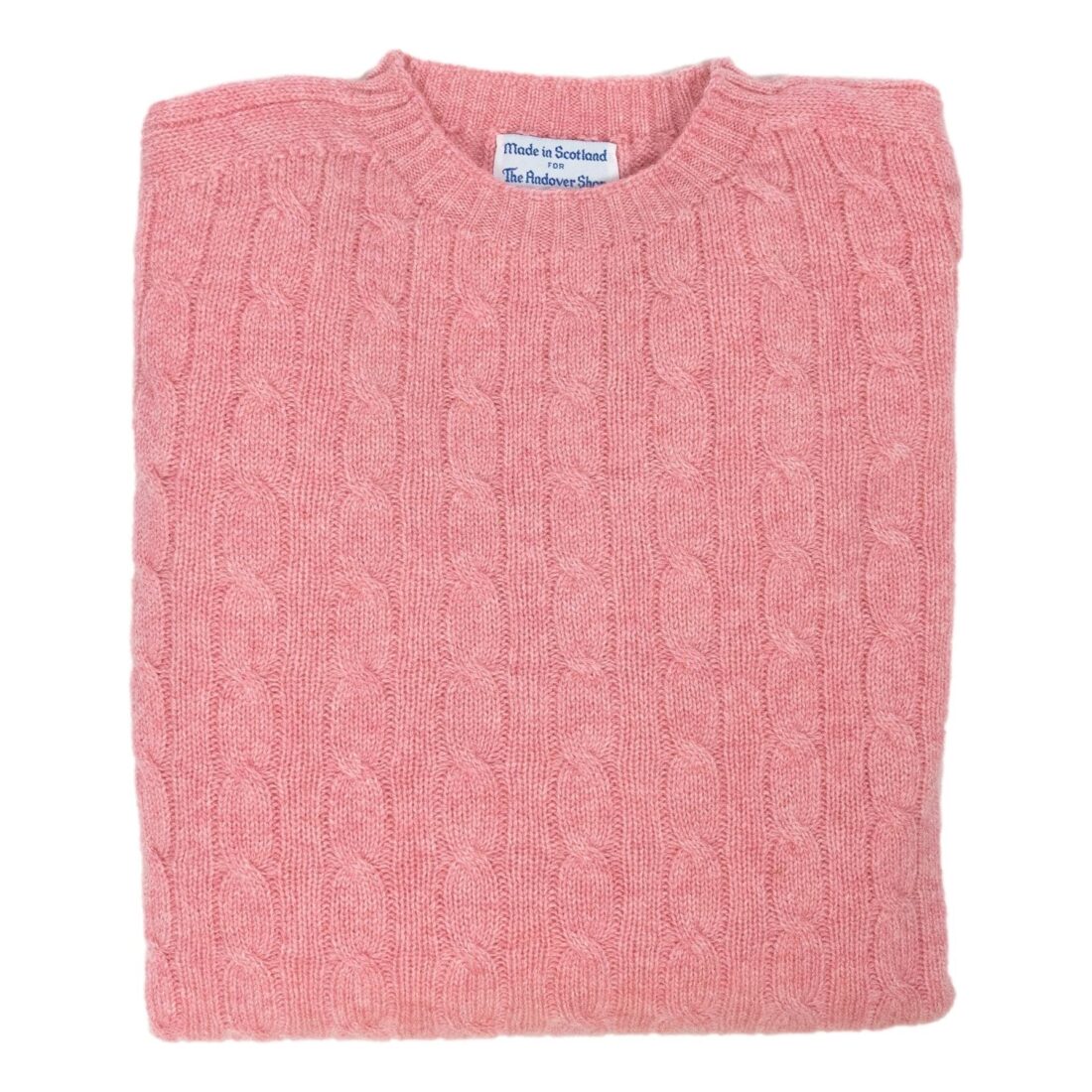
Tucker: You’re correct that The Andover Shop specializes in two-button suits, blazers, and sport coats. While we offer a full range of traditional menswear, our signature pieces are classic and timeless, and we particularly excel in creating made-to-measure garments. Oxford cloth button-downs, fine English and Italian neckwear, Shetland sweaters, dress trousers in cotton and wool, and variations of our cashmere sweaters are a few of our signature items. As customer tastes evolve, we’ve also introduced new favorites like our vests and 5-pocket trousers, which are quickly becoming Andover Shop staples.
Pure Cashmere Montreux Cable Crew Neck Sweater Made in Scotland for The Andover Shop
Matthew: I am an Anglophile and I own a beloved Morris Duffle Coat that was made in England for The Andover Shop. Do you have many items from Great Britain? Are customers asking for more items made in the United States?
Ivy Style editor Matthew Longcore in the Morris Duffle Coat made in England for The Andover Shop
Tucker: Yes, we do have many items from Great Britain. We also source much of our clothing from Italy, France, and Canada. We have always had demand for items made in the United States and we’ve been lucky to find those that do it the best. Quality is at the forefront of everything we do here at The Andover Shop and that’s something we won’t compromise on. A few examples of staple items from Great Britain are our Chrysalis jackets like the Chepstow and Chiltern Dry Wax Field Coat. We hold a trunk show each fall where customers can create a made-to-measure outerwear piece from Chrysalis. We also recently started carrying Crockett and Jones beautifully bench made shoes. They have been made in England since 1879.
Matthew: I have heard that the two Bush men who served as President of the United States – father and son, both graduates of Phillips Academy – shopped at The Andover Shop. Is this correct? Do you have many multigenerational legacy families as customers?
George Herbert Walker “Poppy” Bush as a student at Phillips Andover Academy
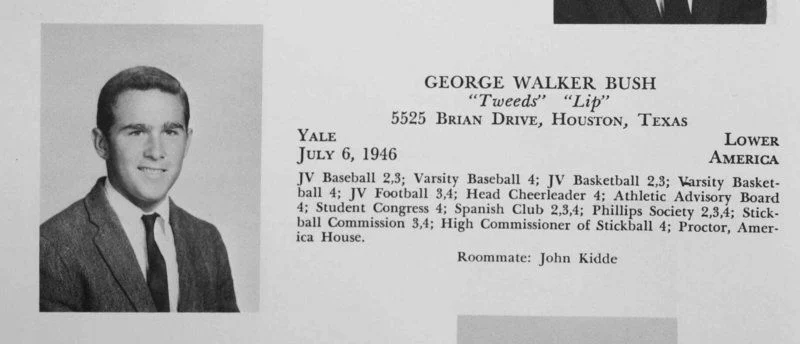
Tucker: Yes, that’s correct! George W. Bush was actually nicknamed “Tweeds” while studying at Phillips Academy because of the many tweed jackets he wore from The Andover Shop. Even today, we’re proud to serve many multigenerational families. It’s not uncommon to see a grandfather who has been shopping with us for 40-50 years come in with his son and grandson to pick out new sport coats. It’s especially special when you learn that he’s still wearing a jacket he bought over 40 years ago and that his grandson has been gifted a few to continue the tradition in style.
George Walker “Tweeds” Bush yearbook photo at Phillips Andover Academy
Matthew: I have to ask this question, as it is one of my favorite topics of conversation (and debate): “Ivy” versus “Preppy.” How do you define these terms? Do you see them as synonymous? Or are they distinctive?
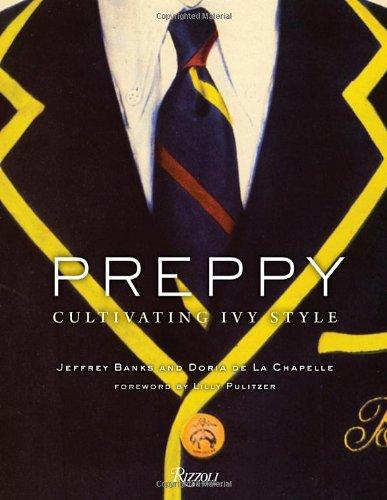
Preppy: Cultivating Ivy Style by Jeffrey Banks and Doria De La Chapelle with a foreword by Lilly Pulitzer (2011)
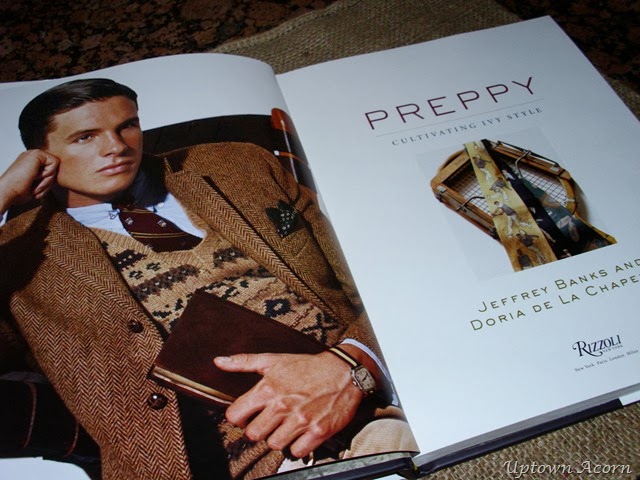
Tucker: This is always a big debate in our shop. Personally, I don’t think the terms are synonymous, but I also don’t see them as completely distinct—the lines between the two, in my opinion, are a bit blurred. I find “Ivy” style to be more refined and sophisticated, featuring items like tweed jackets, loafers, and Oxford Cloth Button-Downs. Traditionally, “Preppy” is associated with bright pastels, boat shoes, and Nantucket reds. The two styles overlap, I think, when those bright “Preppy” colors are incorporated into the more refined, sophisticated “Ivy” aesthetic.
Preppy: Cultivating Ivy Style by Jeffrey Banks and Doria De La Chapelle with a foreword by Lilly Pulitzer (2011)
Matthew: What are some new developments at The Andover Shop? Do you have any collaborations in the works or upcoming events?
Author James Ellroy
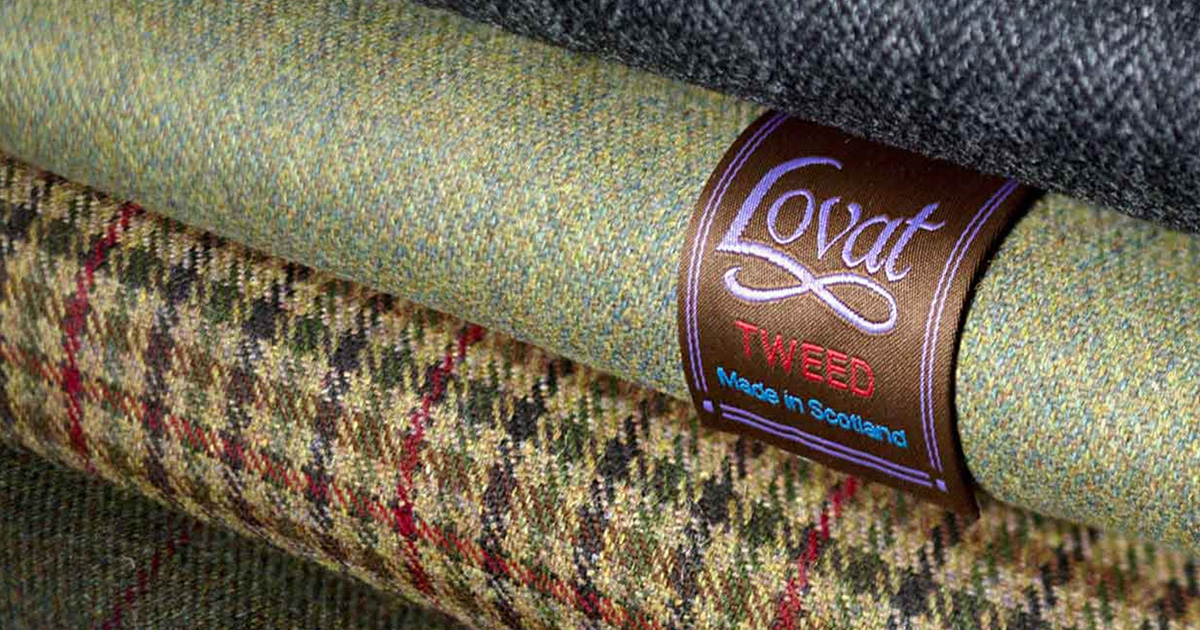
Tucker: We do have some fun and exciting events coming up! This June we will be hosting New York Times best-selling author and friend and customer of the store James Ellroy. He will be sharing with us his newly published novel Red Sheet, set for release in early June. Looking ahead to this fall, we’re thrilled about some special collaborations. We’re working with Lovat Mill of Hawick, Scotland, to create a collection of jackets in honor of their 200th anniversary. For more information about these events, as well as ongoing favorites from previous years, visit the Events section on our website. We also encourage you to join our email list to receive updates and exclusive details about these events directly in your inbox.
Lovat Tweed Made in Scotland
Matthew: Our motto at Ivy Style is “Fashion Fades. Style is Forever.” Do you agree with that statement? What are some aspects of classic menswear that you consider to be timeless?
Tucker: I couldn’t agree more! That idea is at the core of what The Andover Shop represents. We’re not chasing trends or fleeting moments in fashion; we’re rooted in enduring style. The pieces we offer are timeless, built on tradition and quality, and they remain relevant year after year. True style doesn’t expire, it evolves while staying grounded in what works. Like I mentioned earlier, we have customers that have been shopping with us for 40 plus years who still wear those same sport coats purchased the first day they walked in our shop. They don’t look outdated and they still fit in with the timeless style of today’s Andover Shop. It’s also a testament to the quality and make of our garments.
Matthew: Is there anything else about The Andover Shop that you would like to share with Ivy Style readers?
Tucker: If you’re looking to learn more about us, our website theandovershop.com and our Instagram are great places to start! We welcome our customers to call one of our store locations or email us at info@theandovershop.com and we’ll be happy to answer any further questions. We’re always here to help with any wish or desire you may have!
For more information about the legacy of The Andover Shop, please check out our archives including these articles.
Charlie developed the Andover model with/alongside the Southwick (Grieco Bros.) tailors. It was intentionally non (anti?) Ivy — 2 button, padding, sharp lines, tapering (tracing), and prominently pressed lapel. Seams were not lapped; stitching was pick. Natural shoulder clothiers including Langrock, Adler, and ELJO’s responded with a firm “No thanks.” Later it would inspire the undarted version of the Dorset model. My theory is Charlie was trying to get JFK’s business (which went to Chipp) or capitalize on JFK’s preferred style, which was decidedly not traditional natural shoulder.
* The Andover Shop was consistently #2 or #3 for Southwick MTM. ELJO’s, ever committed to the Warwick and Douglas models, was #1 for decades. The Thurstons selected tweeds specific (unique) to their store, whereas Charlie used the famous seasonal swatch boxes and W. Bill. He designed a giant version of the classic PoW glen that became legendary.
Charlie had 2 models with Southwick the Bristol which was undated and the Dorset as SE pointed out the darted model. Southwick made in my mind the best soft/natural shoulder garment. Charlie was way ahead of his time and a master of style. He knew how something should fit on you and what colors you should wear. I started with Charlie and the Andover Shop in 1958 when I was in boarding school and have never bought any clothes from anyone else. It started with my father then me, my 2 sons and now my grandson. So 4 generations at the Andover Shop. The Andover Shop MTM business for me was and still the best. GREAT interview of a GREAT SHOP.
Sandy, thank you for the positive feedback about the interview, and for sharing your family history with The Andover Shop. My good friends Michael and Paula live in New Hampshire, not far from Andover, and are regular customers. Paula is an admin for the Preppy Handbook Fan Club group on Facebook. My wife and I attended the wedding of their daughter. Michael wore a very nice Made-To-Measure suit from The Andover Shop.
SE, I bought many suits and sport coats from the Andover shop that were MTM from the bolts of material Charlie had picked out from his tour with his brother in law Virgil to England and Scotland every year. The bolts of material were all in the store as you walked in. He would cut and send the 3 to 4 yards of material to Southwick and have them make the garment. These bolts were special to the Andover Shop and what made the Shop like no other run of the mill store. If you didn’t see what you liked with the bolts of material then he would have you look through the samples of swatches that you can see in his picture in the article.
Yes, true — the cloth “blankets” that Charlie gathered / collected throughout the decades. Quite a congregation. Best I recall, many were W. Bill, Hardy/Minnis, P&B, Gardiner, the older Harris, and H. Lesser. “The good goods.”
Correction: the Andover model was 3-button, but a squared off front, pressed lapel (3/2), and lower button stance. J. Press’ current Ivy model is very similar. An updated, urban take on the sack. Bristol was the 2-button incarnation.
Another observation about Charlie: remarkably skillful historian and archivist — a librarian and professor simultaneously. Alongside Jay Walter, capable of deconstructing and myth busting. For instance: Charlie was quick to remind us that the entirety of what “American” natural shoulder style was/is (remains), in fact, British:
The button-downed oxford (cheviot cloth) was a thoroughly British innovation (thank you, Brooks Bro.), the “civilian sack coat” (Brooks marketed it as the no. 1 sack) was the birthchild of British soft tailoring (Victorian/Edwardian workman’s coat and/or “donkey jacket”). The beginnings of the “loafer” are also British: certainly the strap, and, I’d argue, the tasseled version. The “Weejun,” often remembered as a New England manufacturer’s appropriation of the Norwegian moccasin, was preceded by King George VI (then Duke of York)’s 1926 commissioning of a casual, slip-on (laceless) shoe for the purpose of “loafing around.” Surely the comfy-yet-sturdy, laceless “court shoe” served as inspiration as the Wildsmith artisans engaged in this act of creation.
It goes without saying that repp(e), wool challis, and silk-wool poplin fabrics for neckwear are 100% British, as are tweed (Scotland, Ireland), flannel (West of England), and worsteds. Stripes, tartans, checks (tattersall, glen, russell, gun club, etc.) — all British.
The hook vent, lapped seams, and high notch lapel were around well before 1902 — all rooted in country/outdoorsy pursuits, mostly equestrian. The blazer’s origins are usually attributed to the Royal Navy and thought to be worsted serge, but a solid navy twill of Scottish tweed (for farm and field) preceded it by decades. Another reflection for another day.
Charlie consistently gave credit where credit is entirely due: the Brits. What’s intriguing (to me) is the merging of country, sport, workwear, comfort intended for a laborer’s long, arduous day, and the aristocratic tastes.
Bud Collins had Charlie make him a pair of pants from the material of a Spanish flag. Another little unknown fact was the actor Jack Lemmon worked in the stockroom of The Andover Shop in Andover while he was at Phillips Academy.
God only knows how many Andover and Harvard faculty, deans, students, and alums Charlie outfitted. The story of The Andover Shop intersects swimmingly with the development of the legendary Southwick MTM operation. The relationship was mutually beneficial.
Charlie could lay claim to stylistic innovations that haven’t (yet) been sufficiently chronicled, including double lapped seams, 3/8” stitching (“swelled edges”), and the sporty, clubby Warwick model, which featured a notably high button stance, rounded front soft lapel roll, and heavy cloth complemented by thin canvas and butterfly lining. Because the upcharge for MTM was minimal (only slightly higher than floor/OTR inventory), The Andover Shop’s approach was unique.
Among the cloth innovations was the giant version of the classic Prince of Wales glen check, multiple variations of the Russell check, and a bold, deeply etched, steep twill of solid navy Cheviot. His staff will recall he favored matte antique brass for blazer buttons and zero lining & tipping for neckties. He broke rules yet remained remarkably purist. Both a reformer and traditionalist.
Some predicted the demise of The Andover Shop would follow Southwick’s final exhale, since the histories and success of both were intricately, inextricably connected.
Regarding the famous Andover Shop Shetland crewneck: rumor has it Charlie selected the Scottish yarns for seasonal weavings and persisted in the demand for a small, knitted collar that hugged the shirt collar. Barely/ mildly brushed.
I had the chance to interact with Mr. Mscisz last year when I bought a Southwick blazer from the AS and it got stuck in the customs on my end for a general problem of my country’s postal service unrelated to my own shipment. Although the AS had no fault at all for this he was extremely kind to follow up with USPS on my behalf to help expedite things. A true gentleman, really suited (pun intended!j for the job at the AS.
Another Charlie innovation high twist worsted Shetland tweed woven by Gardiner (Selkirk). For sport jackets. It was lightweight (9/10 oz.) and porous — perfect for New England summers. As he frequently insisted, fine wool breathes better than cotton, particularly when the latter is tightly woven. “Seersucker doesn’t breathe. It insulates.” Hilarious but true.
Charlie cut his teeth at Langrock, yes? Following the service and time at Bowdoin, he worked at the Cambridge J. Press.
The Andover model, featuring lower (3)button stance, squared-off front, and pressed lapel to the 2nd/middle button, served as a counterpoint to Squeeze’s clubby, sporty collegiate, hook-vented 3-button style. The plain-knit Shetland crewneck was a rejoinder to the triple brushed Shaggy Dog.
What if modern-day J. Press offer a model based on the Warwick — an homage to early Heyday Squeeze? I feel sure RTC and/or Ferrara can manage it.










Charlie developed the Andover model with/alongside the Southwick (Grieco Bros.) tailors. It was intentionally non (anti?) Ivy — 2 button, padding, sharp lines, tapering (tracing), and prominently pressed lapel. Seams were not lapped; stitching was pick. Natural shoulder clothiers including Langrock, Adler, and ELJO’s responded with a firm “No thanks.” Later it would inspire the undarted version of the Dorset model. My theory is Charlie was trying to get JFK’s business (which went to Chipp) or capitalize on JFK’s preferred style, which was decidedly not traditional natural shoulder.
S.E., that is an interesting bit of history. Thank you for sharing. I wonder if Paul Winston can tell us more about Chipp and JFK.
* The Andover Shop was consistently #2 or #3 for Southwick MTM. ELJO’s, ever committed to the Warwick and Douglas models, was #1 for decades. The Thurstons selected tweeds specific (unique) to their store, whereas Charlie used the famous seasonal swatch boxes and W. Bill. He designed a giant version of the classic PoW glen that became legendary.
Charlie had 2 models with Southwick the Bristol which was undated and the Dorset as SE pointed out the darted model. Southwick made in my mind the best soft/natural shoulder garment. Charlie was way ahead of his time and a master of style. He knew how something should fit on you and what colors you should wear. I started with Charlie and the Andover Shop in 1958 when I was in boarding school and have never bought any clothes from anyone else. It started with my father then me, my 2 sons and now my grandson. So 4 generations at the Andover Shop. The Andover Shop MTM business for me was and still the best. GREAT interview of a GREAT SHOP.
Sandy, thank you for the positive feedback about the interview, and for sharing your family history with The Andover Shop. My good friends Michael and Paula live in New Hampshire, not far from Andover, and are regular customers. Paula is an admin for the Preppy Handbook Fan Club group on Facebook. My wife and I attended the wedding of their daughter. Michael wore a very nice Made-To-Measure suit from The Andover Shop.
SE, I bought many suits and sport coats from the Andover shop that were MTM from the bolts of material Charlie had picked out from his tour with his brother in law Virgil to England and Scotland every year. The bolts of material were all in the store as you walked in. He would cut and send the 3 to 4 yards of material to Southwick and have them make the garment. These bolts were special to the Andover Shop and what made the Shop like no other run of the mill store. If you didn’t see what you liked with the bolts of material then he would have you look through the samples of swatches that you can see in his picture in the article.
What wonderfully encouraging and entertaining interview!
Kind Wednesday Evening Regards,
H-U
Yes, true — the cloth “blankets” that Charlie gathered / collected throughout the decades. Quite a congregation. Best I recall, many were W. Bill, Hardy/Minnis, P&B, Gardiner, the older Harris, and H. Lesser. “The good goods.”
Correction: the Andover model was 3-button, but a squared off front, pressed lapel (3/2), and lower button stance. J. Press’ current Ivy model is very similar. An updated, urban take on the sack. Bristol was the 2-button incarnation.
Another observation about Charlie: remarkably skillful historian and archivist — a librarian and professor simultaneously. Alongside Jay Walter, capable of deconstructing and myth busting. For instance: Charlie was quick to remind us that the entirety of what “American” natural shoulder style was/is (remains), in fact, British:
The button-downed oxford (cheviot cloth) was a thoroughly British innovation (thank you, Brooks Bro.), the “civilian sack coat” (Brooks marketed it as the no. 1 sack) was the birthchild of British soft tailoring (Victorian/Edwardian workman’s coat and/or “donkey jacket”). The beginnings of the “loafer” are also British: certainly the strap, and, I’d argue, the tasseled version. The “Weejun,” often remembered as a New England manufacturer’s appropriation of the Norwegian moccasin, was preceded by King George VI (then Duke of York)’s 1926 commissioning of a casual, slip-on (laceless) shoe for the purpose of “loafing around.” Surely the comfy-yet-sturdy, laceless “court shoe” served as inspiration as the Wildsmith artisans engaged in this act of creation.
It goes without saying that repp(e), wool challis, and silk-wool poplin fabrics for neckwear are 100% British, as are tweed (Scotland, Ireland), flannel (West of England), and worsteds. Stripes, tartans, checks (tattersall, glen, russell, gun club, etc.) — all British.
The hook vent, lapped seams, and high notch lapel were around well before 1902 — all rooted in country/outdoorsy pursuits, mostly equestrian. The blazer’s origins are usually attributed to the Royal Navy and thought to be worsted serge, but a solid navy twill of Scottish tweed (for farm and field) preceded it by decades. Another reflection for another day.
Charlie consistently gave credit where credit is entirely due: the Brits. What’s intriguing (to me) is the merging of country, sport, workwear, comfort intended for a laborer’s long, arduous day, and the aristocratic tastes.
Your knowledge in this area is staggering.
Charlie Davidson supplied the GTH pants that Bud Collins wore. Maybe a revisit of that post from long ago is worthwhile !
Bud Collins had Charlie make him a pair of pants from the material of a Spanish flag. Another little unknown fact was the actor Jack Lemmon worked in the stockroom of The Andover Shop in Andover while he was at Phillips Academy.
God only knows how many Andover and Harvard faculty, deans, students, and alums Charlie outfitted. The story of The Andover Shop intersects swimmingly with the development of the legendary Southwick MTM operation. The relationship was mutually beneficial.
Charlie could lay claim to stylistic innovations that haven’t (yet) been sufficiently chronicled, including double lapped seams, 3/8” stitching (“swelled edges”), and the sporty, clubby Warwick model, which featured a notably high button stance, rounded front soft lapel roll, and heavy cloth complemented by thin canvas and butterfly lining. Because the upcharge for MTM was minimal (only slightly higher than floor/OTR inventory), The Andover Shop’s approach was unique.
Among the cloth innovations was the giant version of the classic Prince of Wales glen check, multiple variations of the Russell check, and a bold, deeply etched, steep twill of solid navy Cheviot. His staff will recall he favored matte antique brass for blazer buttons and zero lining & tipping for neckties. He broke rules yet remained remarkably purist. Both a reformer and traditionalist.
Some predicted the demise of The Andover Shop would follow Southwick’s final exhale, since the histories and success of both were intricately, inextricably connected.
I agree on no lining or tipping, especially for Repps.
Regarding the famous Andover Shop Shetland crewneck: rumor has it Charlie selected the Scottish yarns for seasonal weavings and persisted in the demand for a small, knitted collar that hugged the shirt collar. Barely/ mildly brushed.
S.E. You are so right. He didn’t want it to look like the J. Press shaggy Dog.
I had the chance to interact with Mr. Mscisz last year when I bought a Southwick blazer from the AS and it got stuck in the customs on my end for a general problem of my country’s postal service unrelated to my own shipment. Although the AS had no fault at all for this he was extremely kind to follow up with USPS on my behalf to help expedite things. A true gentleman, really suited (pun intended!j for the job at the AS.
Stories of this sort inspire hope.
Another Charlie innovation high twist worsted Shetland tweed woven by Gardiner (Selkirk). For sport jackets. It was lightweight (9/10 oz.) and porous — perfect for New England summers. As he frequently insisted, fine wool breathes better than cotton, particularly when the latter is tightly woven. “Seersucker doesn’t breathe. It insulates.” Hilarious but true.
Charlie cut his teeth at Langrock, yes? Following the service and time at Bowdoin, he worked at the Cambridge J. Press.
The Andover model, featuring lower (3)button stance, squared-off front, and pressed lapel to the 2nd/middle button, served as a counterpoint to Squeeze’s clubby, sporty collegiate, hook-vented 3-button style. The plain-knit Shetland crewneck was a rejoinder to the triple brushed Shaggy Dog.
What if modern-day J. Press offer a model based on the Warwick — an homage to early Heyday Squeeze? I feel sure RTC and/or Ferrara can manage it.
Here’s a NYT article from 1985. No mention of Harris?
https://www.nytimes.com/1985/09/08/magazine/the-weavers-of-weekend-tweeds.html
If you’re wondering why I posted this…I did a Google search for Gardiner Selkirk.