
By Isobel Harte
“There’s nothing more flattering than pearls,” says Andreas Kronthaler, creative director of [fashion designer] Vivienne Westwood. “They play with the whites of your eyes and teeth; pearls really talk to you. And they work on everybody, from young to old… You can wear them all the time—it’s one of the few things you can. You can even wear them for breakfast!” – Elle, June 23, 2025
“Pearls are always appropriate.” – Jackie Kennedy
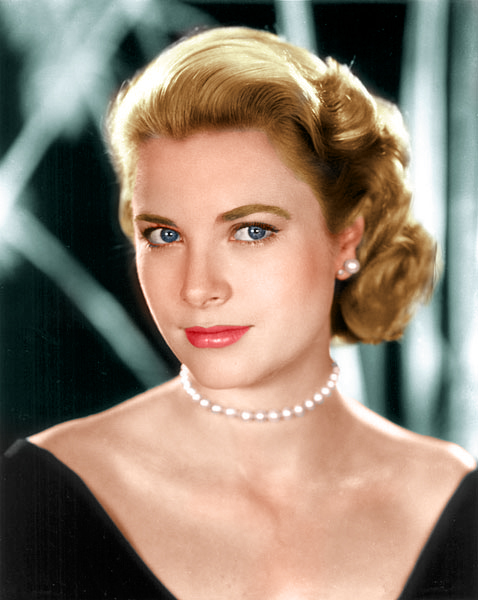
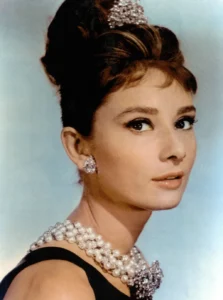
Pearls may be June’s traditional birthstone, but women born in the other eleven months of the year coopt pearls as their own – they’re universally beloved. For the Ivy Style woman, they are a necessity. We wear them often, although we might not wear them for breakfast. Nor would we likely be interested in the giant, obviously fake pearls Elle magazine goes on to tout as seen on Paris runways this past spring. For us, they are not a fashion trend but the foundation of our jewelry collections. We reflect on 20th century icons like Grace Kelly or Jackie Kennedy, so often photographed wearing pearls, and agree that they do flatter everyone, from Barbara Bush to Audrey Hepburn.

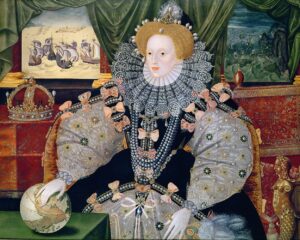
One of the most astonishing display of pearls and the purposeful message that they can convey is the Armada Portrait of Queen Elizabeth I. Everywhere you look, Elizabeth is adorned with pearls, you might say armed with them – multiple long strings hang around her neck, she wears large pearl drop earrings, strands are draped across her bodice, pearls are embedded in her sleeves, and they rise from her hair forming a type of halo. In her case, this excess works in her favor. Pearls were a symbol of chastity in the English Renaissance, defining her as the Virgin Queen, unhampered by a man at her side overriding her decisions. They were just as significant as a symbol of her wealth and her power. At the time of her portrait, Elizabeth’s navy had defeated the mighty Spanish Armada. Her legacy and England’s prosperity were guaranteed. Her pearls said it all.
In Elizabeth’s time, real pearls were found objects, carefully harvested from oceans and rivers – they were rare and precious. Over time, natural pearls became scarce as they all had to begin organically within an oyster or freshwater mollusk. Oyster beds dwindled and their harvesting, an always dangerous occupation, became more and more difficult.
In 1893, Japanese businessman Mikimoto Kokichi developed the first cultured pearl that could be mass produced by manually inserting an irritant called mother of pearl, a type of nacre, into an oyster’s mantle to stimulate the creation of a pearl. Thus, the cultured pearl was born along with the 20th century, thereby extending the ability to own pearls to a much larger clientele.
The 20th century also saw dramatic improvements in the manufacture of fake pearls although jewelry makers had been creating false pearls since antiquity as they have always been a desirable gemstone. Venetian pearl makers in the 1400s created pearls by coating glass beads with a mixture of egg whites, powdered glass, and snail slime. These slightly disgusting ingredients yielded imitation pearls so real looking, the makers got into trouble for cutting into the profits of Venetian merchants who traded in real pearls. Today some artificial pearls are so beautiful, they can’t be distinguished from real ones, except perhaps by their feel. Real pearls are heavier than imitation ones.
Faux pearls can easily be mistaken for the real thing if one wears them with enough panache. A case in point is the three strand necklace Jackie Kennedy purchased from Bergdorf Goodman in the 1950s for around $35. These weren’t the only pearls Jackie owned, but they were among her favorites. She wore them everywhere and continued to do so when she became First Lady, even on occasions of state. Now they are in the Smithsonian, given to the museum by the owners of The Franklin Mint who made a fortune from them. They bought her $35 pearls at auction for $211,000, duplicated the original necklace, and sold a limited number of copies for a gross profit of $26 million. As The Franklin Mint’s Lynda Resnick put it in an excerpt from her book Rubies in The Orchard: “By wearing those iconic pearls, women everywhere could channel a bit of Jackie.”

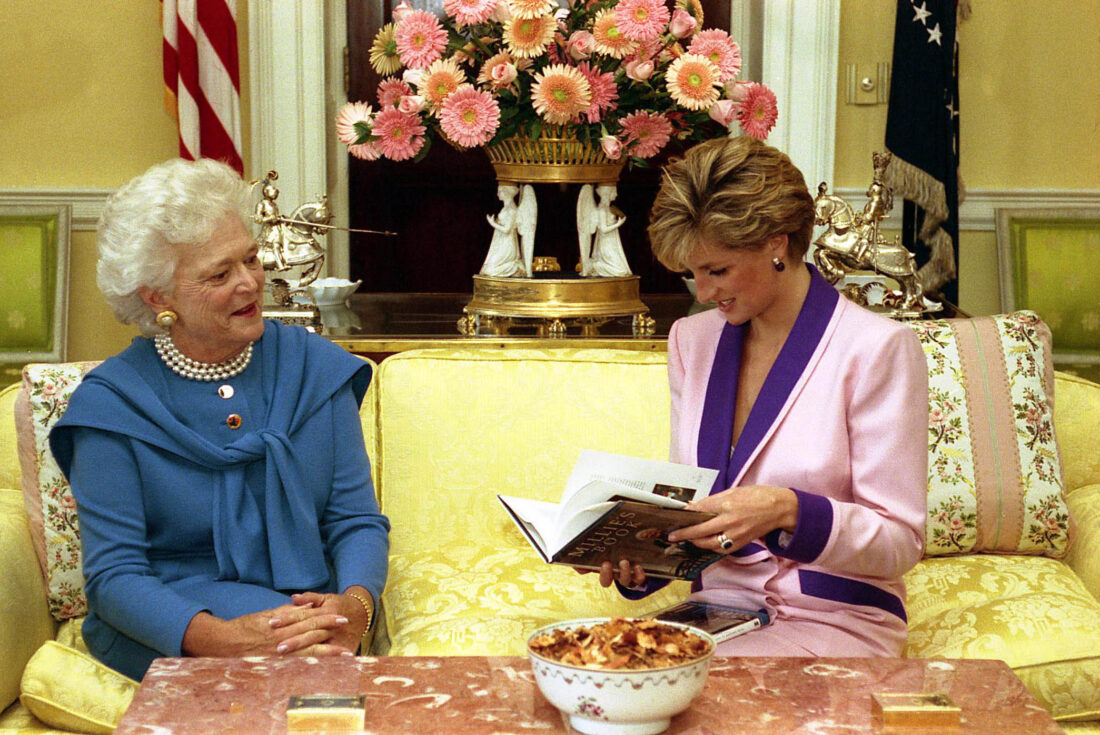
Barbara Bush also wore fake pearls. Her signature three strand necklace was created by Kenneth Jay Lane, a legendary New York costume jewelry maker, which still sells copies of the Barbara Bush pearl necklace on their website for $165. Mrs. Bush was open about her faux pearls, not caring to disguise the fact that they were fake and therefore relatively attainable by the average American woman. They were her trademark as First Lady, and she rarely took them off even after her husband left office. The New York Times published an article about her titled “Soft Power in Fake Pearls” which shows her wearing the pearls with a stunning designer gown to an inauguration ball in 1989. The takeaway for us is that the cost of our pearls shouldn’t matter.
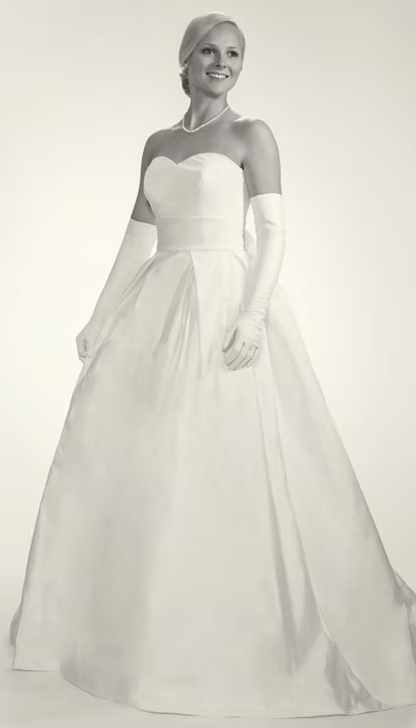
Ivy Style women wear pearls proudly but quietly. Not concerned about changing styles, we are not worried we’ll be mistaken for our mothers or our grandmothers. If we have inherited our pearls from them, we consider ourselves lucky. And whether we choose to wear real or manufactured pearls, we wear them with elegance and grace.
Isobel Harte is the pen name of this week’s Ivy Style contributor. She is the author of several children’s educational books on events in American history and has written a time travel romance novel which is still in search of a publisher.






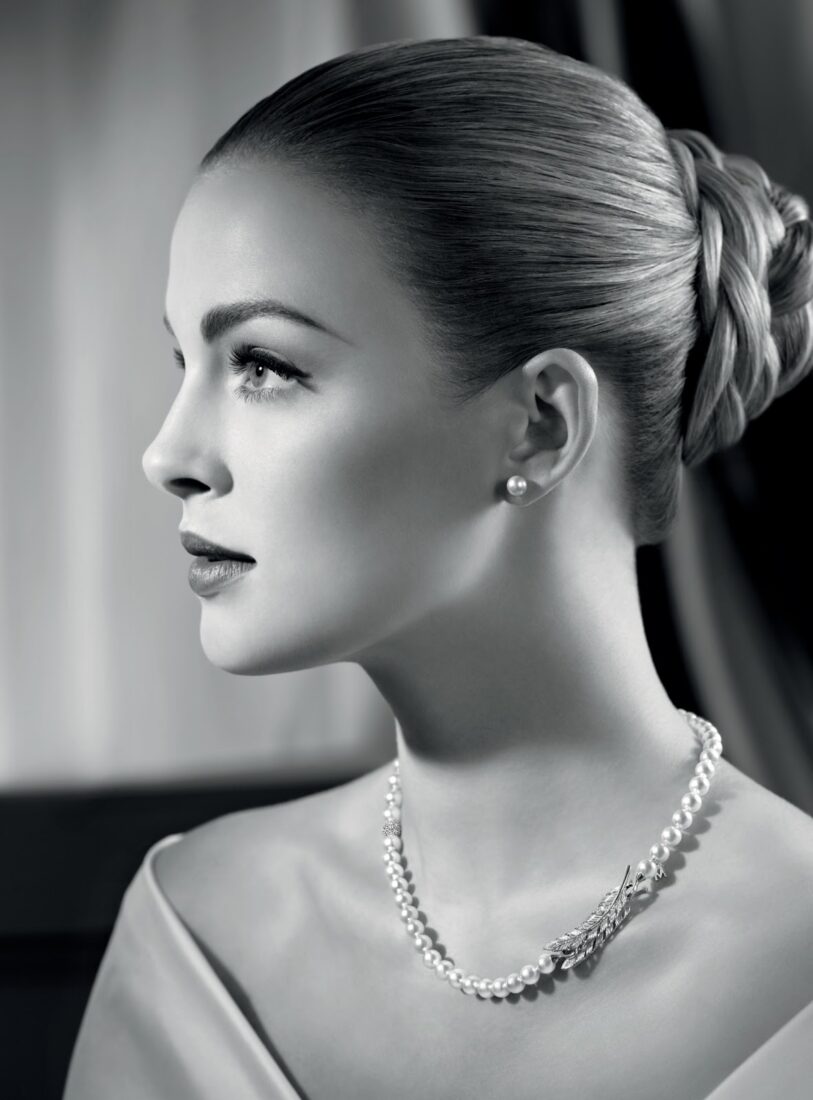
Lovely. Less is more, as in the Mikimoto Debutante and Grace Kelly, but Barbara Bush looks terrific. Just curious. At what age may a little girl wear cultured pearls or costume jewelry?
Agree completely about less is more. Pearls are the epitome of understated elegance. I am not sure the etiquette of jewelry but seems appropriate for what we refer to around here as “middle school” and onward.
A string, or two, of pearls complete the woman.
Well stated, and very true indeed.
With due respect to Matthew, John, Christian and other writers for Ivy-Style.com, this is the best piece — in many years. Informed and informative, erring toward brevity and Puritanish plainspeak. Like pearls, the beauty is found in the restrained, unadorned elegance. I fondly recall the many women in my circles who never relinquished their pearl earrings and necklaces — not even for sports and outdoorsy pursuits.
I agree wholeheartedly. Hands down, this is one of the very best pieces on Ivy Style. Beautifully written, well researched, informative, and interesting. A wonderful addition to our page.
Pearls make a great gift as well.
Nice article.
Craig, pearls are the perfect gift. Classic and timeless.
Great article.
My Aunt Mildred,,who passed away in 2006 at age 83, rarely left the house without her pearls. She was a very classy lady, although her pearls were of the fake variety. She never wore pants, just dresses of various styles. In the 1960’s and 70’s, she reminded me of Florence Henderson, aka Mrs. Brady.
However, in her last few years, she wore simple homemade skirts and flannel (mens) shirts. Gone were the dresses and pearls.
My mother, on the other hand, wore simple shirts with some type of skirt. She never wore dresses, nor pants. She never cared how she looked.
The two sisters were worlds apart, but both carried themselves with dignity.
Cheers.
This was a pleasure to read. Thank you! Never knew about Jackie’s faux pearls!
I want to post an article on your site.
Just adding my praise to the chorus. Thank you for the well-written article and lovely photos. My wife loves her pearls, both faux and real, and they always look perfect.
It is delightful to get a woman’s perspective on Ivy/Traditional style, and I hope we will be treated to many more posts from Ms. Harte.
“Diamonds may be a girls best friend, but pearls are what a woman takes to the bank!”
https://stjohnsbayrum.com/blogs/things-we-love/a-string-of-pearls