Gilded Age Fashion interview with author Elizabeth L. Block, PhD
June 29, 2026
By Isobel Harte
Isobel Harte is an Ivy Style contributor who has written about pearls and cardigans.
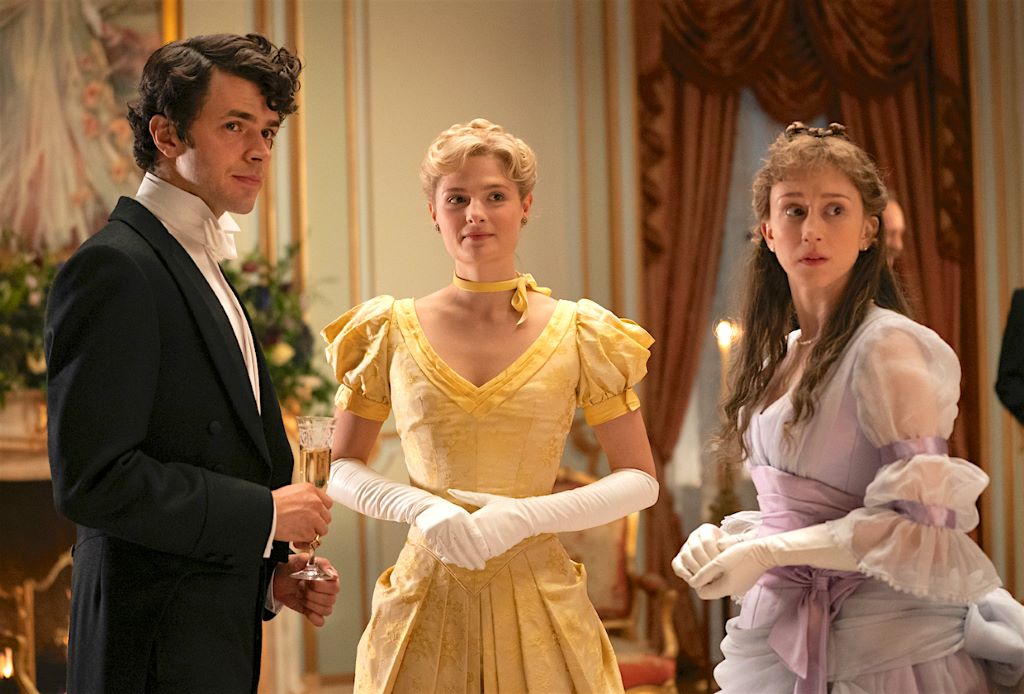
The Gilded Age is an American historical drama television series created and written by Julian Fellowes for HBO that is set in New York City in the late 19th century.
The book focused on the fabulous fashions and accessories worn by women at the pinnacle of society in America’s Gilded Age. Dr. Block seamlessly weaves together more than fifty photographs of extraordinary haute couture dresses and accessories with stories about the women who wore them and the designers who created them. Each photograph illuminates a remarkable work of art painstakingly created by hand in the last three decades of the 19th century. Nothing was left to chance in the wardrobes of these women. Every detail of every dress or every accessory was meaningful, part of an overarching plan by the wearer and the designer to set a high standard for aesthetics, and hopefully to outshine all others. Every woman who wore these garments was competing for stature, class, style, and beauty.
As a contributing writer for Ivy Style, I am thrilled by the opportunity to interview Elizabeth Block, the author of Gilded Age Fashion.
Isobel Harte:
Can you tell us a little about your background and what inspired you to create Gilded Age Fashion?
Elizabeth Block:
I came to this subject through art history. My doctoral research centered on portraits of American women painted in the late nineteenth century — Sargent, Cassatt, Beaux — and I kept finding myself drawn not just to the sitters, but to what they were wearing. The gowns in those paintings are so deliberately chosen, so precisely fitted to the occasion and to the image the sitter wanted to project. That kept pulling me toward fashion as a subject worth taking seriously on its own terms.
I work at the Metropolitan Museum of Art, where I edit publications, including exhibition catalogues. That gives me close and ongoing access to the Costume Institute’s collection, which is extraordinary. But for this book I wanted to cast a wider net — to bring in garments from institutions around the country that don’t always get the attention they deserve, places like the Western Reserve Historical Society in Cleveland, which holds some genuinely spectacular pieces that most people have never seen.
Most importantly, I wanted to write a beautifully illustrated and accessible gift book for readers who love the Gilded Age, fashion history, and period dramas.
Isobel Harte:
If you had to pick one dress from the book to describe in detail for Ivy Style readers, which one would it be?
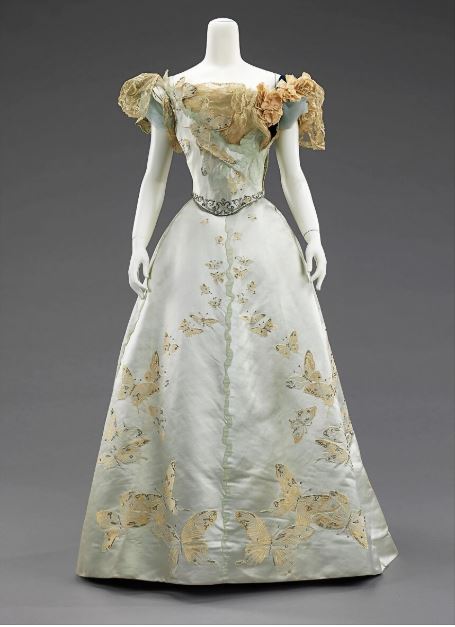
Brooklyn Museum Costume Collection at The Metropolitan Museum of Art, Gift of the Brooklyn Museum, 2009; Gift of Mrs. Paul Pennoyer, 1965
Elizabeth Block:
My favorite dress in the book is the House of Worth butterfly gown from 1898 that was designed by Jean-Philippe Worth, one of Charles Frederick Worth’s sons who took over direction of the couture house after Charles Frederick died in 1895. The dress is beautifully crafted of silk with rhinestones. What makes it so extraordinary is that the silk was custom designed for the House of Worth and the repeat motif is placed precisely so that the butterflies flutter in a circular formation upward from the bottom of the skirt upward toward the waist.
Isobel Harte:
Your book contains a fascinating reference to Charles Frederick Worth, the transplanted Englishman who became the founder of the famous House of Worth in Paris. You quote him as saying, “Some of the Americans are great spenders; all of them (all of them that I see, I mean) love dress, even if they are not extravagant over it. And I like to dress them, for, as I say occasionally, ‘they have faith, figures, and francs,’—faith to believe in me, figures that I can put into shape, francs to pay my bills. Yes, I like to dress Americans.”
Why do you think American women were so desperate for fashions from Paris? Were there any American designers during that time period who could compete with the House of Worth or other French couture houses such as Maison Félix?
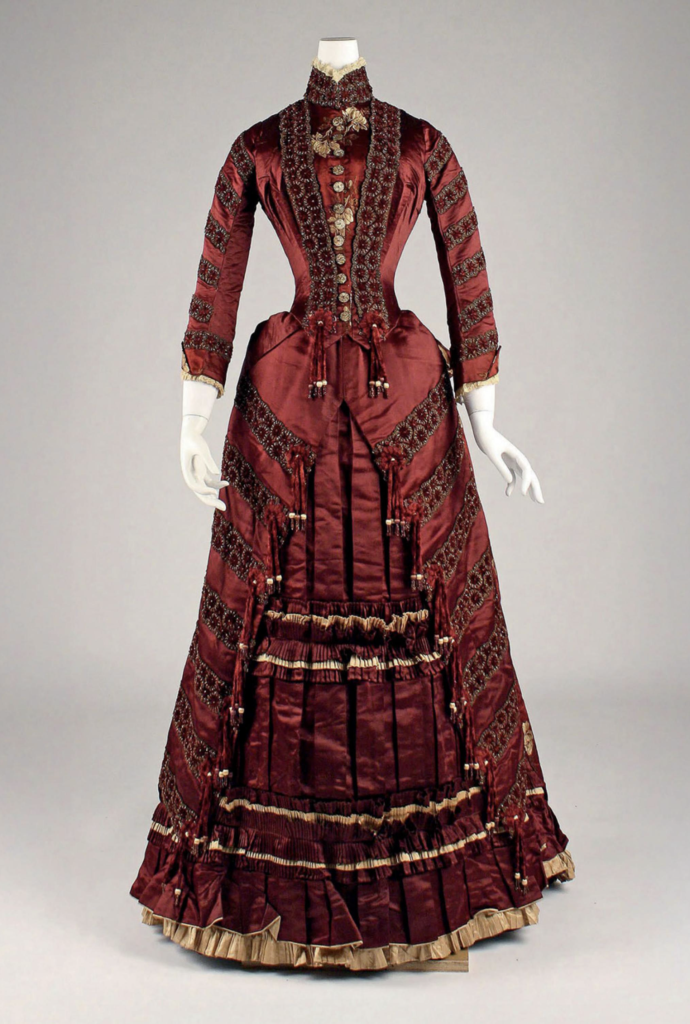
A pleated and embroidered beauty in maroon satin embellished with glass beads, 1879, Leroyer & Ducas of Paris, France. Elizabeth L. Block, Gilded Age Fashion, 2026, Hardie Grant Books, p. 19.
Elizabeth Block:
Wealthy American women of the Gilded Age were living in a world where clothing was read as evidence of taste, status, and identity. Paris had generations of craftsmanship and reputation behind it, and the women shopping on the Rue de la Paix understood exactly what they were buying into. The House of Worth was the undeniable leader in the industry but there were many other important and long-lasting couture houses including the Maison Félix, Paquin, and Doucet.
Isobel Harte:
Many of the stunning dresses in Gilded Age Fashion look both impractical and uncomfortable with exaggerated bustles and long trains – and, of course, the required corset, often designed and sewn by a corsetiere to go with a particular dress and the particular woman who would wear it. Can you tell us a little about how corsets came into and went out of fashion? What was their significance for upper class women in the Gilded Age?
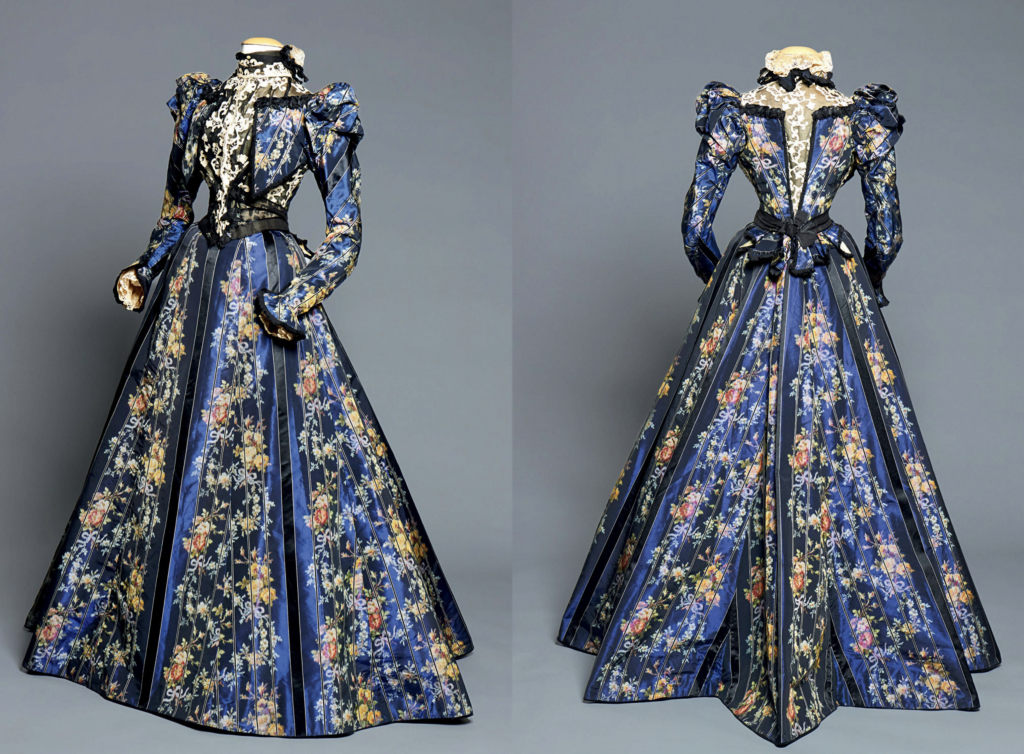
An ensemble of floral trellises, striped pleats, and lace for Annie Otis Sanders. Elizabeth L. Block, Gilded Age Fashion, 2026, Hardie Grant Books, p. 28-29.
Elizabeth Block:
Corsets had been part of women’s dress for centuries before the Gilded Age. What changed in the 1870s and 1880s was the silhouette they created: a compressed waist, lifted bust, and hips pushed back to work with the bustle. For wealthy women, a corset was often custom made by a corsetière, fitted to the body and designed to support a specific gown.
Many women of this class had worn corsets since adolescence. It was not something reserved for special occasions; it was simply part of getting dressed.
Isobel Harte:
You organized Gilded Age Fashion by the type of event a woman was to dress for, indicating a possibility of six changes of clothes within one day. The rules for what was to be worn when were very strict, depending on the time of day or the occasion. Do you think the rules for well-dressed men in society were as strict as those for women? Were the risks of breaking them as great?
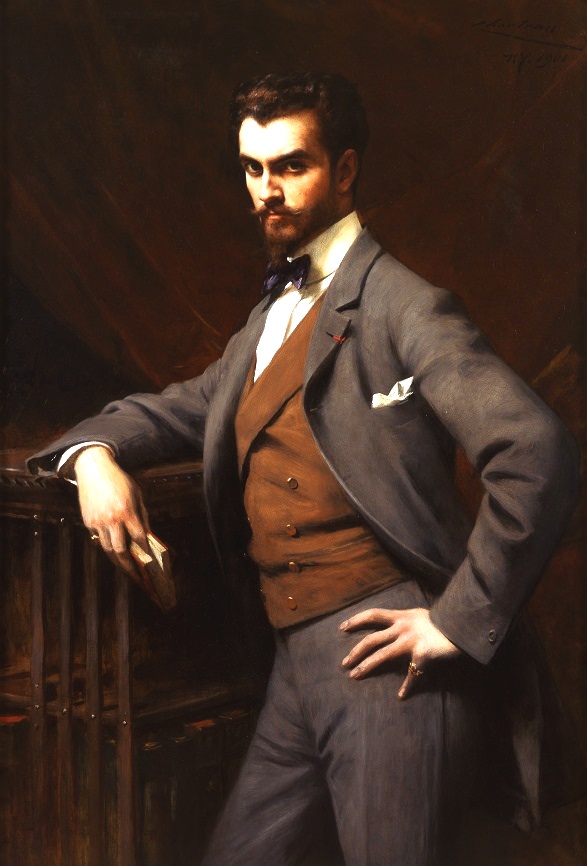
James Hazen Hyde, the heir to the Equitable Life Assurance Society. A Harvard graduate who loved art, he lived in a brownstone at 9 East 40th Street and had his clothes handmade in Paris.
Elizabeth Block:
Men had rules too, with distinctions between the morning coat, frock coat, and white tie, but they were not changing clothing as often during the day and their clothing was much more standardized, so the stakes were not as high as they were for women. The gossip columns loved to pounce on slip-ups in women’s dress.
Isobel Harte:
Is there anything else you would like to tell us about Gilded Age fashions?
Elizabeth Block:
There are so many more Gilded Age outfits to be found, so take a look in those trunks in your attics!
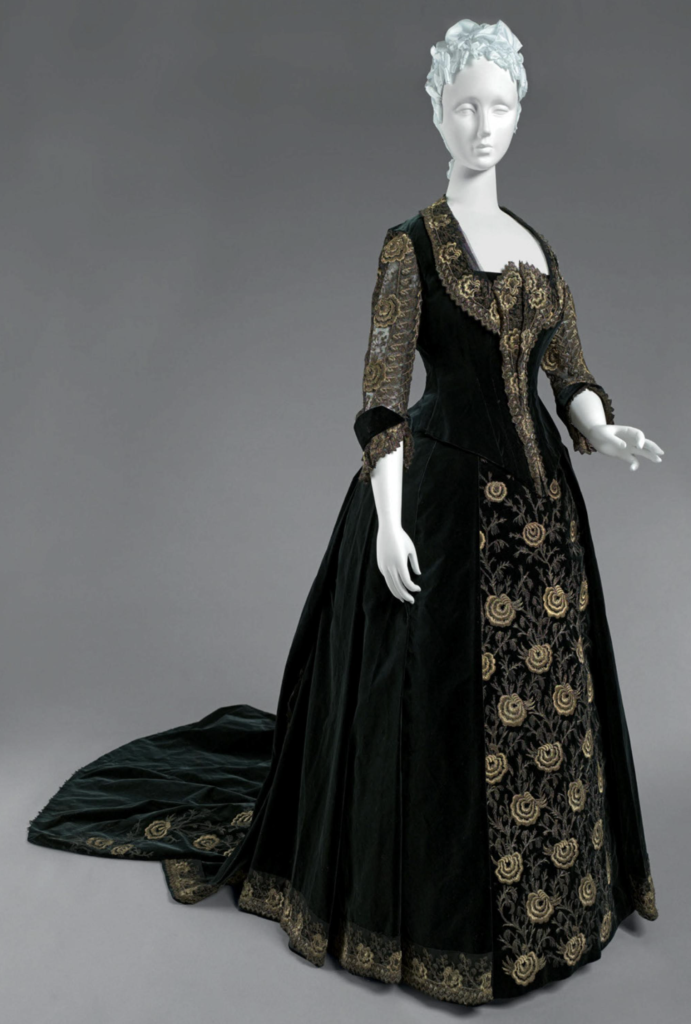
Sarah Mahon Roebling’s dress in black velvet, mid-1880s. Elizabeth L. Block, Gilded Age Fashion, 2026, Hardie Grant Books, p. 41.
It is so rewarding to hear questions and comments from readers. I enjoy learning which women’s fashion history topics are top of mind, so please stay in touch through my Gilded Age Fashion newsletter. I am pleased to offer readers of Ivy Style a free subscription. Email me at elizabethlblock@gmail.com and I will sign you up!
Isobel Harte:
You are also an award-winning speaker on women’s fashions. Can you tell us about some of your upcoming speaking events? Could one of our readers book you for a private event?
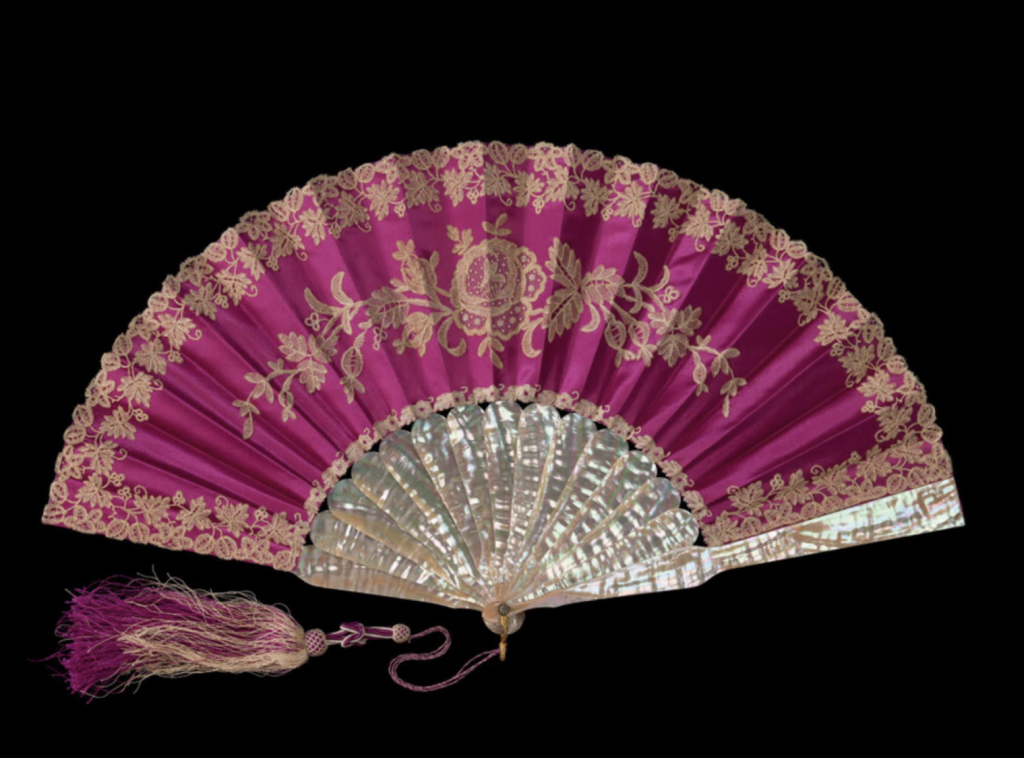
Fan in purple satin, Tiffany & Co, 1890s. Elizabeth L. Block, Gilded Age Fashion, 2026, Hardie Grant Books, p. 90.
Elizabeth Block:
Please join me at the following events this summer and fall. Readers are welcome to email me for private events: elizabethlblock@gmail.com
July 22, 5pm, The Mount, Lenox, MA. Register here.
August 6. Cheekwood Estate & Gardens, Nashville, TN. “Fleurs de Villes The Gilded Age,” presented in partnership with HBO Max. Details to come







Great historical post.
Thank you, Craig!