Town & Country magazine was founded in 1846 by Nathaniel Parker Willis and George Pope Morris. It is the oldest continuously published general-interest magazine in the United States. Originally named The Home Journal, it adopted its current name in 1901.
As a longtime subscriber to Town & Country, I have noticed of late that the magazine has taken an interest in all things “Preppy” – and, more recently, has referenced “Ivy Style.”
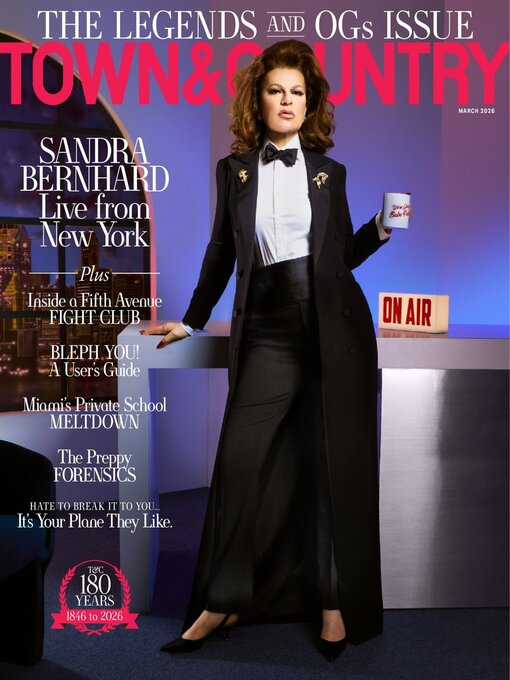
Town & Country March 2026
Here are some examples from the past year:
The New Pope of Prep (December 4, 2025)
A preppy revival is sweeping fashion and culture. Thank Jack Carlson for that.
The March 2026 issue of Town & Country arrived in the mail this week. I immediately observed the phrase “The Preppy FORENSICS” on the cover. As it turns out, this issue has no less than seven articles devoted to the “Preppy” world, with several mentions of “Ivy Style” thrown in for good measure. Let’s review three of them.
Why Is Preppy Back? By Bridget Foley
Bridget Foley writes: “The dominance of Ivy Style, particularly on the European runways, says a lot about the world we’re living in right now.”
Foley’s use of the term “Preppy” in the title of the article and “Ivy Style” in the subtitle suggests that the two terms are synonymous and interchangeable. This is a highly debatable proposition which Foley expounds upon in her article.
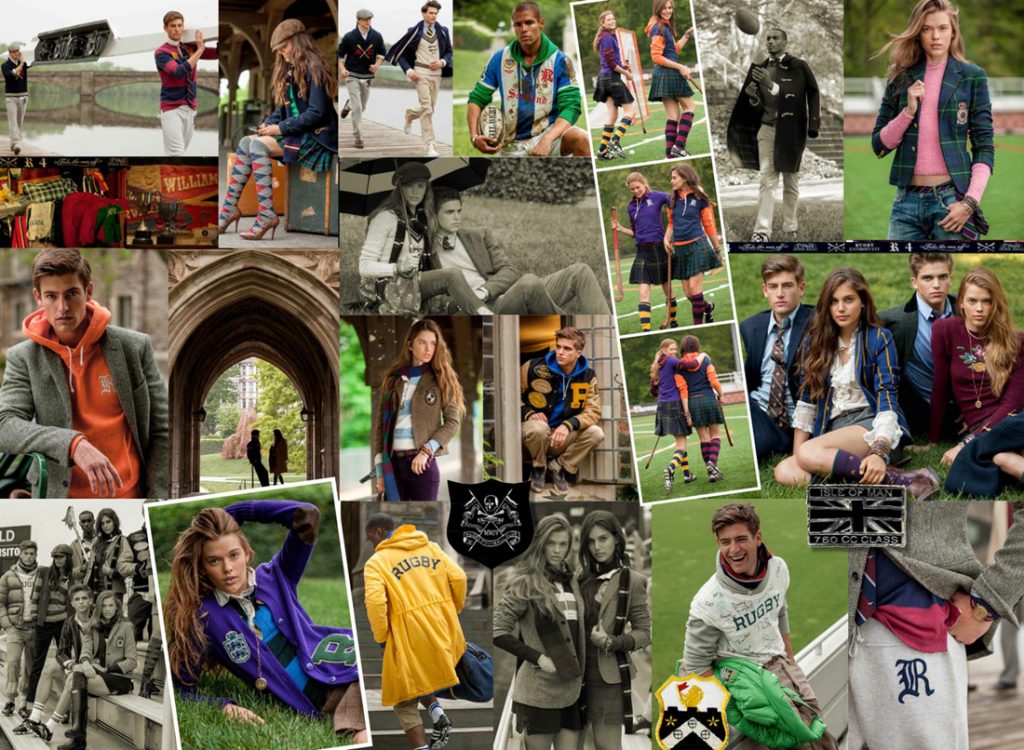
Rugby Ralph Lauren Fall 2012
According to Foley, “Preppy has an ironclad identity, its stylistic markers the stuff of legend: polo shirt, navy blazer, khakis, tennis sweater, penny loafers.” She credits Ralph Lauren as “the genre’s undisputed maestro” who “codified preppy” and “has kept it vital ever since.” Later in the article, she clarifies the distinction between “Preppy” and “Ivy Style” writing:
Preppy emerged as a more flamboyant extension of Ivy Style, which developed at elite East Coast men’s colleges in the late 19th and early 20th centuries. Though considered an American sartorial invention, the style had firm roots in British aristocratic life, which was, in many ways, a charmed, cloistered existence. It allowed a great deal of time for leisure pursuits – tennis, golf, cricket – each with a snappy wardrobe. Images crossed the Atlantic and resonated powerfully with the young men of the equally cloistered Ivy League, who co—opted elements of those tony sports, and of British tailoring, and melded them into something new – an aesthetic with a polished but casual vibe, and steeped in the carpe diem confidence of its creators.
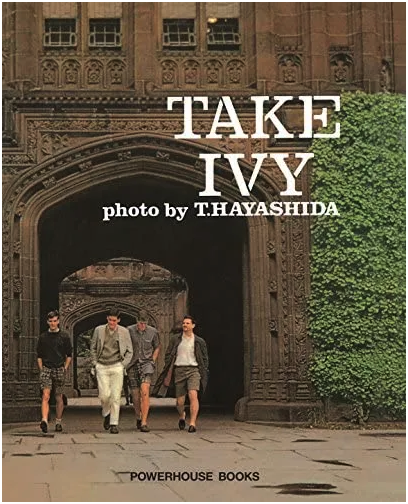
The anthropological term for this phenomenon is cultural diffusion. Anglophilia among upper class Americans is a much responsible for Ivy League clothing as it is for Collegiate Gothic architecture on Ivy League campuses.
Take Ivy (1965) – Ivy League students with Collegiate Gothic architecture in the background
Patricia Mears, deputy director of the Museum at FIT and chief curator of the school’s 2012 exhibition “Ivy Style” states: “I credit Ralph Lauren and Lisa Birnbach [author of The Official Preppy Handbook] with coming up with the terminology and bringing these things to popular culture.”
The current Preppy Revival is driven by nostalgia. Foley explains:
We live in a fractured, caustic culture, full of angst, anger, and political divisiveness, not to mention fear of AI coming for our jobs – maybe for our whole human species. With this ugliness has come a once unimaginable decline in basic courtesy. Don’t we all yearn for a little grace, and some acknowledgment that not all the norms we once lived by are archaic cogs in a world of chaos? For years preppy had provided the dual comforts of familiarity and propriety – ideas we can hold on to, even as other norms shatter in the social maelstrom.
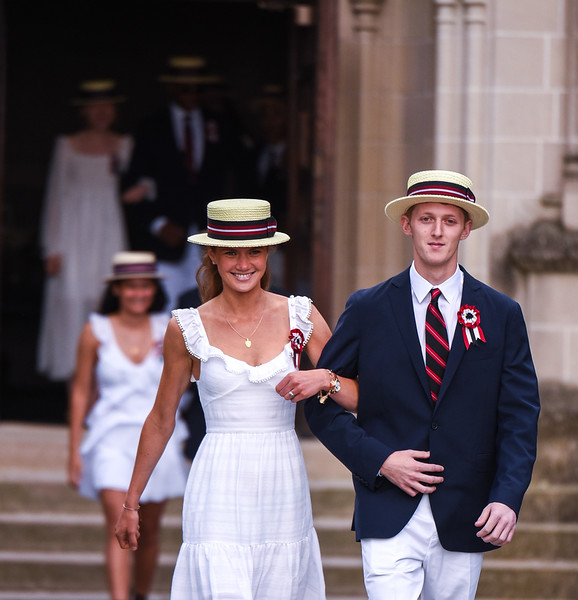
Groton School Graduation 2018, photo credit: Scot Langdon, Lowell Sun
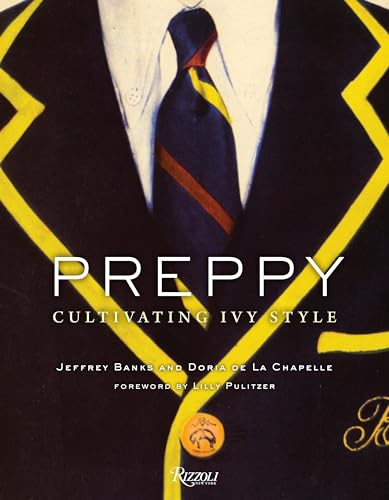
Jeffrey Banks, the author of Preppy: Cultivating Ivy Style, states that “Preppy is a longing for what we’ve lost, and we’ve lost is the civility to other people.”
Preppy: Cultivating Ivy Style (2011)
Jalil Johnson, creator of the Substack Consider Yourself Cultured, echoes that statement. “There is this conversation about what it means to be American,” he states. “Some people feel the only way they can access the American Dream is through clothing. Preppy is the vehicle for that.”
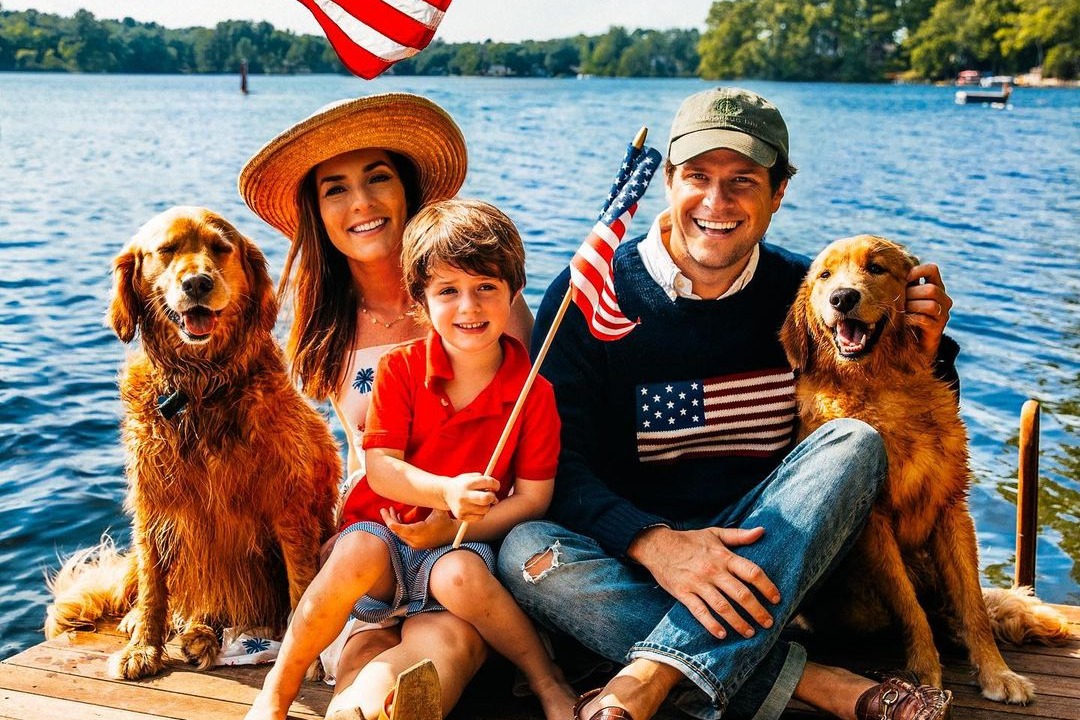
Kiel James Patrick, Sarah Vickers Patrick, and their family
Are There Any Preppies Left at Harvard? By Helen Scarborough
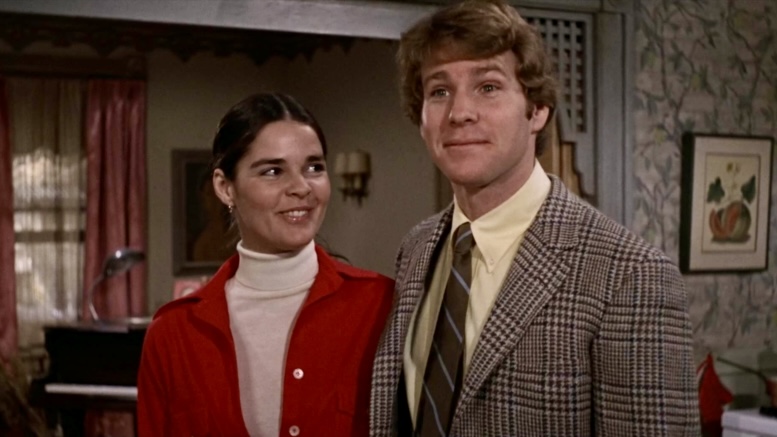
When the movie Love Story (1970) starring Ryan O’Neal (as Harvard preppy Oliver Barrett IV) and Ali MacGraw came out, the word “preppy” made its way onto the silver screen. “Don’t you have your own library, Preppy?” Boarding schools like Andover, Exeter, Groton, and St. Paul’s were feeder schools for Ivy League colleges like Harvard, Yale, Princeton, and Dartmouth. The Ivy League set the tone for preppy culture and style.
Love Story (1970)
Helen Scarborough suggests that Harvard (and the Ivy League more broadly) continues to have a preppy element, even though the general atmosphere is no longer overwhelming preppy as it was a century ago. She quotes recent graduate who states, “I do think preppiness exists at Harvard, but its not homogeneous in the way it is at Georgetown or UVA.” Indeed, the preppy culture has become a much smaller subculture at elite colleges. This was already the case when The Official Preppy Handbook (1980) was published. In fact, after decades of meritocratic admission policies and diversification initiatives, preppies were already in the minority in the Ivy League by the 1980s.
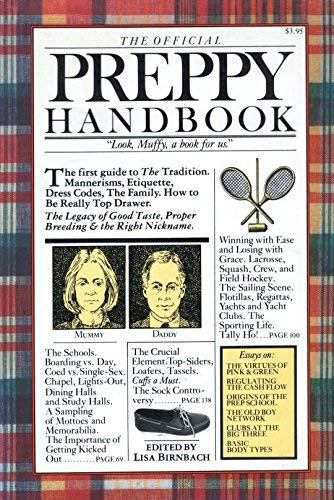
The Official Preppy Handbook (1980)
The logic behind this is explained in a section of the book titled “The Ivy League Dilemma” which notes :
Before the term “Preppy” was popular, “Ivy League” was used to describe a certain kind of person. Like the school he went to, he was steeped in tradition … But, because the Ivy League colleges are generally large and wealthy, they can afford a diversity of students that goes far beyond the merely Preppy … Still, the Ivy League is widely perceived as the cream of the elite schools, and as the Preppiest of places to go. But there is a paradox. While there is no Preppier credential than to have gone to an Ivy League college, there are many schools far more exclusively Preppy in appearance and atmosphere than these eight … The pink-and-green scale tips in favor of the more homogeneous smaller schools.
The Official Preppy Handbook features a list of the top 20 preppy colleges in America. The list includes over half of the 11 schools in the NESCAC (Amherst, Colby, Connecticut College, Hamilton, Trinity, and Williams) but only one member (Princeton) of the 8 schools in the Ivy League, despite the public perception of the Ivies as “the preppiest” of schools. The New England Small College Athletic Conference, or NESCAC, comprises 11 highly selective, top-tier liberal arts institutions in the Northeast, known as “Little Ivies.” By the time of the publication of the Preppy Handbook, these colleges had become well known for attracting a more homogeneous preppy student body. The “Discovering Prep” section of the book highlights “some crucial points of the Prep Ethos” which include favoring “fake college football (Williams vs. Amherst)” as opposed to “real college football (Michigan vs. Ohio State).”‘
Trinity College rowing blazer at Henley Royal Regatta
Scarborough points out that traditional feeder schools (prep schools) still enjoy disproportionate representation at colleges like Harvard. Therefore preppies in the literal sense (graduate of prep schools) are in large number, regardless of whether or not they adopt a preppy style of dress:
Still, it would be disingenuous to say prep doesn’t exist here at all…Part of this comes, as it always has, from the pipeline. Prep schools, particularly those in New York and Boston, continue to feed disproportionately into Harvard. Strangely, though, those who might once have been the most visibly preppy often try to recede into the background. You’re unlikely to see a Porcellian or Owl member in plaid pants, for example. If preppiness today simply means having gone to an elite private or boarding school, then yes, it remains present. But as an aesthetic or uniform, it’s far more fragmented and self-aware than it seems in the movies.
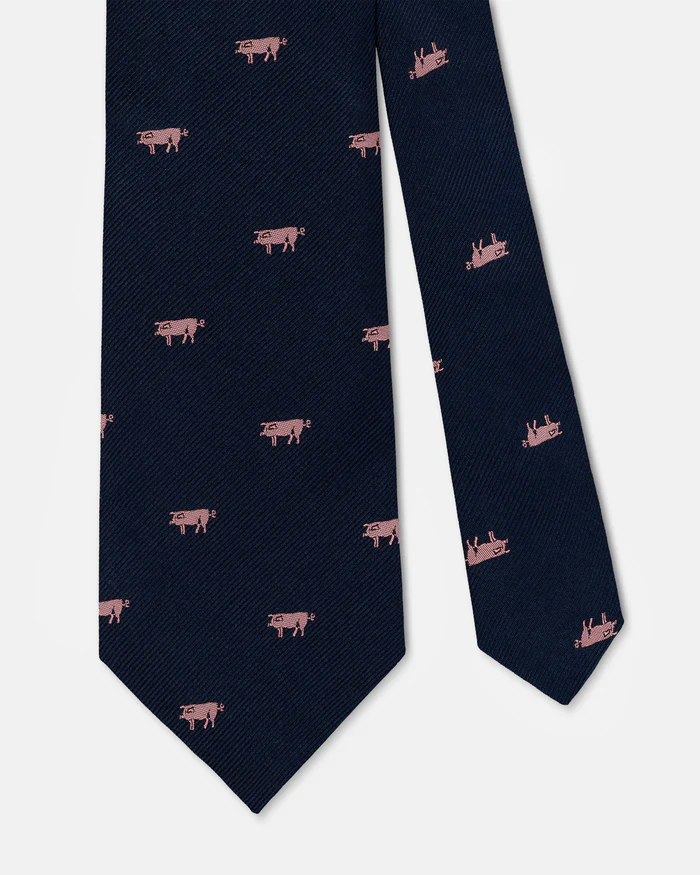
Necktie of the the Porcellian Club at Harvard
What Are Penny Loafers Without Pennies? By Laura Neilson
The explanation, ironically, is that it “makes no cents” to continue producing pennies:
Over the past 10 years, the total production cost of the penny has risen from 1.3 cents to 3.69 cents per penny. These production costs include materials, facilities, and overhead. The U.S. Mint projects an immediate annual savings of $56 million in reduced material costs by stopping penny production. Given the increasing number of non-cash transactions and the very low purchasing power of a single penny, the Department of the Treasury does not believe continued production is fiscally responsible or necessary to meet the needs of commerce in the United States.
What does this mean for that iconic staple of the Ivy Style wardrobe: the penny loafer? Probably not too much.
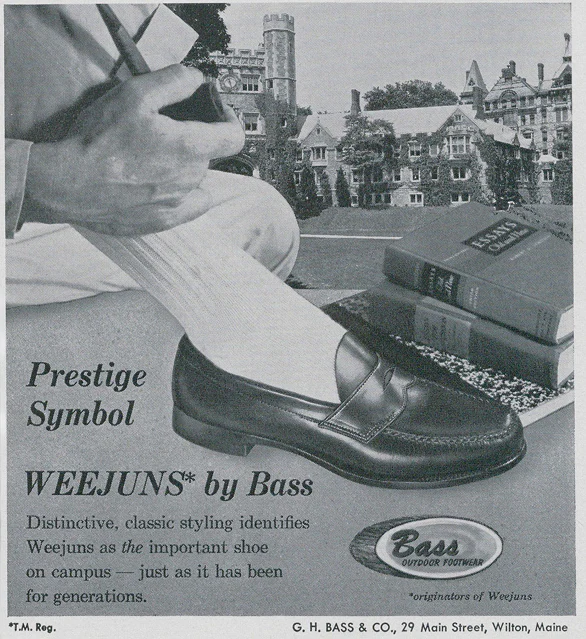
Admittedly, as a middle school student in the 1980s, I put pennies in my first pair of Bass Weejuns. I recall that several of my classmates did the same. In so doing, we were honoring a tradition that began with our parents generation. Laura Neilson provides the historical context:
When G.H. Bass introduced Americans to a laceless shoe style based on Norwegian fishermen’s slip-ons nearly a century ago, the brand’s classic Weejun, named for its Norwegian roots, featured a leather strap across the vamp with a small cutout slot. The design detail was later employed by prep schoolers, supposedly as a stash for spare phone change. The trend went viral, and by the mid-’50s the penny loafer was a wardrobe staple in East Coast prep and Ivy League culture.
Today, many of us wear some version of the penny loafer, but few (children perhaps) actually put pennies in their shoes. So the loss of the penny in American currency does not bode poorly for the penny loafer. If anything, it strengthens the penny loafer’s nostalgia value. And nostalgia, as Town & Country suggests, is what Preppy Style – and Ivy Style – are all about.
I disagree that “nostalgia” is “all it’s about”. I dress in what I would describe as “traditional American” style with some “preppy” elements, like madras ties in the summer, which I wear on some special occasions. Otherwise, I definitely try not to resemble a Polo Ralph Lauren model. My wardrobe is also not exclusively “American” and includes some Italian and other European influences. After all, I live in NYC — the most diverse and cosmopolitan town in the world, and not a New England village. But to me it’s not so much about “nostalgia” as it’s about psychological comfort, convenience, and reliability. Dressing in Traditional American style is the easiest way to look conservative and professional without appearing too boring, and walk the line between overdressed and underdressed in today’s “business casual” world.
Having come of age in the 1950s and going to university in the 60s, I know that the term
preppy” wasn’t in popular use until the 1970s when designers picked it up as a way of commercializing their approach to Ivy-styled clothing. The distinction in terms is that “preppy” is self-reflectively Ivy in design, i.e. purposely a copy of the original, while “Ivy” (the older term) is considered more authentically reflecting a life style.
The “ Ivy” style emerged on the west coast in the late 50’s as reflection of the life of grace, good taste and understated competition. Clearly the “Ivy”look migrated from the north eastern bastions of private and privileged higher education to the egalitarian state schools ( UC Berkeley) and Prestigious private colleges ( Stanford). At CAL the key Ivy look was George Goode, followed by Vaughn’s. I still have a bow tie from George Goode’s . The term “ Prep
“ Came in late 60s and 70’s popularized in “ Love
Story”. The popularity of the style that symbolized old money and a relax life style financed by trust funds became democratized. It lost some of its exclusive luster. Anti-conformity reacting to the Man in the Gray Flannel Suit evolved into a bit of grunge ripped jeans, tie dyed shirts and bra burning and new freedom of expression. Today some long for the grace and tradition of the Ivy Prep look. Ralph Lauren stylized Ivy look — even in Olympic uniforms — also J Crew brought Prep Inspired look to the mass market. Long live the Prep style and what values it symbolizes. Cheers, Chips S
For any/all interested in replicating Oliver’s tweed, there are several options, including a tweed in the current W. Bill Shetland book and a Lovat Mill Cheviot. Take your pick or proceed with both.
It’s odd, but no one, male or female ever used these terms in my extended family except in reference to Love Story, which my parents, sister and I saw at a drive-in theater once summer not long after the movie came out. The style was simply how adult males dressed (and for special days/occasions teen-aged males too). My late mother used the term ‘classic’ a few times during my formative years when I groused about the need to dress well. Thank goodness the 70s-80s rocker aesthetic I once cultivated has receded in the rearview mirror by many years at this point. Maybe it’s not that the style has come back for the moment. Maybe some, at least, have come back to the style?
That is certainly how it was in my part of Virginia in the 70s and 80s, Heinz-Ulrich. More or less true in Washington, D.C. in the 80s as well, at least among lawyers and Hill types.
I heard of/about J. Press when during grad school— my early 30s (Classmate from NYC). was a known quantity, but only barely. Nobody wore Brooks Brothers; most had never heard of it.
Previously, all the way back to the cradle, we relied on the same (exceptional) stores/shops with which C-Ville is familiar. They were exemplary: the makers they used, the cloth books, the longstanding relationships (friendships) with loyal customers. Also, they remained stubbornly old-fashioned about certain details (specs) that set the dyed-in-the-wool traditionalists apart. 3/8” lapel stitching and lapped seams, steep center vent with angled stitching. Because of the settings, the élan vital was far more country (equestrian, fishing, hunting) than coastal.
“The style was simply how adult males dressed” may be translated, “ simply what my dad, brothers, friends, teachers, neighbors, fellow parishioners wore…”.
Charlottesville: three cheers for old Alvin-Dennis? And, of course, the Elliewood Ave. outpost that’s gone with the wind.
Thanks, S.E. Eljo’s is much missed in Charlottesville. Bill Kivligan’s shop (“The Men’s Store”) in Staunton, Virginia, was where I first saw things like Southwick sack suits, Sero shirts, repp and foulard ties, and Alden shoes, although it was some time before I could afford them. All of the local professional men seems to get their clothes there.
I never heard the term “Preppy” till Love Story. I saw the movie at 18 over Christmas break my freshman year in college. I thought Ali MacGraw was referring to where he went to school before undergrad. I grew up in the South, I knew where the wealthy went to school.
My father dressed very trad, but not much, he spent most of his clothing budget on golf clothing and shoes. Most of the time he wore military gear. Who influenced my taste in Ivy or collegiate clothing were my three older sisters, the oldest born in 1941, the last born in 1948 Japan. As long as I can remember my sisters wore Weejun Logan shoes an dressed a certain way. At 9 my mother and sisters decided I shouldn’t always live play clothes, jeans, tennis shoes, tees, camp shirts, sweat shirts. Off we drove to a mens/boys store in Oxford, Mississippi. I got some Weejuns, a blazer that actually fit, various OCBDs and trousers. I had often heard while tagging along shopping with my sisters the Term Ivy, but that day in Oxford I realized Ivy meant cool. A Ivy junky was born, I’ve dressed the same way ever since regardless of changing fashions.
Off topic, I know, but what caught my eye on the cover depicted was “Fifth Avenue Fight Club.” Turns out the article is about some sort of legal wranglings over the Pierre. What a disappointment. I was so hoping for amusing anecdotes about Upper East Side types putting on the gloves and beating the you-know-what out of each other or maybe rolling around on a mat, MMA-style, punching and pulling hair. Oh well. Some other time.
Oh yeah. It’s just clothing. Some signals one thing, and some signals something else. People who wear one can dress that way or dress the other or neither. It is, after all, what’s under the clothes that actually matters.
I’ve seen that plaid on the W. Bill page. Now I see that it is a bigger pattern than I thought. 1970 was about 3 years past the prime for Ivy. I really don’t like Oliver Barrett IV’s haircut. It looks uncomfortable, and reminds me of myself at that age.
Love Story is not great cinema, but it is an enjoyable movie to watch and certainly an iconic period piece. I must say, though, that I’ve always had questions about the casting.
Ryan O’Neal seems a shade too overtly macho to be Oliver Barrett, IV, scion of an über-WASP family. And Ali McGraw seems a shade too polished and snooty to be the daughter of an Italian-American baker from Cranston, RI. I guess they just weren’t quite as good at hiding their real-life identities as they should have been (O’Neal was a truly tough guy, a former Golden Gloves boxer from LA; McGraw was a Rosemary Hall and Wellelsey alum).
In order for the movie to really work, Oliver would have needed to be a tad more of a twit around the edges (tough, sure, because he was a hockey jock, but tough twits were a thing in the Ivy culture of the era) and Jennifer would have needed to be a bit rougher around the edges (Radcliffe-ish, sure, but with some measure of Cranston still visible and/or audible, the kind of high-low mixture that was also an Ivy/Seven Sisters thing at the time, especially among scholarship kids with a foot in two very different worlds).








I disagree that “nostalgia” is “all it’s about”. I dress in what I would describe as “traditional American” style with some “preppy” elements, like madras ties in the summer, which I wear on some special occasions. Otherwise, I definitely try not to resemble a Polo Ralph Lauren model. My wardrobe is also not exclusively “American” and includes some Italian and other European influences. After all, I live in NYC — the most diverse and cosmopolitan town in the world, and not a New England village. But to me it’s not so much about “nostalgia” as it’s about psychological comfort, convenience, and reliability. Dressing in Traditional American style is the easiest way to look conservative and professional without appearing too boring, and walk the line between overdressed and underdressed in today’s “business casual” world.
Having come of age in the 1950s and going to university in the 60s, I know that the term
preppy” wasn’t in popular use until the 1970s when designers picked it up as a way of commercializing their approach to Ivy-styled clothing. The distinction in terms is that “preppy” is self-reflectively Ivy in design, i.e. purposely a copy of the original, while “Ivy” (the older term) is considered more authentically reflecting a life style.
The “ Ivy” style emerged on the west coast in the late 50’s as reflection of the life of grace, good taste and understated competition. Clearly the “Ivy”look migrated from the north eastern bastions of private and privileged higher education to the egalitarian state schools ( UC Berkeley) and Prestigious private colleges ( Stanford). At CAL the key Ivy look was George Goode, followed by Vaughn’s. I still have a bow tie from George Goode’s . The term “ Prep
“ Came in late 60s and 70’s popularized in “ Love
Story”. The popularity of the style that symbolized old money and a relax life style financed by trust funds became democratized. It lost some of its exclusive luster. Anti-conformity reacting to the Man in the Gray Flannel Suit evolved into a bit of grunge ripped jeans, tie dyed shirts and bra burning and new freedom of expression. Today some long for the grace and tradition of the Ivy Prep look. Ralph Lauren stylized Ivy look — even in Olympic uniforms — also J Crew brought Prep Inspired look to the mass market. Long live the Prep style and what values it symbolizes. Cheers, Chips S
For any/all interested in replicating Oliver’s tweed, there are several options, including a tweed in the current W. Bill Shetland book and a Lovat Mill Cheviot. Take your pick or proceed with both.
W. Bill Shetland:
https://www.harrisons1863.com/product/wb12432/
Lovat Mill ‘Prince of Wales’:
https://lovatmill.com/200-years-of-tweed-1826-2026/
And/or Lovat Mill Kirkton 574
It’s odd, but no one, male or female ever used these terms in my extended family except in reference to Love Story, which my parents, sister and I saw at a drive-in theater once summer not long after the movie came out. The style was simply how adult males dressed (and for special days/occasions teen-aged males too). My late mother used the term ‘classic’ a few times during my formative years when I groused about the need to dress well. Thank goodness the 70s-80s rocker aesthetic I once cultivated has receded in the rearview mirror by many years at this point. Maybe it’s not that the style has come back for the moment. Maybe some, at least, have come back to the style?
Kind Friday Regards.
H-U
“The style was simply how adult males dressed.”
That is certainly how it was in my part of Virginia in the 70s and 80s, Heinz-Ulrich. More or less true in Washington, D.C. in the 80s as well, at least among lawyers and Hill types.
I heard of/about J. Press when during grad school— my early 30s (Classmate from NYC). was a known quantity, but only barely. Nobody wore Brooks Brothers; most had never heard of it.
Previously, all the way back to the cradle, we relied on the same (exceptional) stores/shops with which C-Ville is familiar. They were exemplary: the makers they used, the cloth books, the longstanding relationships (friendships) with loyal customers. Also, they remained stubbornly old-fashioned about certain details (specs) that set the dyed-in-the-wool traditionalists apart. 3/8” lapel stitching and lapped seams, steep center vent with angled stitching. Because of the settings, the élan vital was far more country (equestrian, fishing, hunting) than coastal.
“The style was simply how adult males dressed” may be translated, “ simply what my dad, brothers, friends, teachers, neighbors, fellow parishioners wore…”.
Charlottesville: three cheers for old Alvin-Dennis? And, of course, the Elliewood Ave. outpost that’s gone with the wind.
Thanks, S.E. Eljo’s is much missed in Charlottesville. Bill Kivligan’s shop (“The Men’s Store”) in Staunton, Virginia, was where I first saw things like Southwick sack suits, Sero shirts, repp and foulard ties, and Alden shoes, although it was some time before I could afford them. All of the local professional men seems to get their clothes there.
I never heard the term “Preppy” till Love Story. I saw the movie at 18 over Christmas break my freshman year in college. I thought Ali MacGraw was referring to where he went to school before undergrad. I grew up in the South, I knew where the wealthy went to school.
My father dressed very trad, but not much, he spent most of his clothing budget on golf clothing and shoes. Most of the time he wore military gear. Who influenced my taste in Ivy or collegiate clothing were my three older sisters, the oldest born in 1941, the last born in 1948 Japan. As long as I can remember my sisters wore Weejun Logan shoes an dressed a certain way. At 9 my mother and sisters decided I shouldn’t always live play clothes, jeans, tennis shoes, tees, camp shirts, sweat shirts. Off we drove to a mens/boys store in Oxford, Mississippi. I got some Weejuns, a blazer that actually fit, various OCBDs and trousers. I had often heard while tagging along shopping with my sisters the Term Ivy, but that day in Oxford I realized Ivy meant cool. A Ivy junky was born, I’ve dressed the same way ever since regardless of changing fashions.
“School before undergrad”. That is exactly what preppy meant at the time, and is how I use the term.
Off topic, I know, but what caught my eye on the cover depicted was “Fifth Avenue Fight Club.” Turns out the article is about some sort of legal wranglings over the Pierre. What a disappointment. I was so hoping for amusing anecdotes about Upper East Side types putting on the gloves and beating the you-know-what out of each other or maybe rolling around on a mat, MMA-style, punching and pulling hair. Oh well. Some other time.
Is anyone else getting tired of this Ivy vs preppy vs traditional semantic teapot tempest?
Oh yeah. It’s just clothing. Some signals one thing, and some signals something else. People who wear one can dress that way or dress the other or neither. It is, after all, what’s under the clothes that actually matters.
I’ve seen that plaid on the W. Bill page. Now I see that it is a bigger pattern than I thought. 1970 was about 3 years past the prime for Ivy. I really don’t like Oliver Barrett IV’s haircut. It looks uncomfortable, and reminds me of myself at that age.
Since you put it that way, it did occur to me the other day that one more round of this might be counterproductive in the longer term.
Kind Regards,
H-U
Love Story is not great cinema, but it is an enjoyable movie to watch and certainly an iconic period piece. I must say, though, that I’ve always had questions about the casting.
Ryan O’Neal seems a shade too overtly macho to be Oliver Barrett, IV, scion of an über-WASP family. And Ali McGraw seems a shade too polished and snooty to be the daughter of an Italian-American baker from Cranston, RI. I guess they just weren’t quite as good at hiding their real-life identities as they should have been (O’Neal was a truly tough guy, a former Golden Gloves boxer from LA; McGraw was a Rosemary Hall and Wellelsey alum).
In order for the movie to really work, Oliver would have needed to be a tad more of a twit around the edges (tough, sure, because he was a hockey jock, but tough twits were a thing in the Ivy culture of the era) and Jennifer would have needed to be a bit rougher around the edges (Radcliffe-ish, sure, but with some measure of Cranston still visible and/or audible, the kind of high-low mixture that was also an Ivy/Seven Sisters thing at the time, especially among scholarship kids with a foot in two very different worlds).