Fit For A Gentleman: Brooks Brothers and Roger Federer
August 28, 2026
By Matthew Longcore
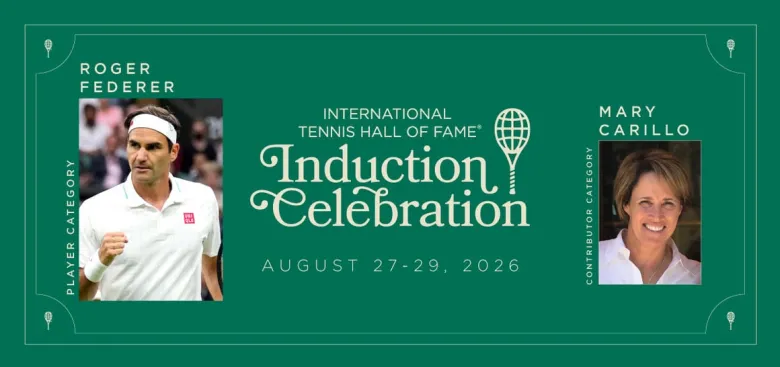
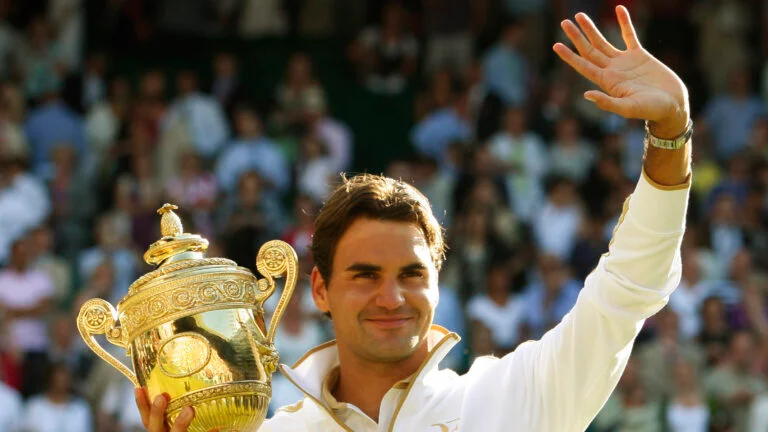
Each summer, the incoming inductees at the International Tennis Hall of Fame in Newport, Rhode Island are welcomed into the esteemed club with the presentation of their official custom-made Brooks Brothers blazers. This year’s blazer presentation will take place during the Fit for Fame event on Friday, August 28. The event will include a cocktail party and a seated dinner, complete with the incoming ITHF Class of 2026 and appearances by past Hall of Famers. Federer will be inducted into the Hall of Fame on Saturday, August 29.
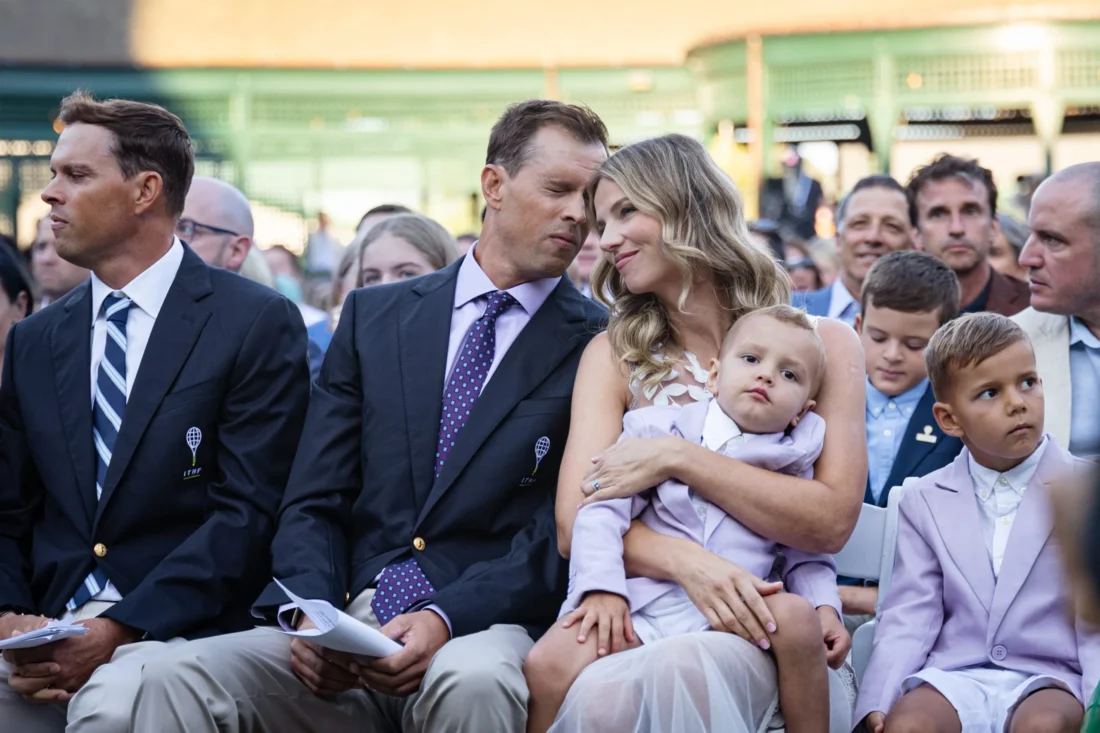
Mike and Bob Bryan in their Brooks Brothers blazers at the 2025 International Tennis Hall of Fame Induction Ceremony in Newport, Rhode Island (Credit: Louis Walker III/What’sUpNewp) Credit: Louis Walker III
I have had the honor of joining my friends from Brooks Brothers at this event for the past two years. This year will mark my third appearance at the celebration weekend. I am especially looking forward to the blazer presentation ceremony, which will include twenty-time major champion Roger Federer who will be inducted in the Player Category, along with sportscaster and journalist Mary Carillo who will be inducted in the Contributor Category.
Roger Federer is one of my favorite athletes of all time. His contributions to the sport of tennis are legendary. According to the International Tennis Hall of Fame:
“Federer is one of only eight men in tennis history to achieve a career Grand Slam in singles and was the first male player in tennis history to win 20 major singles titles. He held the world No. 1 ranking for a record 237 consecutive weeks, ultimately holding that spot for 310 total weeks throughout his career. During his ATP career, he captured 103 singles titles, received the Stefan Edberg Sportsmanship Award 13 times, and was voted as ATP Fan Favorite for a record 19 consecutive years. Federer captured an Olympic gold medal in doubles in 2008, led Switzerland to the 2014 Davis Cup title and created the Laver Cup to honor Hall of Famer Rod Laver’s global legacy.”
It is entirely fitting that Roger Federer – the ultimate gentleman of the tennis world – should be presented with a Brooks Brothers blazer on the hallowed grounds of the legendary Newport Casino. In many ways, Federer – like the seaside resort of Newport itself – is a throwback to a bygone era.
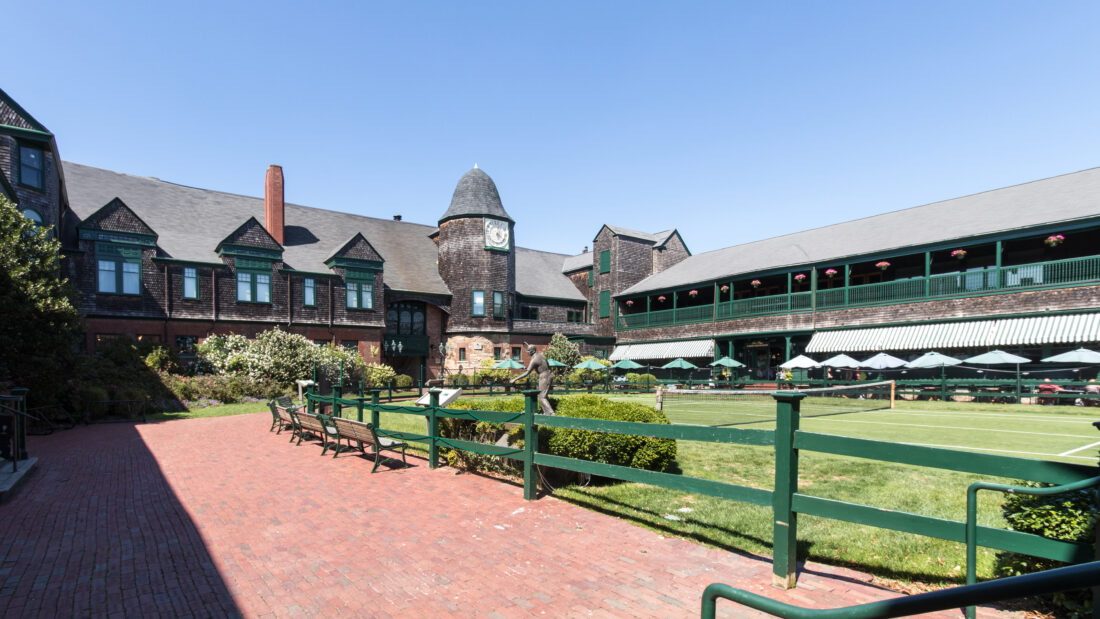
ITHF Grounds and Newport Casino building by Steve, CC BY-SA 2.0, via Wikimedia Commons
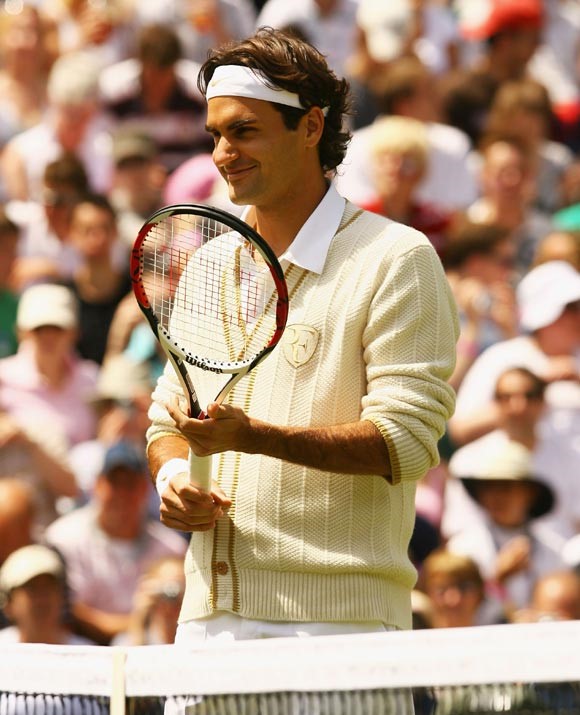
Federer is known for his sportsmanship, grace, and humility both on and off the court. During his career, he played the game of tennis beautifully, making outstanding athletic achievements look effortless. Federer is widely admired for displaying composure and self-control under pressure, and for his respectful treatment of rivals, officials, and fans. His philanthropic efforts include the Roger Federer Foundation, which supports early childhood education.
Roger Federer visited Malawi in 2022 (Photographer: Jens Honoré) SOURCE: https://www.atptour.com/en/news/roger-federer-foundation-20th-anniversary
Federer is the epitome of a “sporting gentleman” as described by the late E. Digby Baltzell. Baltzell was a sociologist at the University of Pennsylvania who popularized the acronym “WASP” and famously chronicled the American upper class. Baltzell, from an old money Philadelphia family, was very much a member of the class that he wrote about.
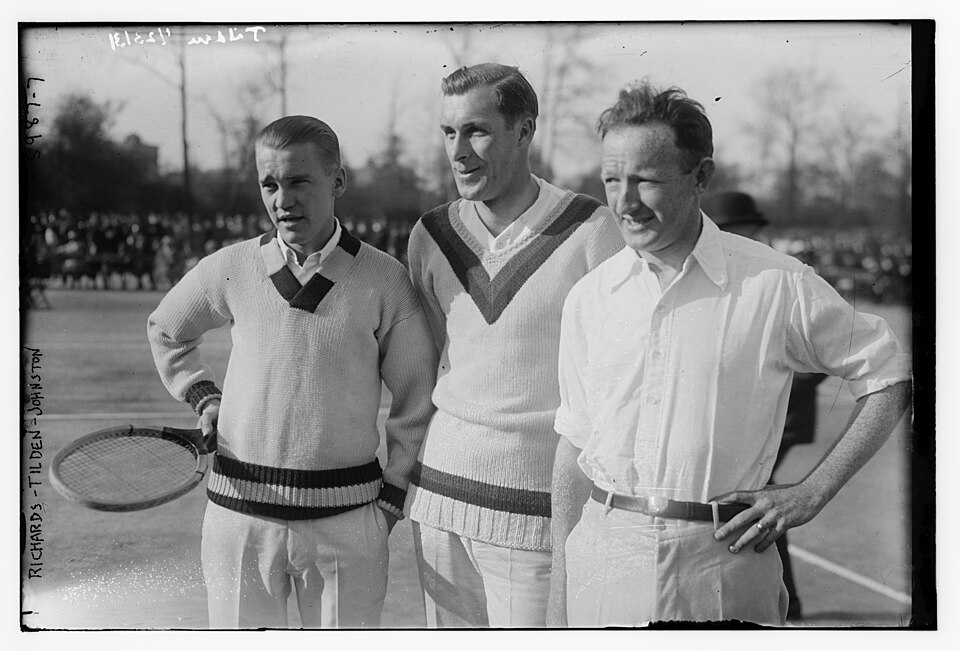
Vincent Richards, Bill Tilden and Bill Johnston at the 1922 Davis Cup by The Library of Congress, Public domain, via Wikimedia Commons
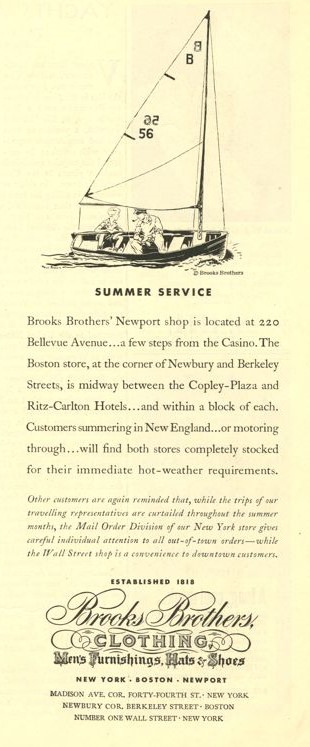
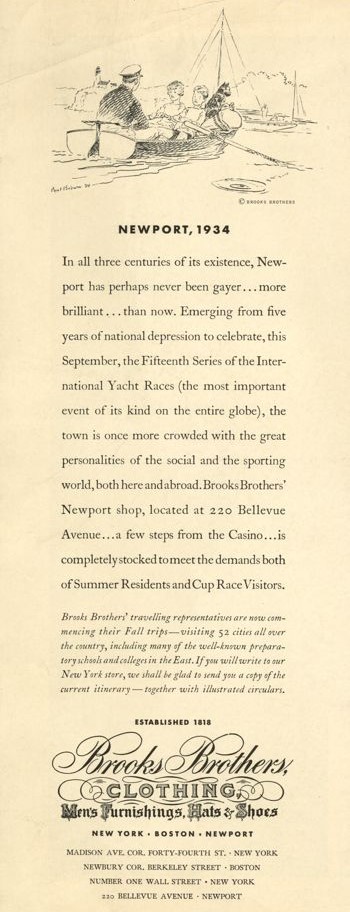
Baltzell’s work frequently intersects with the history of traditional Ivy League menswear and institutions like Brooks Brothers, representing the cultural and sartorial codes of the 20th century American establishment. In his book The Protestant Establishment Revisited (1991), Baltzell references Brooks Brothers – founded in 1818, America’s oldest retailer – as the definitive establishment clothing brand of the mid-20th century. Baltzell recalls that during his time as a doctoral student at Columbia University in the early 1950s, “ambitious graduate students still looked to Brooks Brothers rather than the local Army and Navy Store for their sartorial standards.” (Baltzell 1991: 210)
Ivy League students dressed in tweed jackets, oxford button down shirts, and bow ties. And they did not necessarily come from upper class WASP backgrounds. For members of the upper class, like Baltzell, this style of clothing was a birthright. For others, it became an aspirational style.
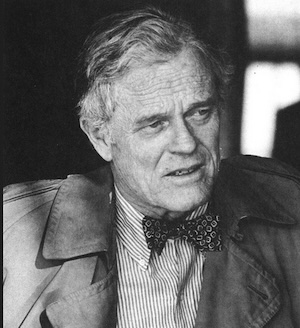
Sociologist and historian E. Digby Baltzell
Ivy League style, as an aspirational style, would reach a crescendo of popularity with the publication of Take Ivy (1965), the stylistic blueprint for Japanese youth interested in “American Traditional” or “Ametora” style. However, this would all change by the late 1960s, with the arrival of the anti-establishment counterculture and the hippie movement. Whereas college students of all socioeconomic backgrounds had once aspired to dress like their privileged classmates from private preparatory schools, this became unfashionable in the countercultural hippie era. Baltzell writes, “And very soon everyone gave up trying, as the Brooks Brothers dress code was replaced by the blue-jean-and-backpack campus culture of the 1960s.” (Baltzell 1991: 223)
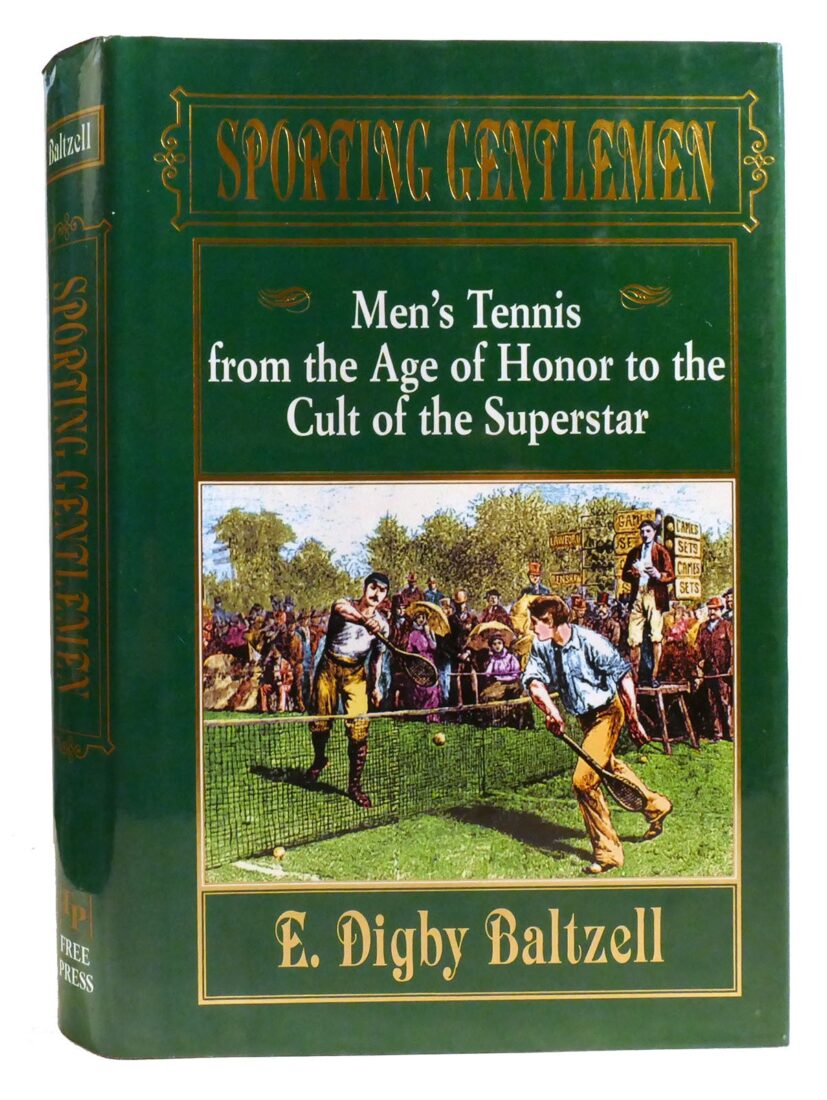
Baltzell lamented the late 1960s as a time when high standards of propriety and decorum disappeared from American culture. This was evident to Baltzell not only in the decline of proper dress, but also in the decline of proper behavior. In his book Sporting Gentlemen: Men’s Tennis from the Age of Honor to the Cult of the Superstar (1995), Baltzell covers the origins of the sport with a focus on the tennis code of honor rooted in the cricket code of the Anglo-American upper class in the late 19th century.
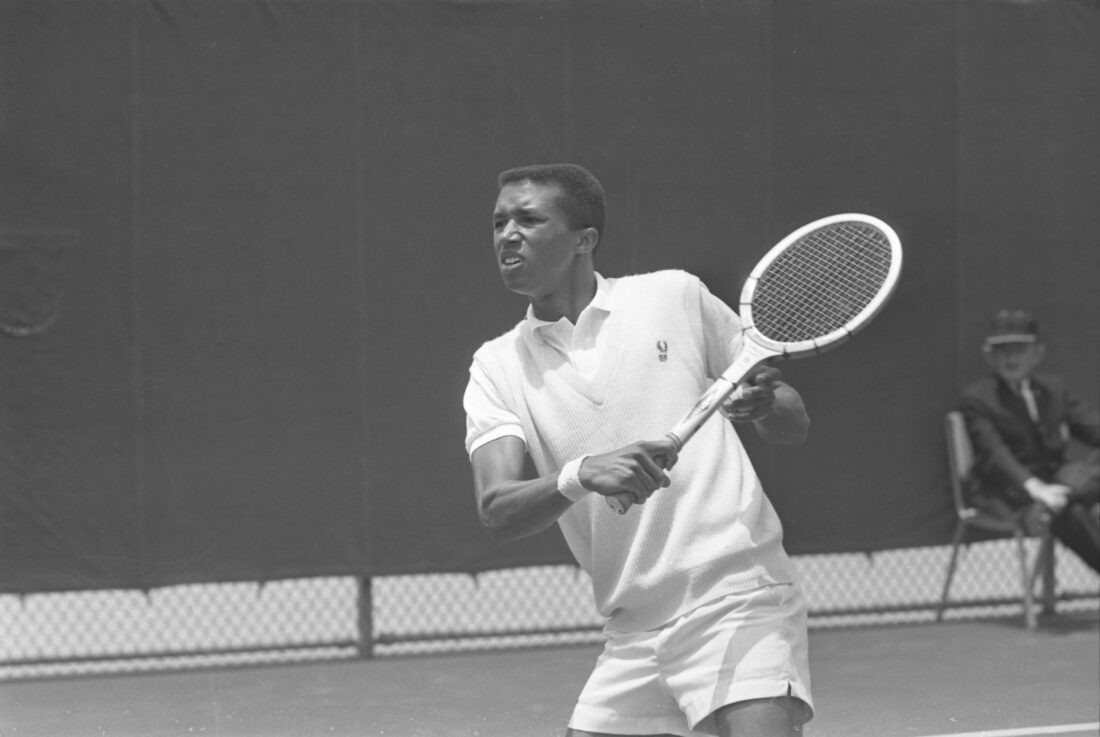
Arthur Ashe in the 1966 Southern California Sectional by Los Angeles Daily News – Photos in the Los Angeles Daily News collection at the UCLA library, CC BY 4.0 via Wikimedia Commons
The book explores how by the late 1960s and 1970s, a genteel honor code of sportsmanship was replaced with a vulgar superstar culture of showmanship. Gentlemen tennis players in the mold of Arthur Ashe fell out of fashion, eclipsed by “bad boys” like Jimmy Connors. Known for his frequent arguments with umpires and obscene gestures, Connors was just one of many professional tennis players who changed the game from the polite country club sport it had once been.
Sporting Gentlemen: Men’s Tennis from the Age of Honor to the Cult of the Superstar (1995) by E. Digby Baltzell
Digby Baltzell passed away in 1996, the same year that a young Roger Federer – at the age of 14 – joined the ITF junior tennis circuit and played his first match there at a grade-2 tournament in Switzerland. I believe Baltzell would be greatly pleased to see that in the decades since his passing, men’s tennis has once again become a place for sporting gentlemen.
Roger Federer has certainly not been alone in forging this upward trajectory. Players such as Pete Sampras, Rafael Nadal, and Jannik Sinner all exhibit gentlemanly qualities – and are all worthy of the International Tennis Hall of Fame (Sampras was inducted in 2007). But Federer, more than anyone, epitomizes the virtues what Baltzell calls a “sporting gentleman.”
Federer was born in Basel, Switzerland on August 8, 1981. The Federer family is an old Swiss family which originates in Berneck, St. Gallen. At age eight, his mother, Lynette, enrolled him in the elite junior program of the Old Boys Tennis Club which was established in 1927 in Basel. Federer’s first Grand Slam win came at Wimbledon in 2003, when he defeated Pete Sampras.
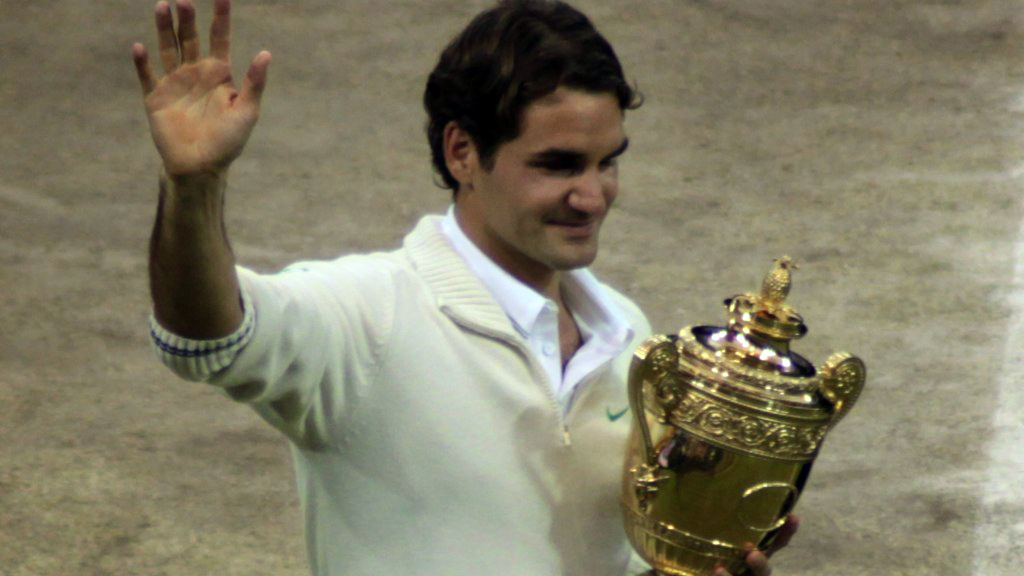
Roger Federer, Winner, Centre Court, Wimbledon 2012 by Robbie Dale, CC BY-SA 2.0, via Wikimedia Commons
The world’s most recognised sportsman in his glorious heyday, Federer switched the globe onto tennis with his beautiful game, record-breaking feats and sportsmanship. Almost 20 years since E. Digby Baltzell’s Sporting Gentlemen – a lament for how far professional tennis had strayed from its Victorian values of honour and civility, the Swiss maestro has restored tennis to a game of sporting gentlemen. The bad boys have been banished. Federer has made nice the new normal.
Tennis has not had a more eloquent spokesman than Federer, who submits to press conferences in three languages. The onerous load speaks of his responsibility to the game but also affords him a global reach unmatched by any other champion. Federer’s character and good deeds off the court have brought honour to tennis as much as his brilliant record. No champion has been more admired and adored.
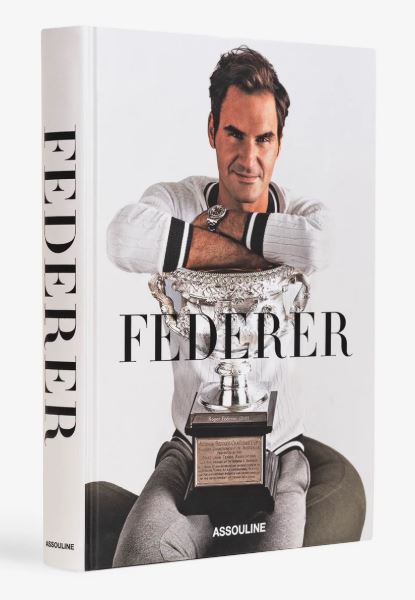
Federer (2024) by Doris Henkel
In an article for the Tennis Channel, Steve Tignor writes about the Norman Brookes Challenge Cup, named after the great Australian tennis champion who “was, in many ways, the Federer of his day.” Tignor adds that “If Baltzell were writing today, he might have compared Brookes to our own Roger Federer.”
Sigrid Neubauer describes Federer as “the ultimate gentleman of sports” stating, “In the grueling world of professional sports, where the space for mistakes – professional or personal – is ever shrinking, Roger Federer not only stands out as one of the greatest tennis players of all time but has also distinguished himself as a gentleman on and off-court.”
Roger Federer plays a return to Sjeng Schalken, of the Netherlands, during their men’s singles quarter final match at the All England Lawn Tennis Championships at Wimbledon, July 3, 2003. (AP Photo/Alastair Grant, File) Kirsty Wigglesworth/AP Photo
Federer has been the recipient of the prestigious Stefan Edberg Sportsmanship Award a record 13 times, voted on by his own peers on the ATP tour. During his career, he was famous for correcting missed baseline calls in favor of his opponents, waiting patiently for crowd disruptions to settle, and routinely applauding great shots hit against him. Always gracious in defeat, Federer maintained a reputation for treating his rivals with dignity and addressing the public with humility.
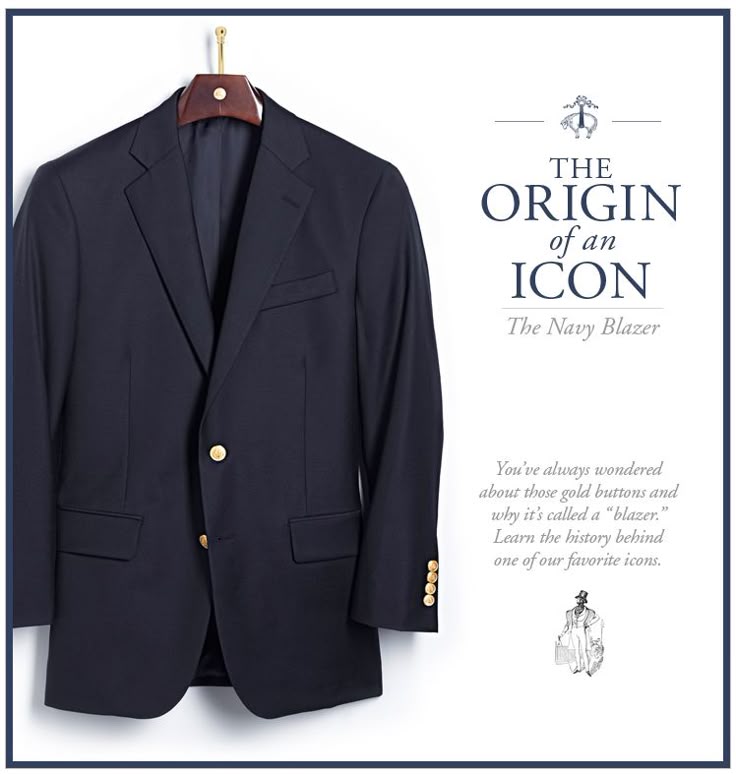
A navy blazer from Brooks Brothers has long been a staple of a gentleman’s wardrobe. I look forward to joining my friends from Brooks Brothers in Newport on August 28 to watch them present this blazer to the ultimate gentleman of tennis.
Interesting article and I’m not even much of a tennis fan, though I very much support good sportsmanship as with Federer and Jack Nicklaus, among others.
Clarey’s terrific biography, The Master: The Long Run and Beautiful Game of Roger Federer, offers us well-expressed, detailed insight into how a prominent athlete can set the standard not only for his sport, but also the human qualities of decency, honor, dedication, and all-around good-guy-ness.
Jim, thank you for the recommendation. I just ordered a copy of Christopher Clarey’s book. Hope to read some of it before the ITHF celebration in Newport next weekend.
Re: Kenny’s thought, Fred Perry had a working class background, which was unusual for a Wimbledon champion of that era. The so-called gentlemen at the All England Club looked down on him and were consistently rude. Perry just kept on winning.
On a related note, Arthur Ashe came from a working-class black family in segregated Virginia. His father worked as a handyman. E. Digby Baltzell considered Ashe to be the ultimate embodiment of the gentleman code in tennis and the last best example of traditional sportsmanship, honor, and grace. According to Baltzell, “the moral life of Arthur Ashe has constantly renewed my faith in the staying power of the gentlemanly ideal.”
I remember being mesmerized by Ashe’s autobiography about a thousand years ago. He was graceful and gentlemanly, but he was also courageous in an old-fashioned way. He didn’t seek attention for himself, but he did seek attention to an idea. At the height of the apartheid controversy, he entered a tournament in South Africa. He caught a lot of flak from Black leaders who thought he was appeasing the South Africans. They didn’t realize he as forcing the racists to sit and watch a Black man who was more elegant and intelligent than they could ever hope to be. He made a difference.
I have observed that several lifetime sports have undergone extreme transformation in our lifetimes, making them much more focused on equipment, clothing, and performance. The near vanishing of tennis whites occurred as wooden racquets gave way to racquets of metal, graphite, and such with larger heads, changing fundamentally the way thevgame of tennis was played. Similar changes occurred in golf with the proliferation of game improvement clubs, the ubiquity of golf carts, and the movement to more athletic shoes and clothes. Competitive sailing has retained much, but the site of foiling Moths is disconcerting. I am sorry to see these advances not because I reject improvement, but because I prefer the improvement to be the product of the lifetime dedication of the players, not the product of detached engineers.
Tim, I agree with you completely. I am a sailor in a club with an active racing program. Many of us work to improve our skills, which is admirable. Others simply look to upgrading their boats with the best equipment and amenities, which takes the element of sportsmanship out of the sport.
I belong to a local (intentionally small and very discreet) clay court tennis club. Only four courts, surrounded by patch of woods. The players are encouraged to use wooden racquets and higher string tension. I hear it’s now a bit of a movement — “slow tennis.” A lot of moon balls and lobs. Intentionally amateur.
Wonderful piece and the comments about the changes to sports equipment to make offense more attractive to spectators, and I would say distance and power more equalizing (but not really) to club level players is right on. Hear! Hear! for wood rackets and traditional size golf club heads. If they were good enough for Kramer, Perry and Laver, for Jones, Hogan and Palmer they should be good enough today. But admittedly, I like most everything better the way it used to be.
Baltzell’s book about Puritans (Boston) and Quakers (Philadelphia) is illuminating for a variety of reasons — that may appeal to the rarely seen modern-day WASP. A lecture on the book confirmed that both cultures shared an appreciation for the slow and the deliberate — style that’s unhurried, even plodding. And, favoring the plain style, lacking in ornamentation. Very few subcultures in America retain this quintessentially WASPy manner of being. The natural habitats would still include the Congregational and Friends meeting houses and related institutions.
Also of social, cultural (and academic) significance is Baltzell’s take on the Protestant Establishment (Liberal/Mainline Protestantism). Let’s recall that this crowd was the initial and primary audience and customer/client base for old Brooks, J. Press, Chipp, Langrock, etc. etc. Without high church Episcopalians, Presbyterians, and New England Congregationalists (descendants of Puritans), there’d have been no such thing (indeed, no need for) “Ivy style.”
The distinction between high church and low church Episcopalians is interesting, and I wonder if low church as I knew it in Virginia in the 1950s and 1960s even exists any more! When I go “home” to the east coast, church seems much higher than it once did. It may be like wooden racquets, going quietly away. However, I do not find these changes nearly as unsettling as the preppy displacement of “plain style, lacking in ornamentation.” I still appreciate “the slow and the deliberate.”









Interesting article and I’m not even much of a tennis fan, though I very much support good sportsmanship as with Federer and Jack Nicklaus, among others.
It’s great to see Arthur Ashe wearing a Fred Perry polo shirt. The brand’s “made in England” polos, M2 and M12, remain excellent.
There remains to this day nothing in the world of sports quite so elegant as tennis whites.
Clarey’s terrific biography, The Master: The Long Run and Beautiful Game of Roger Federer, offers us well-expressed, detailed insight into how a prominent athlete can set the standard not only for his sport, but also the human qualities of decency, honor, dedication, and all-around good-guy-ness.
Jim, thank you for the recommendation. I just ordered a copy of Christopher Clarey’s book. Hope to read some of it before the ITHF celebration in Newport next weekend.
Re: Kenny’s thought, Fred Perry had a working class background, which was unusual for a Wimbledon champion of that era. The so-called gentlemen at the All England Club looked down on him and were consistently rude. Perry just kept on winning.
On a related note, Arthur Ashe came from a working-class black family in segregated Virginia. His father worked as a handyman. E. Digby Baltzell considered Ashe to be the ultimate embodiment of the gentleman code in tennis and the last best example of traditional sportsmanship, honor, and grace. According to Baltzell, “the moral life of Arthur Ashe has constantly renewed my faith in the staying power of the gentlemanly ideal.”
I remember being mesmerized by Ashe’s autobiography about a thousand years ago. He was graceful and gentlemanly, but he was also courageous in an old-fashioned way. He didn’t seek attention for himself, but he did seek attention to an idea. At the height of the apartheid controversy, he entered a tournament in South Africa. He caught a lot of flak from Black leaders who thought he was appeasing the South Africans. They didn’t realize he as forcing the racists to sit and watch a Black man who was more elegant and intelligent than they could ever hope to be. He made a difference.
I have observed that several lifetime sports have undergone extreme transformation in our lifetimes, making them much more focused on equipment, clothing, and performance. The near vanishing of tennis whites occurred as wooden racquets gave way to racquets of metal, graphite, and such with larger heads, changing fundamentally the way thevgame of tennis was played. Similar changes occurred in golf with the proliferation of game improvement clubs, the ubiquity of golf carts, and the movement to more athletic shoes and clothes. Competitive sailing has retained much, but the site of foiling Moths is disconcerting. I am sorry to see these advances not because I reject improvement, but because I prefer the improvement to be the product of the lifetime dedication of the players, not the product of detached engineers.
Tim, I agree with you completely. I am a sailor in a club with an active racing program. Many of us work to improve our skills, which is admirable. Others simply look to upgrading their boats with the best equipment and amenities, which takes the element of sportsmanship out of the sport.
I belong to a local (intentionally small and very discreet) clay court tennis club. Only four courts, surrounded by patch of woods. The players are encouraged to use wooden racquets and higher string tension. I hear it’s now a bit of a movement — “slow tennis.” A lot of moon balls and lobs. Intentionally amateur.
Bravo! I will continue to walk the golf course, carrying my bag and playing blades as long as my knees allow!
Wonderful piece and the comments about the changes to sports equipment to make offense more attractive to spectators, and I would say distance and power more equalizing (but not really) to club level players is right on. Hear! Hear! for wood rackets and traditional size golf club heads. If they were good enough for Kramer, Perry and Laver, for Jones, Hogan and Palmer they should be good enough today. But admittedly, I like most everything better the way it used to be.
Baltzell’s book about Puritans (Boston) and Quakers (Philadelphia) is illuminating for a variety of reasons — that may appeal to the rarely seen modern-day WASP. A lecture on the book confirmed that both cultures shared an appreciation for the slow and the deliberate — style that’s unhurried, even plodding. And, favoring the plain style, lacking in ornamentation. Very few subcultures in America retain this quintessentially WASPy manner of being. The natural habitats would still include the Congregational and Friends meeting houses and related institutions.
Also of social, cultural (and academic) significance is Baltzell’s take on the Protestant Establishment (Liberal/Mainline Protestantism). Let’s recall that this crowd was the initial and primary audience and customer/client base for old Brooks, J. Press, Chipp, Langrock, etc. etc. Without high church Episcopalians, Presbyterians, and New England Congregationalists (descendants of Puritans), there’d have been no such thing (indeed, no need for) “Ivy style.”
The distinction between high church and low church Episcopalians is interesting, and I wonder if low church as I knew it in Virginia in the 1950s and 1960s even exists any more! When I go “home” to the east coast, church seems much higher than it once did. It may be like wooden racquets, going quietly away. However, I do not find these changes nearly as unsettling as the preppy displacement of “plain style, lacking in ornamentation.” I still appreciate “the slow and the deliberate.”
I’m only a very casual tennis fan, so I appreciated learning more about Federer. Sounds like a great event.