The Andover Shop and Constantine Valhouli: Interview Part 2
July 17, 2025
Interview Part 2 with Constantine Valhouli, author of Miles, Chet, Ralph & Charlie: An oral history of The Andover Shop
Back in February, Ivy Style editor Matthew Longcore had the opportunity to interview Constantine Valhouli, author of a book about The Andover Shop. Here is Part 1. We reconnected recently to continue our conversation. This is Part 2.
Miles, Chet, Ralph & Charlie: An oral history of The Andover Shop
IS: Which clothing items from The Andover Shop would you consider to be the most iconic?
The Andover Shop is credited with either inventing or popularizing patchwork tweed garments in, I believe, the 1960s. Their patchwork trousers, waistcoats, and jackets are truly works of art. They balance the different patches in a way that color ‘reflects’ from one patch to another –– a blue tweed beside a neutral with a blue overcheck, for example. On one occasion, they even selected the individual tweeds for a bespoke patchwork waistcoat to accompany the specific colors that the client favored in coats and shirts.
However, Charlie advised clients to only ever wear one of these garments at a time. And never too regularly. Otherwise, you become “that guy.” And Charlie never wanted his clients to become that guy.
Patchwork Tweed from The Andover Shop
IS: What is the one clothing item that every customer of The Andover Shop must own?
Charlie did not want everyone to come out of The Andover Shop looking the same, but rather looking more like themselves. He did suggest that whatever you wore most often –– whether that was a suit, a blazer or tweed coat, or something more casual –– to purchase better versions of these that were well tailored.
G. Bruce Boyer
IS: Are “ivy style” and “preppy style” the same? If not, how do they differ?
I’m going to turn to the wisdom of Bruce Boyer and Richard Press (the former CEO of J. Press and the grandson of founder Jacobi Press) to answer this one. From the turn of the last century until the Second World War, what we now call “ivy style” was the very private purview of a narrow swath of society –– those who went to college, before student loans made it more broadly accessible. The clothiers who served this clientele thus referred to this clothing as “collegiate” or “natural shoulder.” It only became known as “ivy style” later. My guess is that the term emerged during the GI Bill years, which enabled returning veterans to attend college at the government’s expense. This suddenly made possible social and professional mobility for a significant segment of young people, and the style long associated with the elite universities for a period of perhaps twenty years became the national style of the United States.
Ivy League style in LIFE Magazine
(That’s probably more than you ever wanted to know about how ivy style got its name).
Ivy style began to decline in the 1960s. What had begun as a rebellious, youthful, fresh style –– something which stood in opposition to the more stiff and formal Victorian style –– began to have stodgy or elitist connotations among the general public. Another way of saying that is that a style which had long been apart from fashion cycles, had been in fashion for twenty years and suddenly fell out of fashion as the activism of the 60s was accompanied by its own set of clothing signifiers.
Preppy style, at least in my view, represented the revival (and reinterpretation) of aspects of ivy style. But it felt divorced from the institutions and underlying beliefs embodied in the earlier style. It echoed and rhymed with the original but did not copy it exactly. Nor was it meant to. The bright colors of the early 80s felt like a reaction to the black worn by the punk and experimental musicians of the late 70s. But the biggest differentiator from the original ivy style was, I think, the logos. The alligators and crocodiles and crocogators and polo ponies. This was not something we would have seen earlier, and nudged the style more toward ephemeral fashion than timeless style.
Lacoste polo shirts
IS: Ivy style is very traditional but also evolves with changing times. How so?
I’m again thinking back to discussions with Charlie Davidson. With his stores at the edge of Harvard and Phillips Academy, he was constantly exposed to what young people were listening to and reading. What they aspired to. It was a happy exchange: he exposed young people to traditional style and young people kept him up-to-date and culturally relevant. He’s known for his love of jazz, but in his 80s and 90s, he was also listening to cutting-edge rap music.* This influenced the selection of products in the Shop. There was a playfulness to his selections that feels missing in many other clothiers. And it reflected his curiosity.
The jazz musicians of the 1950s and 60s remixed patrician clothing in ways that weren’t usually done. They wore the clothing of lawyers and professors but no one would mistake them for either one. In the beginning, the jazz musicians copied the ivy students and later, students across the United States copied the well-dressed jazz musicians.
Jazz legend Miles Davis
As the culture changed, so too did the clothing.
When I looked back over their catalogs for the book research, it was fascinating to see the gradual evolution. There were periods of exuberant color and patterns, and those of understated tones. If I were to use a financial term to explain this, ivy style would be a low-beta stock –– one which moves less than usual in response to market changes. If fashion favors very tight clothing, perhaps the silhouette at traditional stores might become ever so slightly more trim. But just slightly. Ditto in the opposite direction.
Party at J. Mueser for Miles, Chet, Ralph & Charlie
Charlie was adamant about people not looking like a 1930s or 1950s caricature. Insistent that one’s clothing did not attract attention to itself. And if the clothing were completely unchanging, it would begin to look odd to the contemporary eye.
* I found myself channeling this aspect of Charlie recently when I had to explain who both Josephine Baker and Chappell Roan were to a young friend in university. There may have been some choice Swedish invective used.
The back of G. Bruce Boyer, which is still more stylish than the front of most people
IS: If you were to create a syllabus for a course on Ivy style, which authors and books would you include?
Oh, what a wonderful question! Everything by G. Bruce Boyer and Richard Press. And a few other books on style specifically, including:
Old Money by Nelson W. Aldrich Jr. (with whom I wrote The Master of Eliot House).
A Separate Peace by John Knowles. Phineas embodies the nonchalance of ivy style.
But so much of style not about clothing. Elegance is an extension of humility, empathy, and compassion. Of a sincere and ongoing curiosity about the world and about other people. An extension of not just the books one has read, but of wearing their learning lightly. (I’m a terrible example of all this. A complete barbarian who spends most of his time alone, writing books, with the table manners of a feral raccoon).
Nelson W. Aldrich Jr. in 1988, the year he published “Old Money: The Mythology of Wealth in America” Credit: Marianne Barcellona/Getty Images
IS: How do you see themes from your book intersecting with themes from other books like The Protestant Establishment by E. Digby Baltzell and Old Money by Nelson Aldrich?
Both are such wonderful books, and offer social context for what we’re discussing here in terms of material history. The Establishment-with-a-capital-E is not, and has never been, monolithic. There are old families with distinguished names but without family fortunes, newer fortunes without the social graces, many people somewhere in the middle.
Charlie and The Andover Shop served an unusual cross-section of consummate insiders and absolute outsiders –– Black jazz musicians in the years before the Civil Rights Act was signed into law. In the 1950s and 60s, there were many people who used their privilege on behalf of others, so that the country could live up to its ideals. (And along these lines, Nelson’s sister Frinde Aldrich Maher has written a memoir of her experiences as an activist in the 1960s that explores this theme of culture and counterculture, and how they intersect. I’ve had the privilege of seeing a galley of the book, and cannot recommend Class Encounters highly enough when it comes out later this year).
E. Digby Baltzell, the University of Pennsylvania sociologist who popularized the acronym WASP
IS: Are you working on any new projects right now?
Thank you for asking. I just wrapped up the first leg of a book tour for The Master of Eliot House, with NYC events at The Armoury and J.Meuser. And in unerring belief in the power of coffee and gin-and-tonics, I’m currently doing two projects at once –– both due before the end of the year. The first is a yet-to-be-titled oral history of the legendary New York City clothier Chipp (also with G. Bruce Boyer and Richard Press), and an adaptation of one chapter of the Eliot House book into a film script. It’s a real-life Good Will Hunting. Surprisingly, there have already been a few offers to do table readings of the script, which is steeped in ivy style and all the ideas explored in Miles, Chet, Ralph & Charlie.
It was a thing in late 70s going into the 80s to use a razor blade to remove the alligator from the Izod Lacoste polo shirt. Totally unnecessary if worn properly, i.e., popped collar under an OCBD in Autumn.
Earlier in the 70s we wore them, ideally a white one with you guessed it, 501s and white low cut All Stars. It was essentially a school uniform.
As for the truly iconic Life Magazine Jacket. Any possibility Andover could put me in an exact reproduction made to measure? And, why not? The necktie too?
For many years, ELJO’s in Charlottesville was steadfastly Southwick/Grieco Bros.’ #2 MTM retail account. Number one year after year? The Andover Shop, of course. Like Langrock and a multitude of traditional shops below the Mason-Dixon, The Andover Shop was a Southwick/Grieco Bros. loyalist. The same can be said for O’Connell’s and Eddie Jacobs, to the frustrated disappointment of the salesmen at Norman Hilton, Linett, H. Freeman, Hickey Freeman, and Gordon of Philadelphia.
Grieco Bros. introduced the natural shouldered Southwick model in 1945, followed soon thereafter by the legendary Warwick model. The Warwick jacket, a precursor to the Reagan-era Douglas, featured a high, soft rolled lapel and a decidedly rounded bottom. The first (bottom) button was sewn just above the lower pocket as the third button barely ascended the top edge of the chest pocket (whether besom, patch, or flap). The jacket shoulders/sleeveheads were hand sewn, the lapel stitching was 5/16”. The center vents were frequently hooked and steep, saluting a unique incarnation of equestrian (riding) styling.
Charlie, working with/alongside Grieco Bros. tailors, developed the now famous Andover model, which was less sporty — more Madison Avenue than club party. The button stance was lower; the lapel was longer, narrower, and pressed decisively to the second button. The bottom of the jacket was squarer, the seams were not lapped.
All of these models honored the British soft tailoring tradition, eschewing padding and stiff canvas. Grieco Bros./Southwick was famous for its innovative “Superflex” construction, rendering a jacket that was as comfortable as it was handsome.
The Warwick’s soft, rounded, sporty styling was revived a couple of decades ago, when the Cambridge model was introduced.
For more on the British soft tailoring tradition that inspired the Warwick model, take a look at this:
Besides the Warwick 3 button model the Andover Shop had the Bristol and the Dorset 2 models one had darts and the other no darts but a slight suppression.. Charlie himself wore the Dorset.. The problem with the sack Warwick 3 button that rolled to the second button is that people would leave the top button and when pressed there would be an impression of the button on the rolled lapel. Key was to remove the button so when pressed there was no button impression. Nobody could make a soft shoulder like Southwick.
Thank you, Sandy, for this informed recollection. I agree with you 100% — “nobody could make a soft shoulder like Southwick.” The “Superflex” construction was, with all due respect to other natural shoulder makers, honed to the point of perfection. Yes indeed, the Dorset was the darted version of the Bristol– both featuring higher armholes. A bit later Southwick offered the Plymouth, which was a 2-button exegesis of the Douglas. I am persuaded that the Warwick served as inspiration for the Norman Hilton Olympic model — soft, unpadded, razor thin canvas, and a rounded lapel that was inclined to roll naturally and gently to the bottom button. Another latter-day model that received attention from a few Southern men’s stores was the Miles. This was a revival of the Warwick, amended by side vents.
In 1959 as my parents were taking me around to different boarding schools in MA. We were from Upstate NY and my parents wanted me to get my clothes from MA. They took me into the Andover Shop and that’s when I met Charlie. He took me under his wing and until he died he was my friend and clothing mentor. Every sport coat,suit, pants, sweaters and ties all came from the Andover Shop with Charlie’s approval first however. It has been 66 years and since than and it is still the same way however I now get Larry’s approval.
Lacoste. The lighter pastel colors contrasted nicely with blue jeans. The more saturated colors don’t work so well with anything in my opinion, except light khaki maybe, but it grew into much more of an auto-parts sales-team by-the-hour thing, or school teacher. The layering could work. The pink or spearmint blue under a white OCBD, or pink, white, or blue under a U-stripe. Pink and green was a thing. Once again, less is more.
Aldrich in ‘88 appears to be wearing denim, with a dark crew-neck tee under a dual flap-pocket casual white shirt? That’s gittin’ ‘er done.
Apparently The Andover Shop was second to none in the vast collections of wool challis neckwear, including foulards, stripes, and motifs. Wool challis, like mottled worsted flannel, is obstinately old school Ivy.
S.E. Thank you for your insight on the Southwick models.I visited the company in Lawrence,MA and would talk to Richard the son. I know other manufactures tried to copy but just couldn’t’t do it. and then when Brooks bought them it was down hill.You are right that The Andover Shop had the best collection of great neckwear. Most of it came from England. When you walked into the shop in Cambridge you wouldn’t believe the bolts of the most beautiful tweeds and flannels that Charlie had acquired from his trips to both England and Scotland. A true treasure of a store that no one could complete on the MTM product.
S.E. I was just thinking the only company that came close to the Southwick soft shoulder was Samuelson with their Greenwich Model which the Andover Shop sells today in their MTM.
The aforementioned picture referred to is from 1953 LIFE Magazine article depicting the birth of The Ivy League Look attributed to J. Press. The shot records longtime J. Press salesperson Herman Racow attending to a Yalie’s fitting requirements.
I was not a fan of Samuelsohn’s Greenwich and Greenwich II, which I think Ben Silver used. My recollection sleevehead was a tad bulky. The point-to-point a bit too wide.
For RTW both Linett and Gordon of Philadelphia nailed it during the heyday. H. Freeman’s Naturalaire was inconsistent. Presently no one is rivaling Rochester Teilored Clothing (RTC), with the possible exception of Adrian Jules. Greenfield made Brooks’ Golden Fleece goods — Jay Taylor supervised every aspect of that production.
The American natural shoulder is unique — neither the totally unconstructed “shirtsleeve” shoulder that the Pitti Uomo types and Japanese Ivy/Trad disciples tend to favor, nor the padded, extended Paul Stuart shoulder. Southwick was capable of decades-long mastery because they paid their cutters and sewers well.
The story of Southwick’s consistent decades-long quality is actially the story of collaboration between valued union labor and management’s diligent stewardship. Collaboration. Partnership. This is sadly lacking in the U.S.A. nowadays.
Something else to consider: the quality of the cloth and approach toward weaving. Those bygone woolens, worsteds, and tweeds featured substantial U.K.-spun yarns — yet the weaves of the panamas, hopsacks, and tweeds were decidedly looser. The result (hard finished but porous) was comfortable. Not quite the “slack knit” used for hand knit&framed shetland sweaters, but similar.
Contast with a lot of modern-day fabric — soft finish and flimsy, meager yarns, yet woven so tightly that there’s zero porosity. Suffocating.
Andover has changed a lot, quite a lot, in recent years, offering many very lovely things that are more fashion forward than Ivy. Also, many jackets feature things like double vents, two button fronts, and form fitting darts on the front.
I’ve only been visiting the Cambridge Andover Shop since the early 2000s, so I’m a bit of a neophyte to say the least. With that in mind, I was under the impression that their house cut jacket been a two-button, twin-vented number since at least then… or perhaps two-button with a center vent?
Although I love most of what Andover sells, I’ve never bought an off-the-rail jacket from them. I’d always pop around the corner to J. Press for that.
My point is that I believe Andover’s jackets have broken slightly from the orthodox Ivy, 3/2 with hook vent style. Branching out a little with a 2-button, updated style.
Either way, both the Cambridge and Andover locations are amazing, and paragons of good taste.
S.E.Even though I was from Boston spent most of of my growing up living in Rochester ,NY,the home of Hickey Freeman ( the factory now the home of Rochester Tailored Clothing) and Adrian Julies. Hickey tried to make a soft shoulder model called the Canterbury but never really worked.. They could never get away from that football player boardroom model.
The Andover Shop I believe is having RTC make some of their MTM’s and I believe J Press still uses Adrian Jules for their MTM wear
I forget the name of the Adrian Jules American natural shoulder model. Top tier tailoring.
Rochester Tailored Clothing (RTC) has benefited from the leadership of the former CEO of Southwick. J. Press and O’Connell’s use RTC. The latter developed their own house model.
A.N.S. style * is unique — and once a few key details have been neglected or eschewed, you’d may as well be wearing Paul Stuart or Jos. A Bank. Ditto for shirts, ties, and shoes — but then, I can persnickety.
The proprietor of a traditional Southern men’s store recalls that, among manufacturers, the Southwick “Superflex” tailoring was almost solely responsible for keeping the “Ivy vibe” going well into the 70s and beyond. By the early 80s Linett and Gordon had spiraled downward, H. Freeman was up for grabs (eventually bought by Hays’ Individualized Apparel), and Norman Hilton was tacking toward darted, double vented, wide shouldered waters. Chipp and The Andover Shop were never wedded to orthodoxies, and even the 3-button, undarted retail outposts began to compromise on the shoulder and fit.
Throughout the Carter and Reagan eras, there was still a certain sort of gent who looked like he had just stepped off the Williams College campus circa 1962, favoring the soft, padless tailoring, zephyr weight tweeds and flannels, long-pointed oxfords and wool challis ties. He disappeared for a while, replaced by catalog-based, “preppy lifestyle”-driven companies, only to be resurrected by the internet trads (a source of amusement) in the early 2000s. Rarely seen and inconspicuous, he surfaces for air only occasionally.
c. 2017 I bought two MTM, H Freeman 3/2 sack suits from O’Connell’s. I should have sprung for more expensive Southwick, or Samuelson, but I think there were already some corporate problems with Southwick, so one of the boys steered me to H. Freeman.
H. Freeman sacks have (had) built in waist suppression, and some shoulder padding issues, which I did not expect. Why the hell would H. Freeman do built in waist suppression on a sack suit? I am still an O’Connell’s loyalist, but the retailer is at the mercy of his supply chain/manufacturer(s).
I’ve read recently that there have been even more changes, not for the better, in Rochester within the last year or so.
The ripples of change are certainly washing ashore at O’Connell’s as they are everywhere else, but far more gently. It is most noticeable in suits and sport coats. They seem, however, to be finding very fine new things. I am sorry to watch the slow depletion of their Southwick offerings, mainly for others, as I pounced on what my soul needed. Their knowledge and service remain impeccable, and everything I have seen on their superb website is thoroughly ivy. A real plus is that within a few hours of placing an order you will have notification from UPS for tracking shipment. No grass grows under their feet. I ordered shorts elsewhere and waited two weeks to be advised the order was cancelled and refunded. The seller should have known its inventory and advised me immediately. It is a mistake I hope not to repeat.
I forget the name of the Adrian Jules American natural shoulder model. Top tier tailoring.
Rochester Tailored Clothing (RTC) has benefited from the leadership of the former CEO of Southwick. J. Press and O’Connell’s use RTC. The latter developed their own house model.
A.N.S. style * is unique — and once a few key details have been neglected or eschewed, you’d may as well be wearing Paul Stuart or Jos. A Bank. Ditto for shirts, ties, and shoes — but then, I can persnickety.


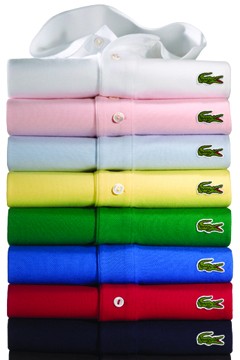








It was a thing in late 70s going into the 80s to use a razor blade to remove the alligator from the Izod Lacoste polo shirt. Totally unnecessary if worn properly, i.e., popped collar under an OCBD in Autumn.
Earlier in the 70s we wore them, ideally a white one with you guessed it, 501s and white low cut All Stars. It was essentially a school uniform.
As for the truly iconic Life Magazine Jacket. Any possibility Andover could put me in an exact reproduction made to measure? And, why not? The necktie too?
Thanks for the reading list.
Give them a call – I’m sure they’ll be happy to accommodate you, or inform you if they are unable to do so.
Great interview. Many thanks. A few thoughts:
For many years, ELJO’s in Charlottesville was steadfastly Southwick/Grieco Bros.’ #2 MTM retail account. Number one year after year? The Andover Shop, of course. Like Langrock and a multitude of traditional shops below the Mason-Dixon, The Andover Shop was a Southwick/Grieco Bros. loyalist. The same can be said for O’Connell’s and Eddie Jacobs, to the frustrated disappointment of the salesmen at Norman Hilton, Linett, H. Freeman, Hickey Freeman, and Gordon of Philadelphia.
Grieco Bros. introduced the natural shouldered Southwick model in 1945, followed soon thereafter by the legendary Warwick model. The Warwick jacket, a precursor to the Reagan-era Douglas, featured a high, soft rolled lapel and a decidedly rounded bottom. The first (bottom) button was sewn just above the lower pocket as the third button barely ascended the top edge of the chest pocket (whether besom, patch, or flap). The jacket shoulders/sleeveheads were hand sewn, the lapel stitching was 5/16”. The center vents were frequently hooked and steep, saluting a unique incarnation of equestrian (riding) styling.
Charlie, working with/alongside Grieco Bros. tailors, developed the now famous Andover model, which was less sporty — more Madison Avenue than club party. The button stance was lower; the lapel was longer, narrower, and pressed decisively to the second button. The bottom of the jacket was squarer, the seams were not lapped.
All of these models honored the British soft tailoring tradition, eschewing padding and stiff canvas. Grieco Bros./Southwick was famous for its innovative “Superflex” construction, rendering a jacket that was as comfortable as it was handsome.
The Warwick’s soft, rounded, sporty styling was revived a couple of decades ago, when the Cambridge model was introduced.
For more on the British soft tailoring tradition that inspired the Warwick model, take a look at this:
https://youtu.be/Dr1zBTsTwHA?si=JWCweKirN__Bs9E4
Again, many thanks for the interview.
Besides the Warwick 3 button model the Andover Shop had the Bristol and the Dorset 2 models one had darts and the other no darts but a slight suppression.. Charlie himself wore the Dorset.. The problem with the sack Warwick 3 button that rolled to the second button is that people would leave the top button and when pressed there would be an impression of the button on the rolled lapel. Key was to remove the button so when pressed there was no button impression. Nobody could make a soft shoulder like Southwick.
Thank you, Sandy, for this informed recollection. I agree with you 100% — “nobody could make a soft shoulder like Southwick.” The “Superflex” construction was, with all due respect to other natural shoulder makers, honed to the point of perfection. Yes indeed, the Dorset was the darted version of the Bristol– both featuring higher armholes. A bit later Southwick offered the Plymouth, which was a 2-button exegesis of the Douglas. I am persuaded that the Warwick served as inspiration for the Norman Hilton Olympic model — soft, unpadded, razor thin canvas, and a rounded lapel that was inclined to roll naturally and gently to the bottom button. Another latter-day model that received attention from a few Southern men’s stores was the Miles. This was a revival of the Warwick, amended by side vents.
How about a warning tag hung on that button, reading: Caution. Remove this button before steam pressing. Or some such message.
First I’ve heard of this.
In 1959 as my parents were taking me around to different boarding schools in MA. We were from Upstate NY and my parents wanted me to get my clothes from MA. They took me into the Andover Shop and that’s when I met Charlie. He took me under his wing and until he died he was my friend and clothing mentor. Every sport coat,suit, pants, sweaters and ties all came from the Andover Shop with Charlie’s approval first however. It has been 66 years and since than and it is still the same way however I now get Larry’s approval.
Lacoste. The lighter pastel colors contrasted nicely with blue jeans. The more saturated colors don’t work so well with anything in my opinion, except light khaki maybe, but it grew into much more of an auto-parts sales-team by-the-hour thing, or school teacher. The layering could work. The pink or spearmint blue under a white OCBD, or pink, white, or blue under a U-stripe. Pink and green was a thing. Once again, less is more.
Aldrich in ‘88 appears to be wearing denim, with a dark crew-neck tee under a dual flap-pocket casual white shirt? That’s gittin’ ‘er done.
Apparently The Andover Shop was second to none in the vast collections of wool challis neckwear, including foulards, stripes, and motifs. Wool challis, like mottled worsted flannel, is obstinately old school Ivy.
S.E. Thank you for your insight on the Southwick models.I visited the company in Lawrence,MA and would talk to Richard the son. I know other manufactures tried to copy but just couldn’t’t do it. and then when Brooks bought them it was down hill.You are right that The Andover Shop had the best collection of great neckwear. Most of it came from England. When you walked into the shop in Cambridge you wouldn’t believe the bolts of the most beautiful tweeds and flannels that Charlie had acquired from his trips to both England and Scotland. A true treasure of a store that no one could complete on the MTM product.
S.E. I was just thinking the only company that came close to the Southwick soft shoulder was Samuelson with their Greenwich Model which the Andover Shop sells today in their MTM.
Hardbooper The picture for Life Mag. was taken at either J.Press in the New Heaven store. They still make that Sport Coat
Oh. That’s interesting given that this is an Andover article. Something didn’t seem right. Thank you.
The aforementioned picture referred to is from 1953 LIFE Magazine article depicting the birth of The Ivy League Look attributed to J. Press. The shot records longtime J. Press salesperson Herman Racow attending to a Yalie’s fitting requirements.
I was not a fan of Samuelsohn’s Greenwich and Greenwich II, which I think Ben Silver used. My recollection sleevehead was a tad bulky. The point-to-point a bit too wide.
For RTW both Linett and Gordon of Philadelphia nailed it during the heyday. H. Freeman’s Naturalaire was inconsistent. Presently no one is rivaling Rochester Teilored Clothing (RTC), with the possible exception of Adrian Jules. Greenfield made Brooks’ Golden Fleece goods — Jay Taylor supervised every aspect of that production.
The American natural shoulder is unique — neither the totally unconstructed “shirtsleeve” shoulder that the Pitti Uomo types and Japanese Ivy/Trad disciples tend to favor, nor the padded, extended Paul Stuart shoulder. Southwick was capable of decades-long mastery because they paid their cutters and sewers well.
The story of Southwick’s consistent decades-long quality is actially the story of collaboration between valued union labor and management’s diligent stewardship. Collaboration. Partnership. This is sadly lacking in the U.S.A. nowadays.
Something else to consider: the quality of the cloth and approach toward weaving. Those bygone woolens, worsteds, and tweeds featured substantial U.K.-spun yarns — yet the weaves of the panamas, hopsacks, and tweeds were decidedly looser. The result (hard finished but porous) was comfortable. Not quite the “slack knit” used for hand knit&framed shetland sweaters, but similar.
Contast with a lot of modern-day fabric — soft finish and flimsy, meager yarns, yet woven so tightly that there’s zero porosity. Suffocating.
Andover has changed a lot, quite a lot, in recent years, offering many very lovely things that are more fashion forward than Ivy. Also, many jackets feature things like double vents, two button fronts, and form fitting darts on the front.
True, this.
I’ve only been visiting the Cambridge Andover Shop since the early 2000s, so I’m a bit of a neophyte to say the least. With that in mind, I was under the impression that their house cut jacket been a two-button, twin-vented number since at least then… or perhaps two-button with a center vent?
Although I love most of what Andover sells, I’ve never bought an off-the-rail jacket from them. I’d always pop around the corner to J. Press for that.
My point is that I believe Andover’s jackets have broken slightly from the orthodox Ivy, 3/2 with hook vent style. Branching out a little with a 2-button, updated style.
Either way, both the Cambridge and Andover locations are amazing, and paragons of good taste.
I considered it a compliment when Charlie called me and said he wanted to buy some of my Grenadine and novelty ties. I can still hear his voice.
Thank you, RP. I should have known that. It needs a proper name. “The Life Magazine Sport-coat”, or “The Life Magazine Sports Jacket”, or some such.
When pressing a 3 button suit jacket or a sport jacket, press the lapel flat. It will naturally roll to the middle button.
S.E.Even though I was from Boston spent most of of my growing up living in Rochester ,NY,the home of Hickey Freeman ( the factory now the home of Rochester Tailored Clothing) and Adrian Julies. Hickey tried to make a soft shoulder model called the Canterbury but never really worked.. They could never get away from that football player boardroom model.
The Andover Shop I believe is having RTC make some of their MTM’s and I believe J Press still uses Adrian Jules for their MTM wear
I forget the name of the Adrian Jules American natural shoulder model. Top tier tailoring.
Rochester Tailored Clothing (RTC) has benefited from the leadership of the former CEO of Southwick. J. Press and O’Connell’s use RTC. The latter developed their own house model.
A.N.S. style * is unique — and once a few key details have been neglected or eschewed, you’d may as well be wearing Paul Stuart or Jos. A Bank. Ditto for shirts, ties, and shoes — but then, I can persnickety.
The proprietor of a traditional Southern men’s store recalls that, among manufacturers, the Southwick “Superflex” tailoring was almost solely responsible for keeping the “Ivy vibe” going well into the 70s and beyond. By the early 80s Linett and Gordon had spiraled downward, H. Freeman was up for grabs (eventually bought by Hays’ Individualized Apparel), and Norman Hilton was tacking toward darted, double vented, wide shouldered waters. Chipp and The Andover Shop were never wedded to orthodoxies, and even the 3-button, undarted retail outposts began to compromise on the shoulder and fit.
Throughout the Carter and Reagan eras, there was still a certain sort of gent who looked like he had just stepped off the Williams College campus circa 1962, favoring the soft, padless tailoring, zephyr weight tweeds and flannels, long-pointed oxfords and wool challis ties. He disappeared for a while, replaced by catalog-based, “preppy lifestyle”-driven companies, only to be resurrected by the internet trads (a source of amusement) in the early 2000s. Rarely seen and inconspicuous, he surfaces for air only occasionally.
This is one of the best commentaries I have ever read. Thank you.
Thanks — fun to recall days of yore
S.E. I have to complement you on your knowledge of the traditional clothing industry, you must have been or still are in it?
c. 2017 I bought two MTM, H Freeman 3/2 sack suits from O’Connell’s. I should have sprung for more expensive Southwick, or Samuelson, but I think there were already some corporate problems with Southwick, so one of the boys steered me to H. Freeman.
H. Freeman sacks have (had) built in waist suppression, and some shoulder padding issues, which I did not expect. Why the hell would H. Freeman do built in waist suppression on a sack suit? I am still an O’Connell’s loyalist, but the retailer is at the mercy of his supply chain/manufacturer(s).
I’ve read recently that there have been even more changes, not for the better, in Rochester within the last year or so.
The ripples of change are certainly washing ashore at O’Connell’s as they are everywhere else, but far more gently. It is most noticeable in suits and sport coats. They seem, however, to be finding very fine new things. I am sorry to watch the slow depletion of their Southwick offerings, mainly for others, as I pounced on what my soul needed. Their knowledge and service remain impeccable, and everything I have seen on their superb website is thoroughly ivy. A real plus is that within a few hours of placing an order you will have notification from UPS for tracking shipment. No grass grows under their feet. I ordered shorts elsewhere and waited two weeks to be advised the order was cancelled and refunded. The seller should have known its inventory and advised me immediately. It is a mistake I hope not to repeat.
I forget the name of the Adrian Jules American natural shoulder model. Top tier tailoring.
Rochester Tailored Clothing (RTC) has benefited from the leadership of the former CEO of Southwick. J. Press and O’Connell’s use RTC. The latter developed their own house model.
A.N.S. style * is unique — and once a few key details have been neglected or eschewed, you’d may as well be wearing Paul Stuart or Jos. A Bank. Ditto for shirts, ties, and shoes — but then, I can persnickety.
* A.N.S. = American Natural Shoulder