Liz graduated Magna Cum Laude from Dartmouth College. She earned an M.A. and a Ph.D. in Art History at the University of Virginia. Liz taught at UVA for many years and spent a year in Sweden as a Fulbright Scholar. As a contributing writer for Forbes, Liz shares her insights on the evolving landscape of college admissions.
Rugby Ralph Lauren (2004 to 2013) marketed a fantasy of college life.
The fantasy narrative in marketing is nothing new. Ivy Style founder Christian Chensvold wrote a terrific piece on this subject back in 2018, in which he states:
I miss Rugby. As in the Ralph Lauren brand that existed from 2004 to 2013. Rugby started to take off in August 2008 when it added e-commerce to its website. This was right when I was preparing to launch Ivy Style, so there was a sense of being part of a neo-prep zeitgeist, or what we came to call here the Ivy Trendwatch. I also ended up writing several pieces for Rugby’s blog. But what I really miss about Rugby is the styling: the fantasy narrative settings like Polo did for so long.
Dr. Stone’s article for Forbes seems to pick up right where Chensvold left off:
Loafers and rugby shirts, cable-knit sweaters, and collegiate stripes are back. This fall, the resurgence of Ivy style has moved from trend to something closer to a cultural motif… And a new generation is rediscovering Ralph Lauren’s rugby shirts, Polo caps, and other staples of classic American style.
So what’s new? Well, clearly not the clothes – which have been around for generations – but rather the irony of the modern age. The summary for the Forbes article highlights the paradox:
This trend emerges paradoxically as higher education faces intense scrutiny over costs, student debt, and AI’s impact. The article argues that while the aesthetic has privileged roots, the underlying desire for community and connection is universal. In an AI-driven era, college’s true value lies not in information, but in fostering mentorship, critical thinking, relationships, and a sense of belonging that technology cannot replicate. Colleges must prove these human experiences remain valuable and accessible.
Prior to the publication of her article, Liz reached out to me with some thought provoking interview questions. Here are her questions and my responses.
Liz Doe Stone: You’ve been documenting Ivy style and its history for years. Why do you think the aesthetic is resonating so strongly again right now, particularly with a younger generation?
Matthew Longcore: I recently completed a Ph.D. in Humanities, and I teach anthropology to young people at the University of Connecticut. The thematic question of my doctoral program was: What does it mean to be human in an age of advanced technology? What it means, for sure, is that we are living in a world that is changing at an unprecedented rate. Artificial Intelligence, the post-pandemic economy, the rise of distance learning and the remote workforce – these are factors which have made people more atomized and isolated from one another. People spend a lot of time in front of screens, and have become disconnected from one another. The high tech new world can be a lonely place. With the future filled with so much uncertainty, there is a natural inclination to take comfort in the past. Ivy style represents a nostalgic and idealized past.
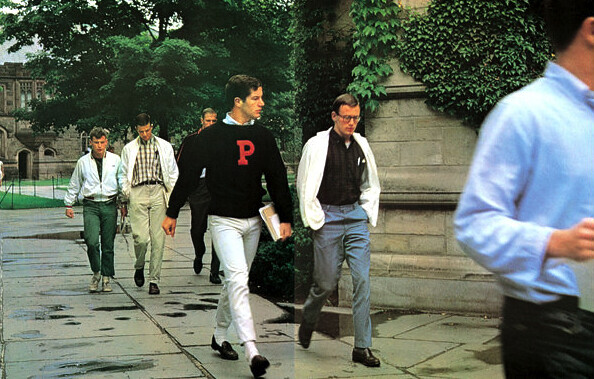
“A letterman’s sweater: Exhibiting the school’s honor and the wearer’s achievements, the glorious letter ‘P’ on the sweater is given only to prominent athletes.’ (Take Ivy (1965) at Princeton University, pp. 64–65)
Liz Doe Stone: Ivy style has always been about more than clothes—it evokes campuses, libraries, clubs, traditions, friendships, and a particular vision of collegiate life. How important is that broader mythology of the American college experience to the enduring appeal of Ivy style?
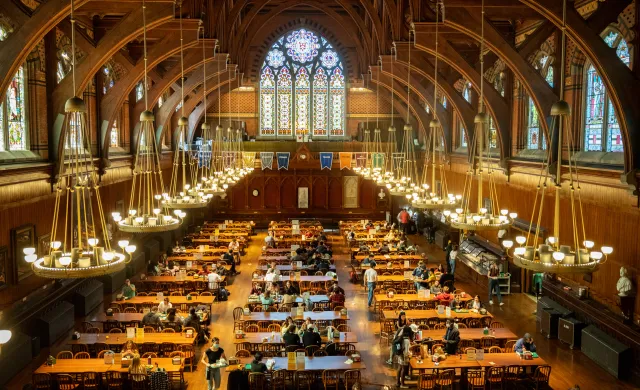
Matthew Longcore: Ivy style clothing is part of the holistic collegiate experience, but the campus setting matters, too. My doctoral dissertation is about Collegiate Gothic architecture on American campuses. Beautiful campus buildings are the setting for the mythology of the American college experience, as described in collegiate stories such as This Side of Paradise by F. Scott Fitzgerald. Many college students today yearn for what they describe as a “Hogwarts” experience – an inspiring campus setting with grand libraries, ancient traditions, and social clubs that foster lasting friendships.
Students dining in Memorial Hall at Harvard University, often compared to Hogwarts.
Liz Doe Stone: At a moment when there is so much conversation about the ROI of a college degree, do you think the resurgence of collegiate style reflects a parallel nostalgia or desire for what college offers beyond the credential (the intellectual community, social experience, traditions, and sense of belonging)?
Matthew Longcore: Yes, definitely. Prior to my current position at Yale, I worked as an academic advisor, and everyone was hyper-focused on ROI. I think people are beginning to realize that the goal of college is not training in a purely technical sense but rather the development of highly transferable skills. In the 21st century, the skills we need include emotional intelligence (which is fostered by a highly social college environment), along with critical thinking skills (because we absolutely cannot rely on machines for this).
2001: A Space Odyssey (1968) foreshadowed the potential dangers of artificial intelligence.
Liz Doe Stone: What do you think the continued fascination with Ivy style tells us about the cultural power of the American college experience itself?
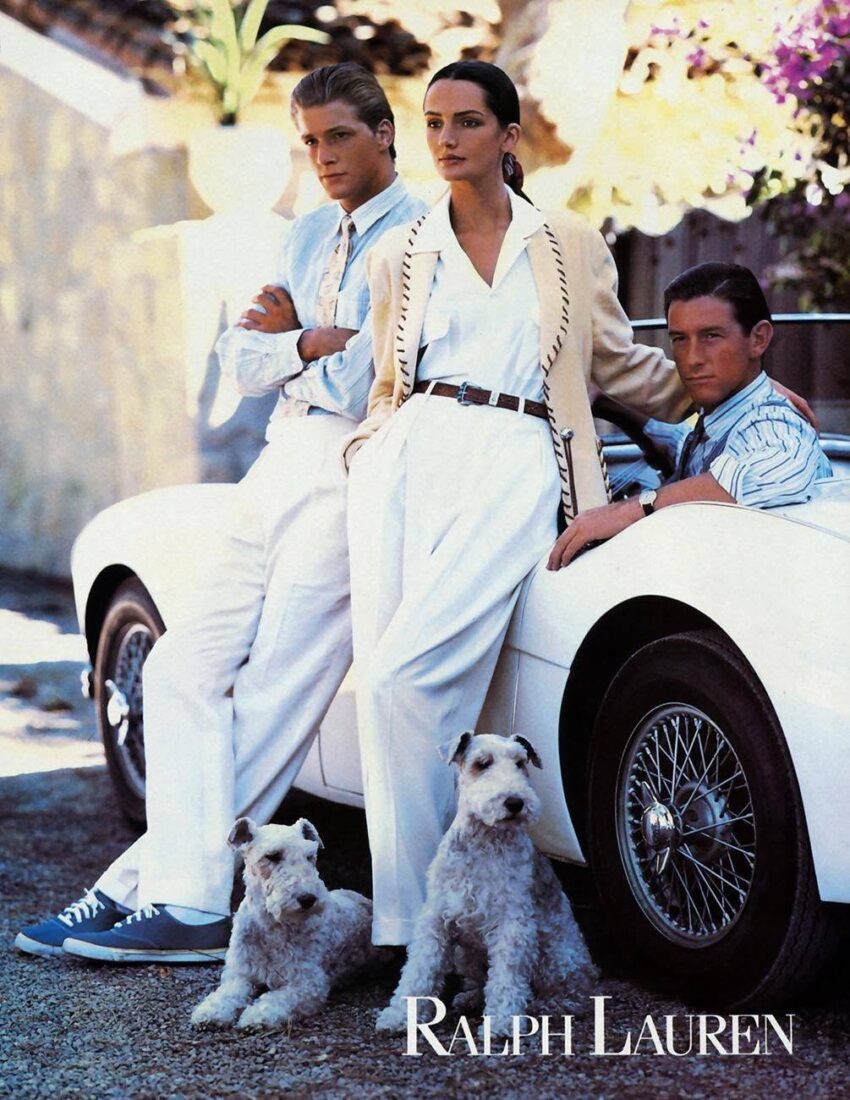
Matthew Longcore: Ivy style tells us that the American Dream is alive and well. For some people, Ivy and preppy clothing is a style that they grew up with through privileged environments like boarding schools, but for most people it is an aspirational style. Ralph Lauren has built an entire empire based on the culture of aspiration. People buy these clothes because they want to be part of that world. Upward mobility includes getting a top notch education and becoming part of a rarefied post-graduate world. Ivy style represents a classic, timeless look. Each piece of clothing in an Ivy style wardrobe is a good investment. I would add that how we dress still matters in the world. When we feel good about our appearance, that confidence resonates with others.
Ralph Lauren has built an empire on the culture of aspiration and the American Dream.











Be the first to comment on "Ivy Style in the AI Age"