
By James Moore
Ivy Style contributor James Moore is the English Department Chair and Director of Squash Programs at Blair Academy in Blairstown, New Jersey. Jim is a graduate of Cornell University where he was a member of the squash team, the glee club, and the Delta Chi fraternity.
In this article, Jim suggests that the natural shoulder is the defining characteristic of the Ivy League look. Do you agree?
Sometimes, it is nice to know that you can get exactly what you want. Such was the case last month, when, in pursuit of a tan poplin suit constructed in strict Ivy fashion, I headed west on Interstate 90 to O’Connell’s in Buffalo, New York. Whatever they had on offer would sport the three-roll-two closure, the undarted front, the Sack silhouette, the center hook vent, a couple of buttons on each sleeve, and, of course, a natural shoulder. The only decision I would have to make was which particular shade of tan I preferred. The deal was done in a matter of minutes, and I spent the rest of my visit considering breaking the bank on a pair of pebble grain Alden chukkas.
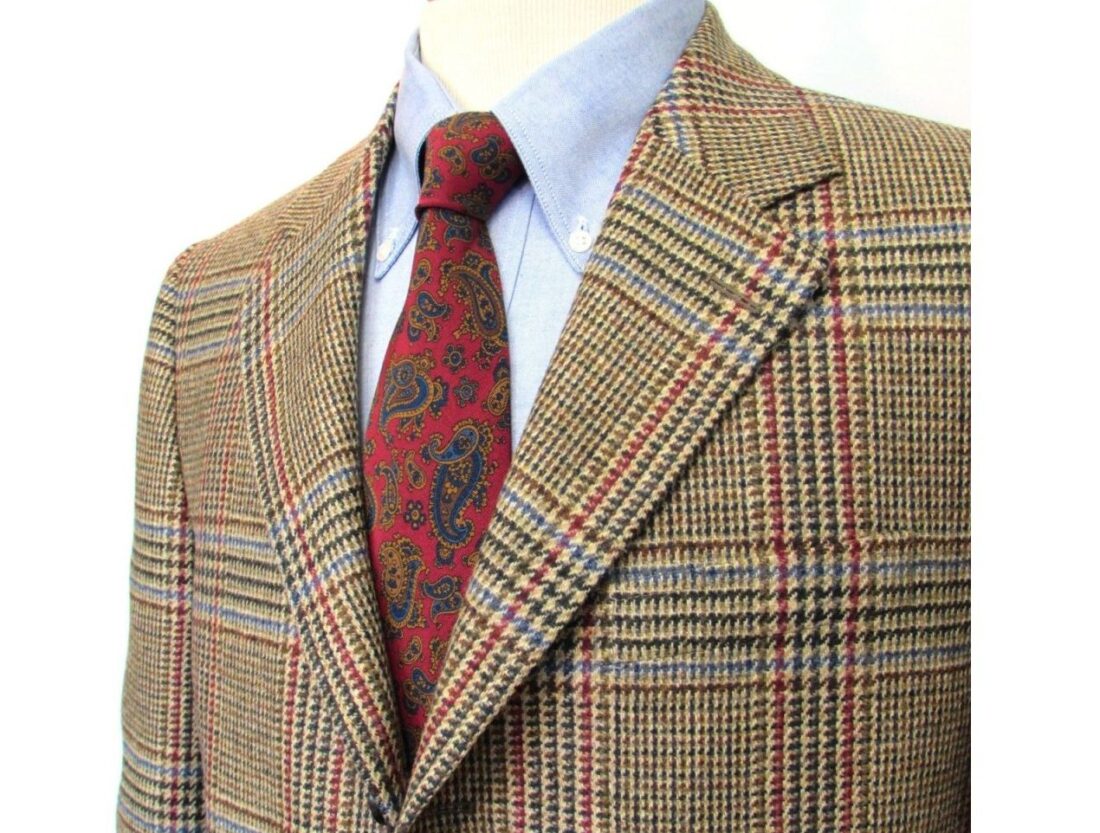
Sometimes, though, we are at someplace other than O’Connell’s, where there are things to consider beyond the difference between, say, “Sand” and “British Khaki.” What of Sid Mashburn’s Virgil No. 3 model, whose undarted three-button front is accented by a spiffy, but not particularly Ivy, ticket pocket, and a deftly executed spalla camicia sleevehead, straight out of Napoli? J. Press last summer offered darted hopsack coats in a range of fetching patterns. Almost all of the coats from Ben Silver are cut on a two-button “American” model, some with two vents. And yet none of these options would raise an eyebrow, except in approbation, in the Reading Room of any club designed by McKim, Mead, and White.

How is it, then, that all these coats would be not only acceptable but lauded in the most Ivy contexts? I submit that the common element is the natural shoulder, from which all Ivy sartoriality descends, and without which any attempt to affect our style violates its gestalt. Indeed, the natural shoulder, whose lack of structural artifice allows us to wear all manner of woolens, cotton, and even silk to their best effect, alone facilitates this. While we might admire the military bearing of a Gieves & Hawkes or Huntsman shoulder, or the architectural roping on a Cifonelli coat, silhouettes limit the opportunity for the balance between rectitude and expression so fundamental to the Ivy aesthetic.
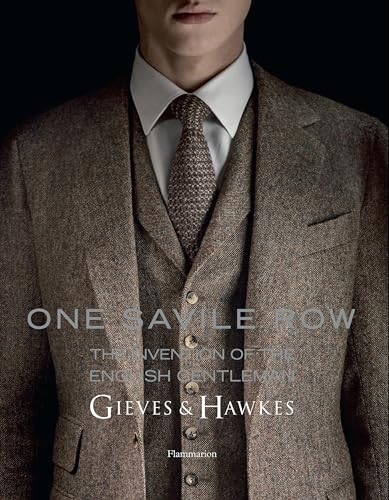
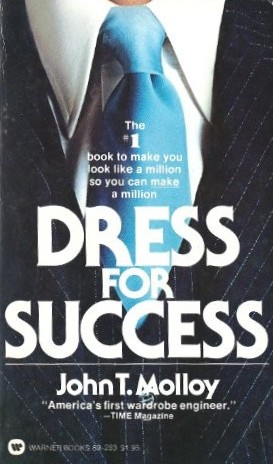
This brings us to the conundrum we face when we shop, well, anywhere but O’Connell’s; we are, after all, aware of slippery slopes. If, for example, we neglect to cuff our trousers, what comes next? Peaked lapels? White-soled “dress” sneakers under tailoring? But by the same token, if, in our pursuit of something that delights us, we reject anything that doesn’t hew entirely to the Ivy orthodoxy, we risk reducing our sartorial interests to a checklist, which, given the origins of our style, is hardly the thing. Remember Molloy’s handbook for the uninitiated, Dressing for Success? In its attempt to help its readers avoid faux pas in the business world, it made them all look the same, much like the writing tool Grammarly, whose risk-averse guidance, in the name of clarity, makes everyone sound the same.
As the sonnet form affords poets, Ivy style offers its practitioners latitude within a well-defined framework; it allows us to wear a bow tie with a racquet motif, or a sober navy Churchillian dotted four-in-hand with either Madras or hard-finished worsted, as long as the coats are built on a natural shoulder. And while the natural shoulder does justice to all manner of collars, save for the ultra-formal English cutaway, it is the only construction that is unimpeachably correct with the Ivy component that is perhaps even more fundamental to a proper wardrobe: the graceful roll of the Oxford cloth button-down.*
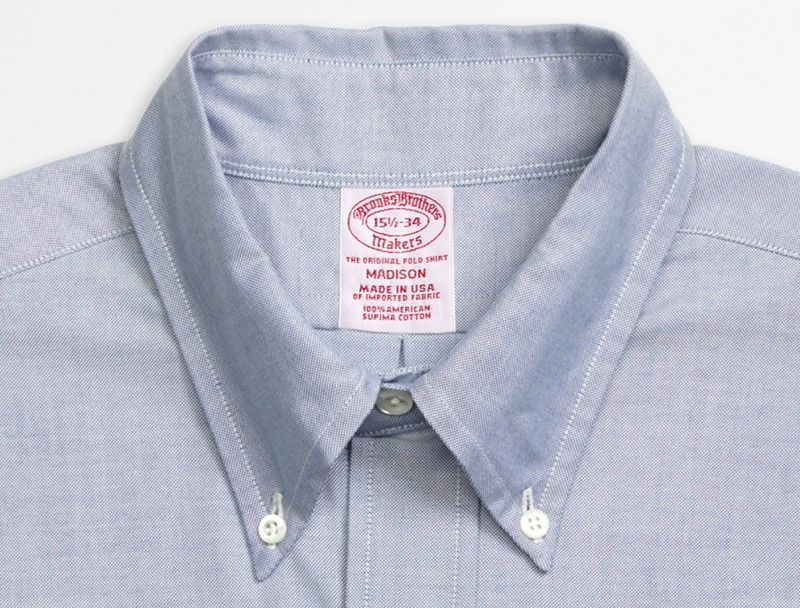
*It is true that Gianni Agnelli, the Italian sportsman and industrialist who bought armloads of OCBD’s from the Brooks Brothers flagship on Madison Avenue, wore them with his strongly structured Milanese tailoring. But L’Avvocato could get away with things– the unbuttoned collars, the wristwatch worn over the shirt cuff– that would simply look affected on the rest of us.







I’ve still got my 50 year old copy of Dress For Success. I still look like a million. I never MADE the million.