Welcome back. We had our first interview for Ivy Style back in November 2025. With so much happening at J. Press, I am glad that we have the opportunity to continue our conversation.
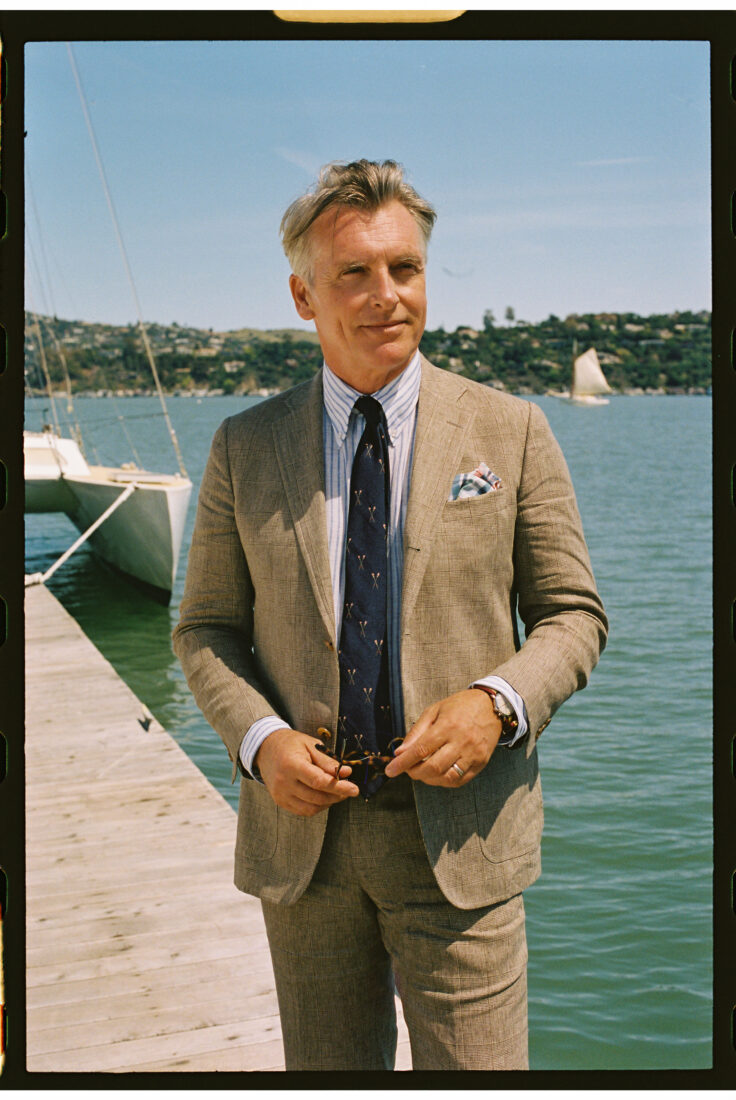
Jack Carlson, J. Press President and Creative Director
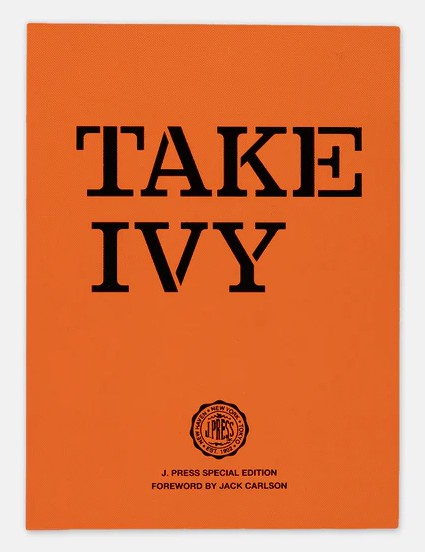
Let’s begin with Take Ivy. As many Ivy Style readers know, the book featuring photographs of Ivy League students was originally published in Japan in 1965. Earlier this year, J. Press released a special edition of the book which includes a new foreword that you authored.
J. Press special edition of Take Ivy with a foreword by Jack Carlson.
You have described Take Ivy as “a kind of style bible for the Ivy League look.” Please tell us more about the Take Ivy project at J. Press. What inspired this endeavor? Did you connect with the original author and publisher? What sort of events and products did J. Press introduce to celebrate the re-launch of the book?
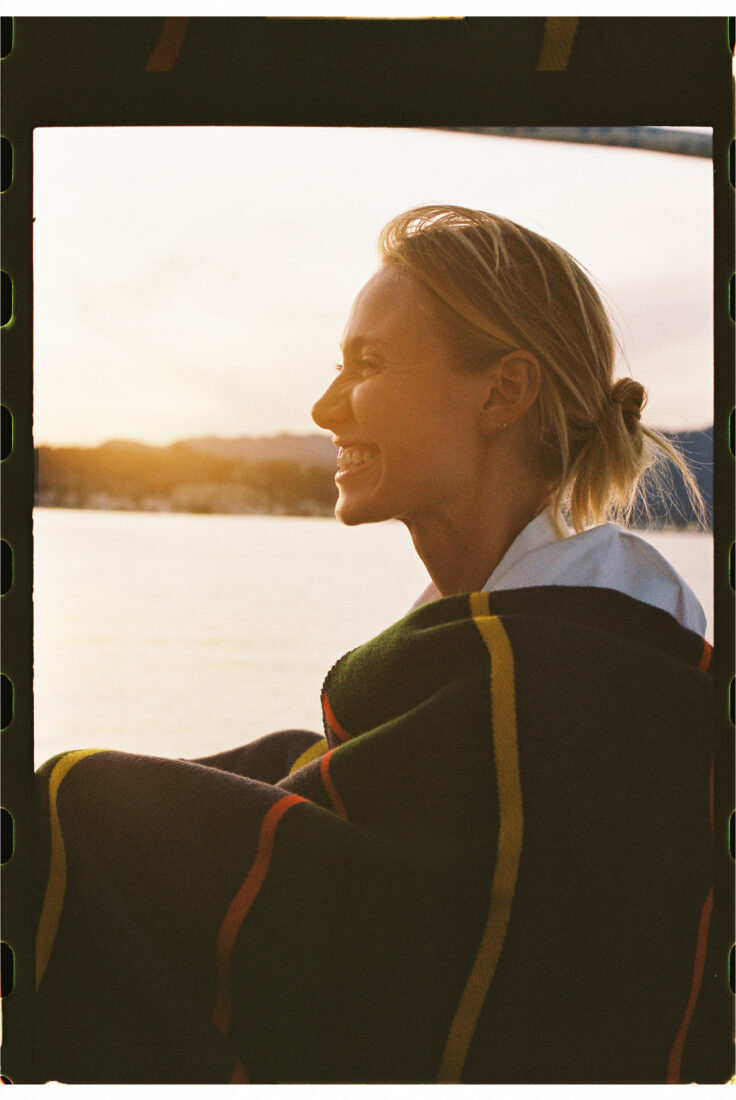
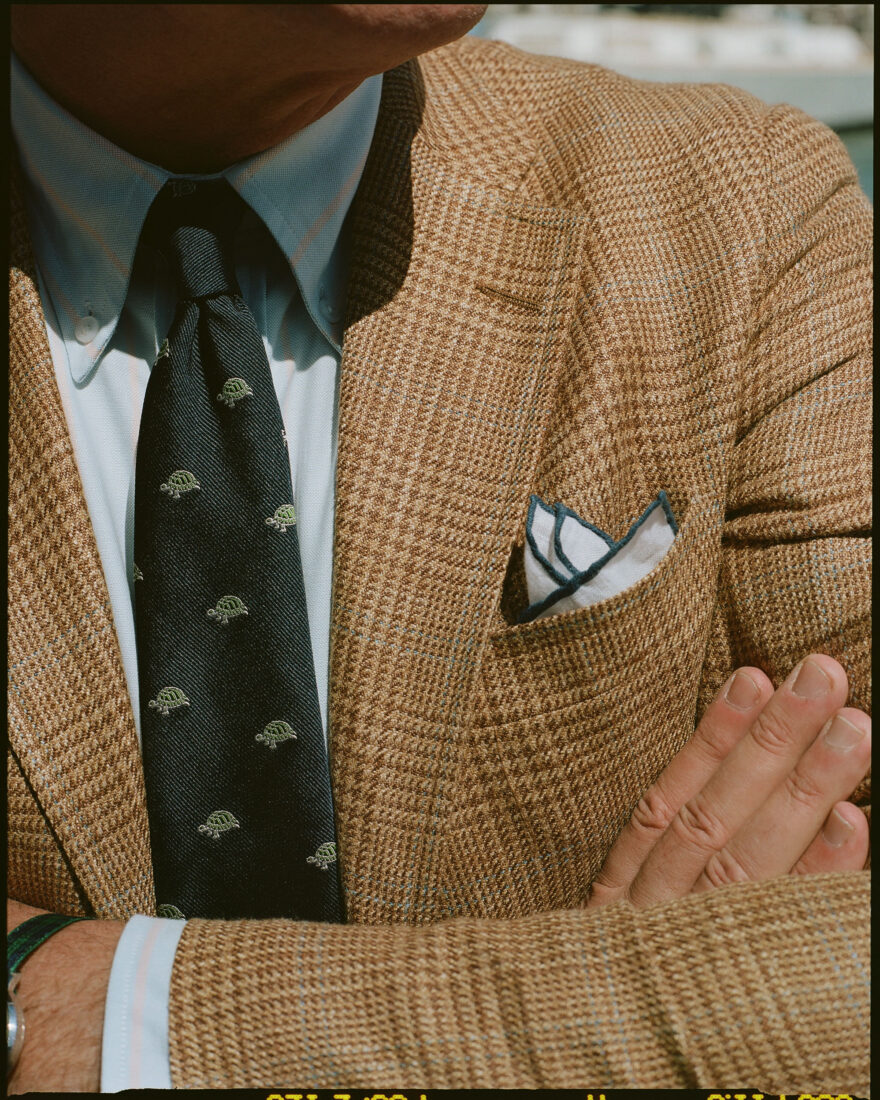
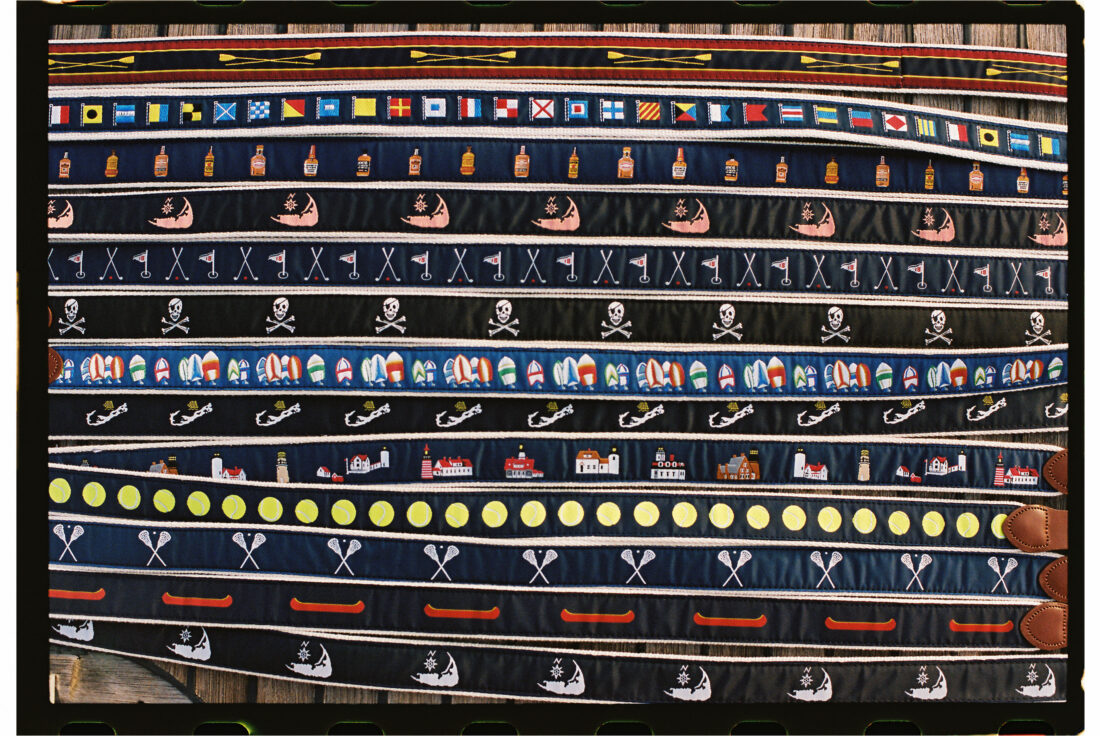
J. Press Summer 2026 Campaign
Jack Carlson:
Everyone (well, everyone in the menswear and Ivy style community) knows a handful of the most famous photos from Take Ivy, the ones that have floated around Tumblr for years. But fewer people know the book as the physical object that it is – or for the witty and well-written text which accompanies those images, or indeed for the whole story behind the creation of those iconic photos and of the book itself. Fewer still know the deeper cut images, or the string of other books that followed Take Ivy: a pair of books called The Ivy and Take 8 Ivy, for example.
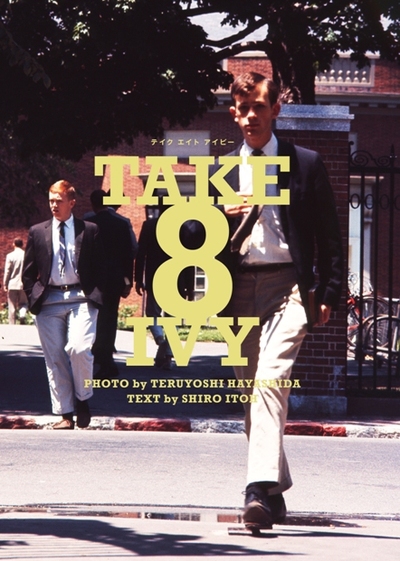
Take 8 Ivy (2011) features text by Shiro Itoh and photography by Teruyoshi Hayashida. It is a follow-up to Take Ivy (1965).
The original book featured J. Press heavily – not only in the photos, but in the text, telling the story of the brand, and highlighting the Press stores in New Haven, Cambridge, and New York.
So, I wanted to celebrate this seminal book, and to reintroduce people to it – including people who might have thought they already knew everything there is to know about it. The copy is not only rich and informative; it’s also downright hilarious at times. And while we all know the photo of the guy in the black Princeton varsity sweater and skinny, cropped white jeans, there are equally fantastic photos of kids walking barefoot across campus in the pouring rain (apparently this was a thing guys did with alarming frequency?); there are cut-off khakis and beat-to-hell Cons; and a great assortment of supposed Ivy grad businessmen milling around midtown New York with briefcases and some very questionable headwear choices.
We worked closely with the publishers and the rightsholders in Japan, including the family of the book’s photographer.
My “foreword” is really just a little note to contextualize the book and its connection with J. Press, and the “merch” we created around the book is just that: merch (a tote bag, a hat, a rugby shirt, a club tie, etc.) because I like simple merch for a project like this. But the main focus is the book itself. With my background as an academic and an archaeologist, I always like going back to the primary sources. Especially when people think they know them well already, but there’s actually much more to discover.
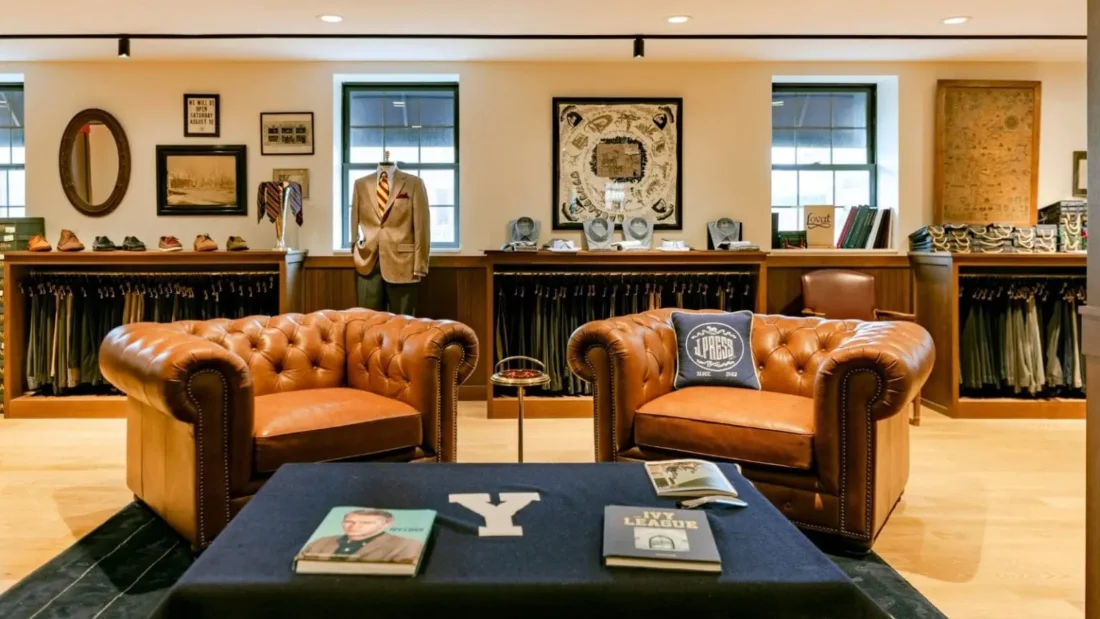
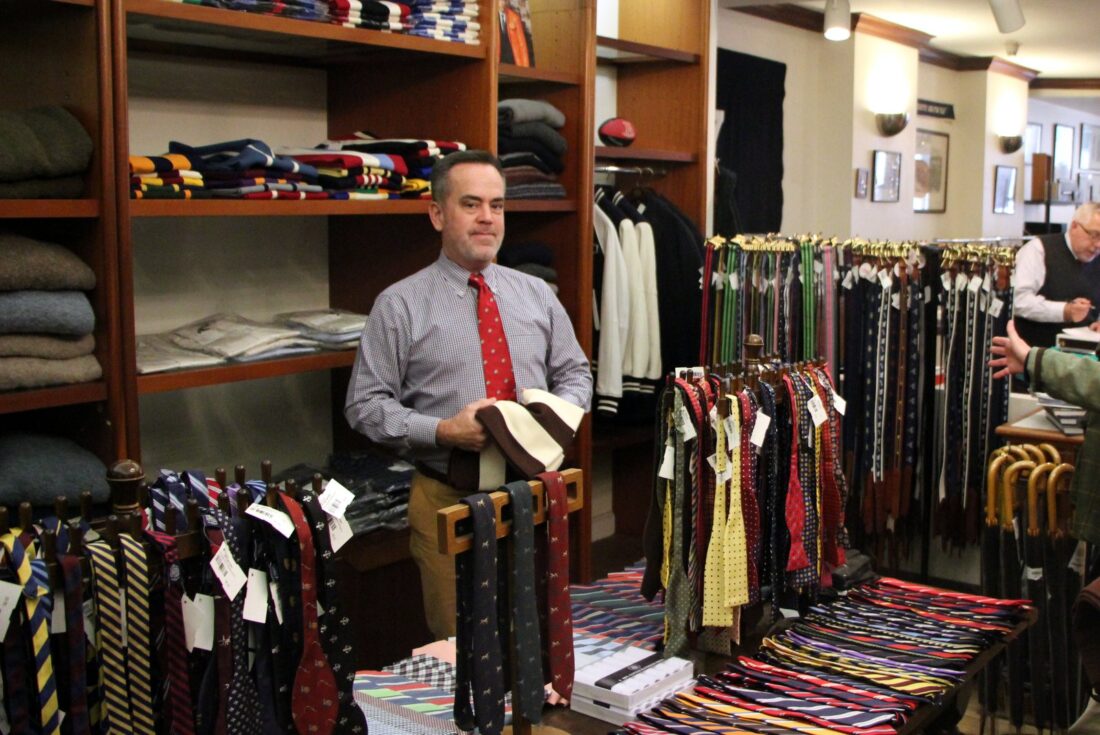
The J. Press store in New Haven, Connecticut.Jim Fitzgerald, J. Press Vice President, at the store in New Haven. Photo Credit: Jim Fitzgerald of J. Press New Haven named General Manager of J. Press USA. https://www.muffyaldrich.com/2014/12/james-fitzgerald-is-named-general.html
Matthew Longcore:
Since I work at Yale, I enjoy visiting the New Haven store often and I know the nice fellows who work there, including Jim Fitzgerald. I also make sure to stop by the New York City store when I visit the Yale Club. I have heard that there are plans to relocate the NYC store, and also that new stores will be opening soon in places like Cambridge, Massachusetts. What can you tell us about the expansion plan for J. Press?
Jack Carlson:
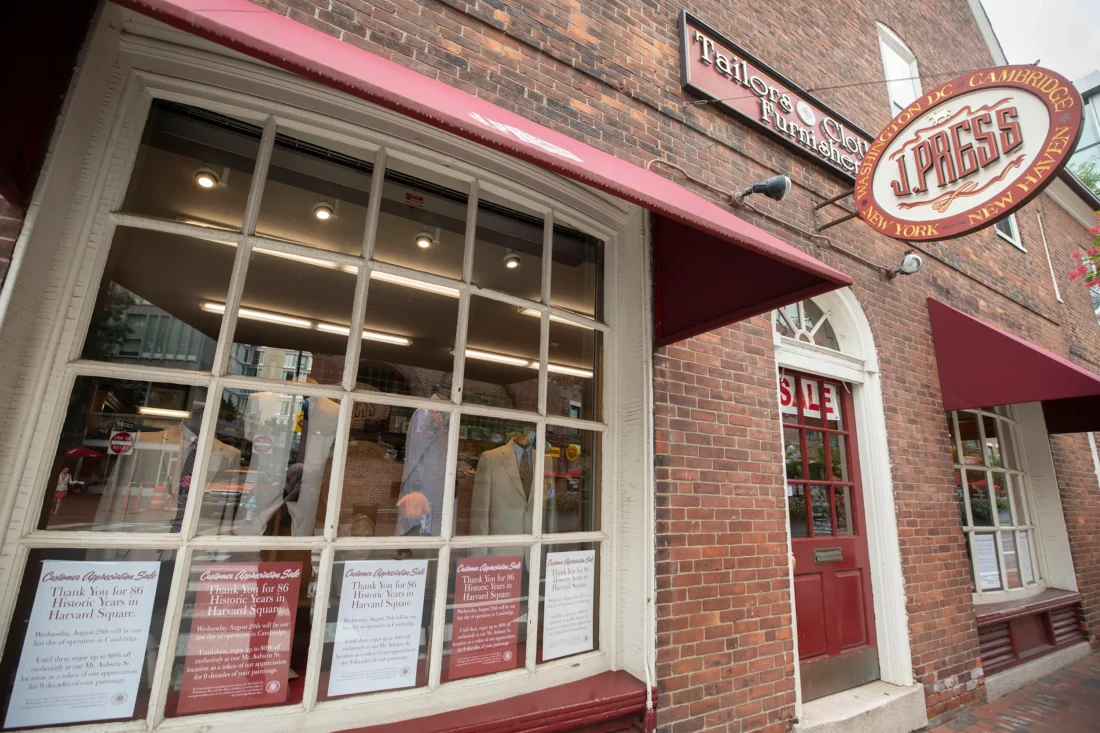
I don’t want to reveal too much, but we have plans to relocate both the New York store and the Washington D.C. store, and to open a store in Cambridge. As someone who grew up with the brand and who has been a fan and lover of the brand for a long time before I joined the company, I’ve always thought that J. Press in New York belongs on Madison Avenue, and with an interior that feels more historic and clubby and less sleek/midcentury; I’ve always thought that J. Press’ store in D.C. belongs in a more historic building and with a richer buildout that feels less like an ’80s time capsule. (I felt this way even way back when I was an undergrad at Georgetown!). And having grown up going to the Cambridge location, I’ve believed that J. Press needs to return to Harvard Square ever since it closed its doors there.
The former J. Press store in Cambridge, Massachusetts.
Matthew Longcore:
There are longtime J. Press customers who do not want to see the store change. I have heard from people who ask – what is happening at J. Press, and does it look anything like the old days?
My response usually goes something like this – yes, there are changes, but J. Press seems to be adding rather than subtracting. In other words, a traditionalist (like me) can still get his traditional wardrobe at J. Press. My most recent J. Press purchases are a tan poplin 3/2 roll sack suit, a 3/2 roll navy blazer, and dress khakis. All as traditional as you can get. How do you respond to those who say that you are bringing too much change to J. Press?
Ivy Style editor and publisher Matthew Longcore at an event in Newport wearing a J. Press tan poplin 3/2 roll sack suit and a Made in USA blue OCBD.J. Press Summer 2026 Campaign
Jack Carlson:
“Too much change” to me is a playbook many other brands have followed, but not J. Press. Here’s the playbook I have seen often from other brands, and it’s the opposite of what we do at J. Press: Moving production of traditional items out of the U.S., U.K., Canada, and their other traditional manufacturing locations for those products. Whiting-out the country of origin on the shirt labels in their ads and product photos. Closing American factories. Abandoning the Ivy look for more generic, more contemporary, or more Italian styling. Lowering the fabric quality. Skimping on the details. Ignoring the things that made the brand what it was in the first place. Sadly, we have seen this playbook time and time again with heritage American menswear brands. Now, that would be “too much change”– but that’s not at all what we are doing at J. Press, thank God.
You mention “the old days.” I’d say that if anything, my main focus (not my sole focus, but my main focus) has actually been on bringing J. Press back to “the old days” in a way: doubling down on the most traditional aspects of the brand: doubling down on Ivy; doubling down on getting the small details right; and doubling down on Made in U.S.A. (and Made in U.K.). These aren’t the things that tend to grab headlines, or even things that are the easiest to notice if you’re just glancing at pictures online. But to me they are things that are vitally important to J. Press as a brand.
J. Press Summer 2026 CampaignJ. Press Summer 2026 Campaign
Funnily enough, most of the “changes” I’ve initiated are actually changes that are taking the brand in a more conservative, and more traditional direction. I’ve taken categories that were previously made overseas and brought them back to the U.S. – and we’ve massively ramped up our American domestic production. It’s no exaggeration to say that as a brand we are single-handedly keeping several important heritage clothing factories (and many, many American jobs) alive by doing this.
I wound down “J. Press Pennant Label,” which, although I liked the aesthetic and the idea behind it, I felt diluted the brand’s bona fides. My belief is that we should be able to take some of the great things that Pennant Label was doing like untipped ties, or contrast-collar oxfords, or different fits of traditional J. Press items, and produce them here in the U.S. and U.K. And that’s what we’re doing. I’ve also phased out a handful of products that had polyester blends, and I’ve doubled down on our relationships with some of the most traditional mills and cloth suppliers with whom we work, including Fox, Marling & Evans, Harris Tweed, and more, as well as on our Shaggy Dog sweaters. While a lot of brands offer “Shetland sweaters,” you would be amazed to find that almost none are actually made in Shetland using Shetland wool. Ours are – and they are finished with a brushing technique that is proprietary to J. Press. Protecting – and cultivating – traditions like this is of the utmost importance to me. This is the mission on which I spend most of my time. (I’ve just come back from Shetland, actually!). I remember when my appointment was first announced, someone wrote to me asking about a rumor they heard that I was going to put polyester in the Shaggy Dogs and move their production to Asia… Clearly someone who doesn’t know me at all!
I’ve spent what sometimes feels like an inordinate amount of time on things like the tie width and taper (making it much more consistent and Ivy); the design of the labels, and making them look less ‘90s and more ‘50s; the rise of our trousers, and developing new models that in my opinion J. Press should have had the whole time, like a double forward pleat or a wider leg model; making the lapel notch and the shoulder shape consistent across our models and factories (our flagship model has been great on both of these details, and the others should be at the same level of execution); developing a more robust and truly top-tier quality Made-in-U.S.A. custom shirt program; really upping our U.S. quality control game, especially for things like the way shirt buttons are sewn onto the shirt and other small but vital details; developing options and details like hand-finished buttonholes, which, in my view, are important when you’re talking about the overall quality of make that we offer, especially in Made-to-Measure; building out our Made-in-U.S.A. Oxford shirt offering to include solid colors and stripes that in my opinion J. Press should have had the whole time, and building out our Made-in-U.S.A. ready-to-wear suit offering substantially to include three models (our classic three-button, a two-button, and a double-breasted) and a wide range of cloth options; growing our schoolboy scarf offering to what it used to be when I was growing up – i.e., the full complement of Yale residential colleges and graduate school designs, as well as Harvard houses and college colors like UVA, Georgetown, Williams, and Amherst etc.
J. Press Schoolboy Muffler
To some, these might sound like silly or even trivial things to spend any time on, let alone to spend most of one’s time on. Carrying a full complement of college scarves? Preserving old-fashioned woven label designs? Buttonholes and button stitching? But my thinking is that someone’s got to do it. It’s about bringing J. Press and our offering closer and closer to their Platonic ideal. J. Press should offer a full complement of schoolboy scarves; J. Press should make its Shaggy Dog sweaters on Shetland; J. Press shirt labels should be red on white with wonky letters; a J. Press shirt should have the perfect collar roll; and so on.
That last one is my favorite pet project, of course: the collar roll. I’m pleased to say the new and improved, which is really to say old and correct, collar roll is “rolling out,” no pun intended, this autumn.
While J. Press is a much smaller brand than many others alongside whom we are often mentioned, it’s a substantial enough business that many of these changes take time. It’s not a matter of coming in and being able to make everything exactly how I want it to be on Day 1 or even in Year 1. But it’s about improving every day: improving the product, improving the website; improving our factories; improving our customer service; improving our stores; and so on, on a consistent basis. And over time, it really shows. I’m happy to say I think a lot of these efforts are really showing already.
J. Press Summer 2026 CampaignJ. Press Summer 2026 Campaign
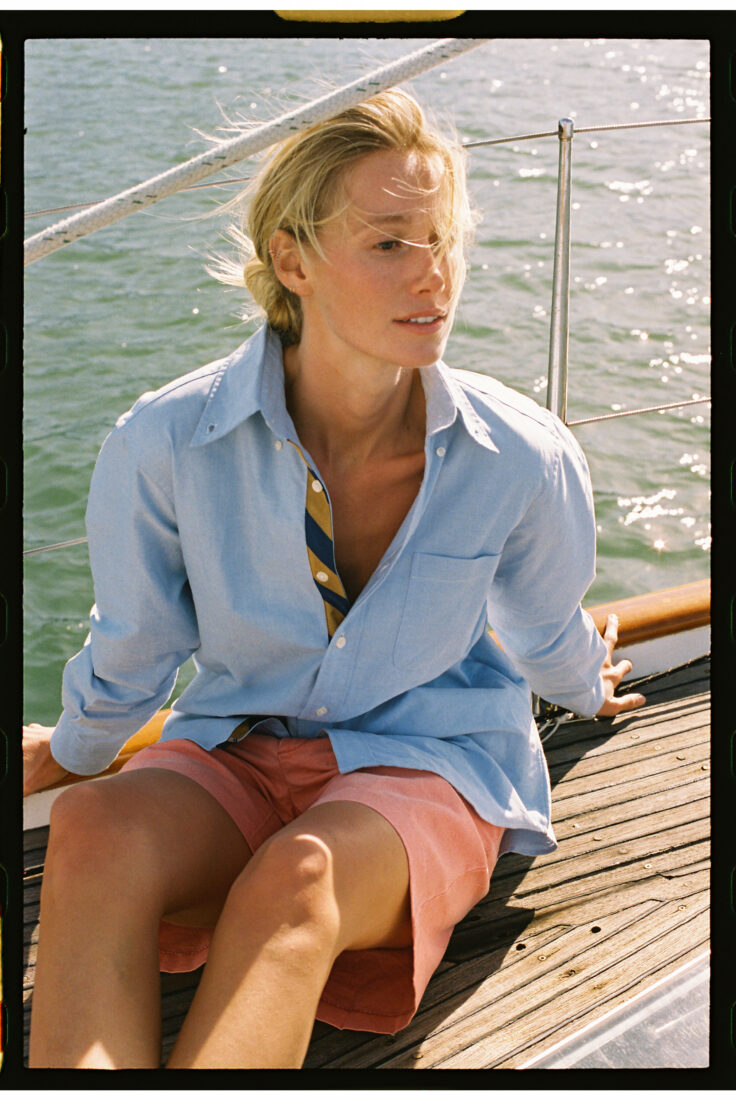
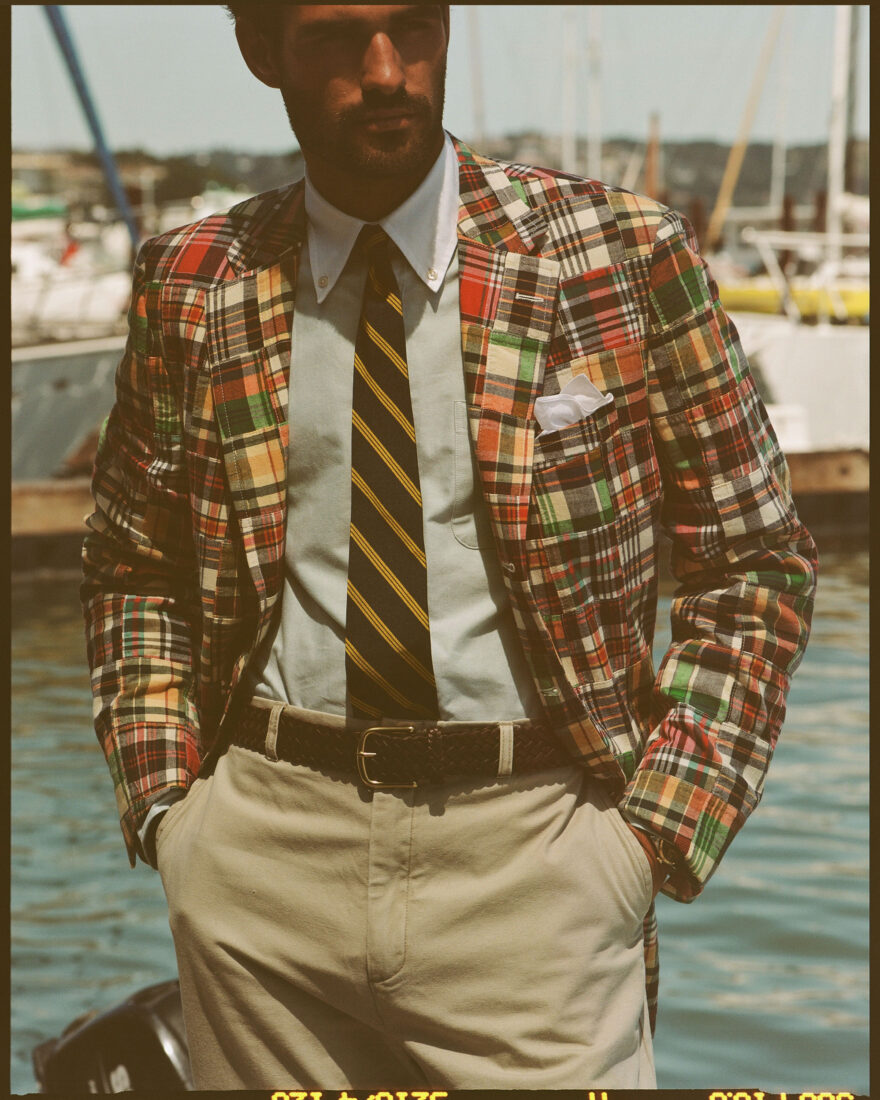
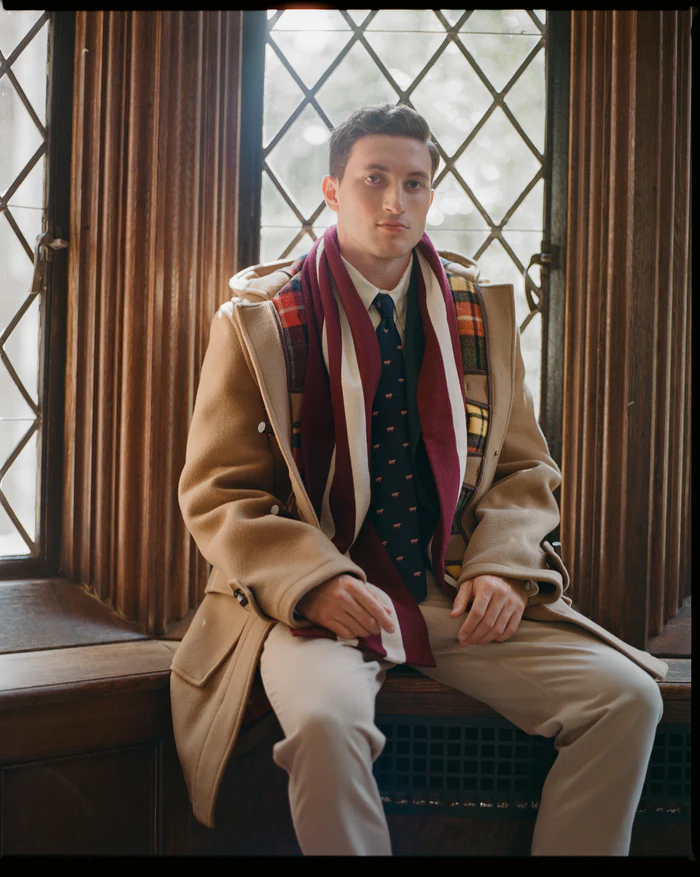
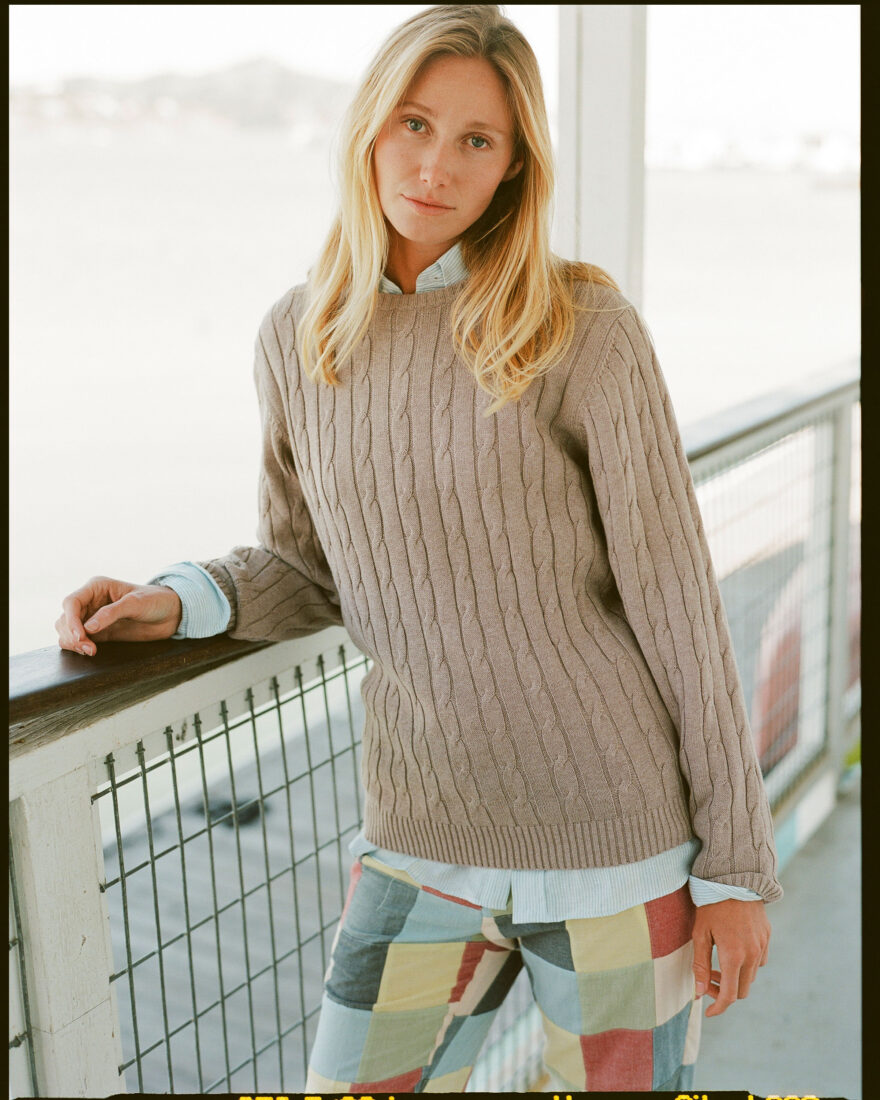
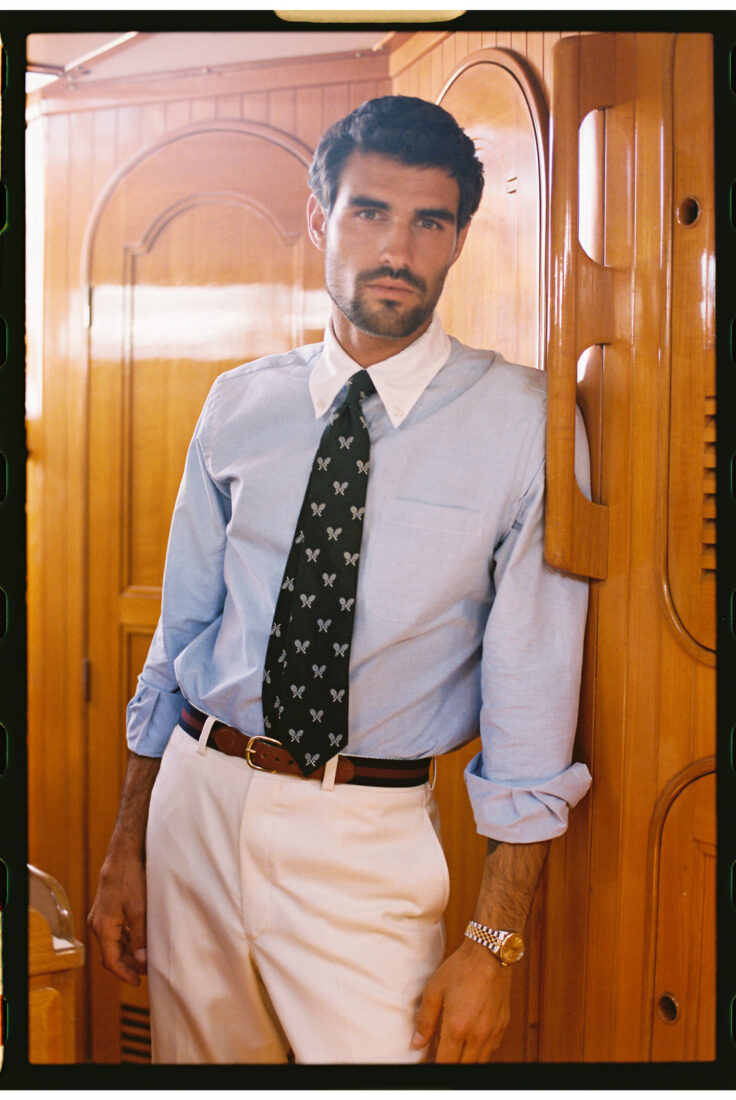
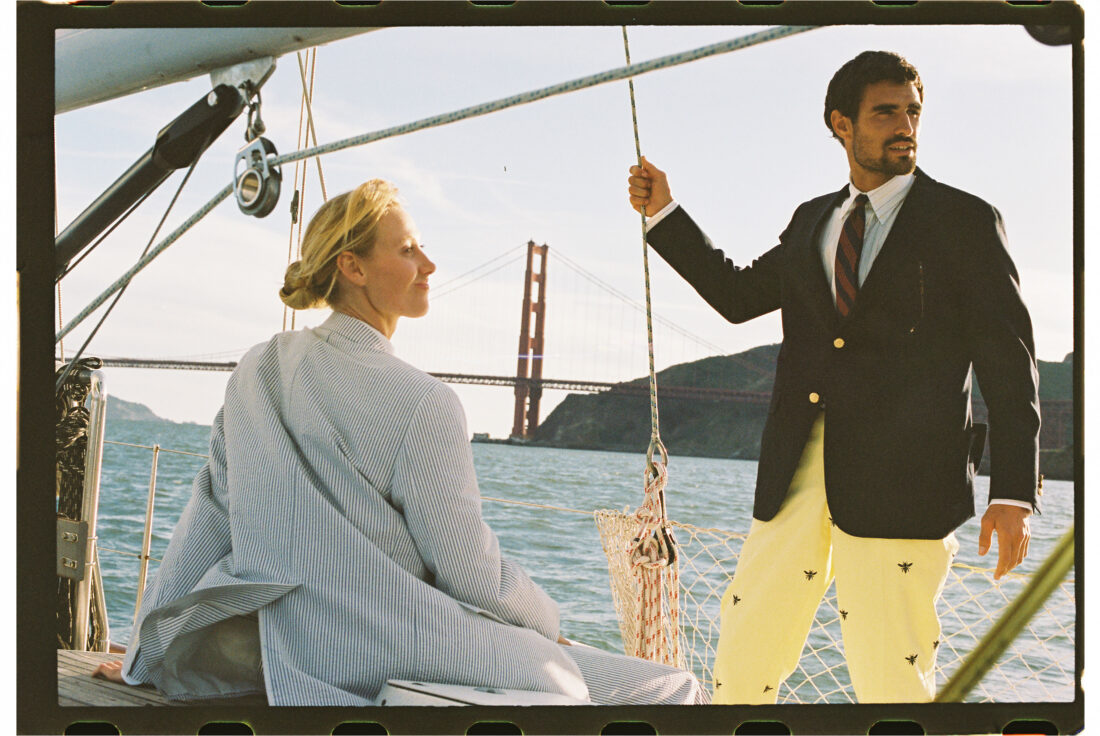
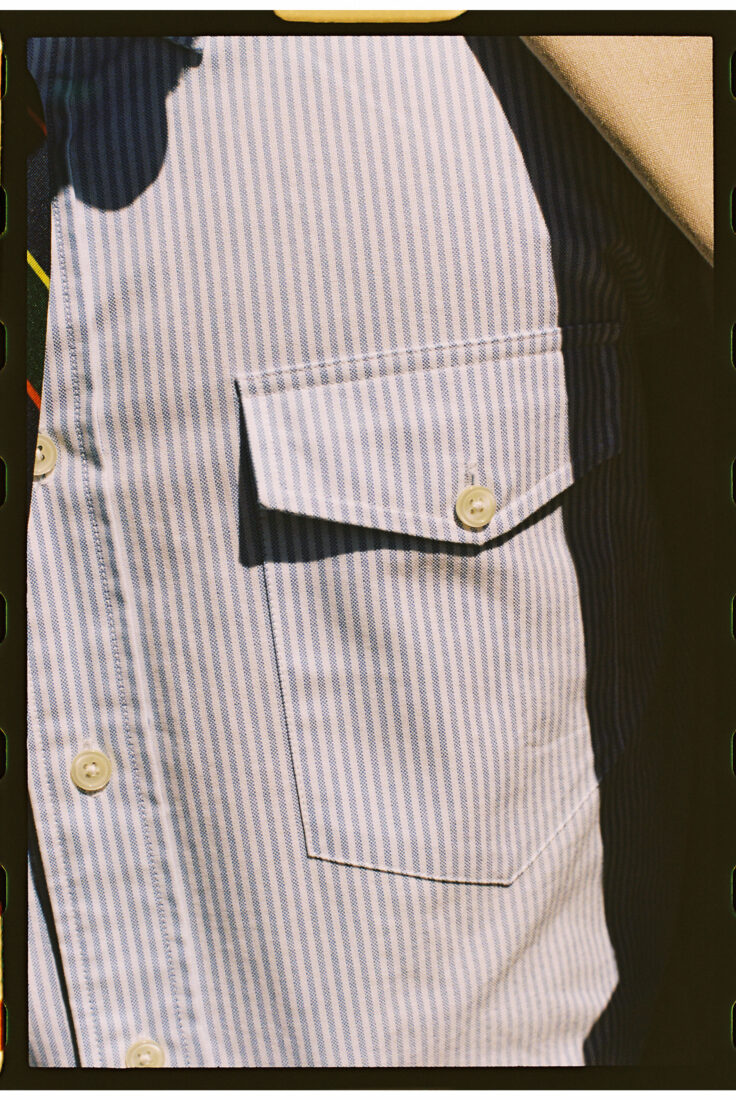
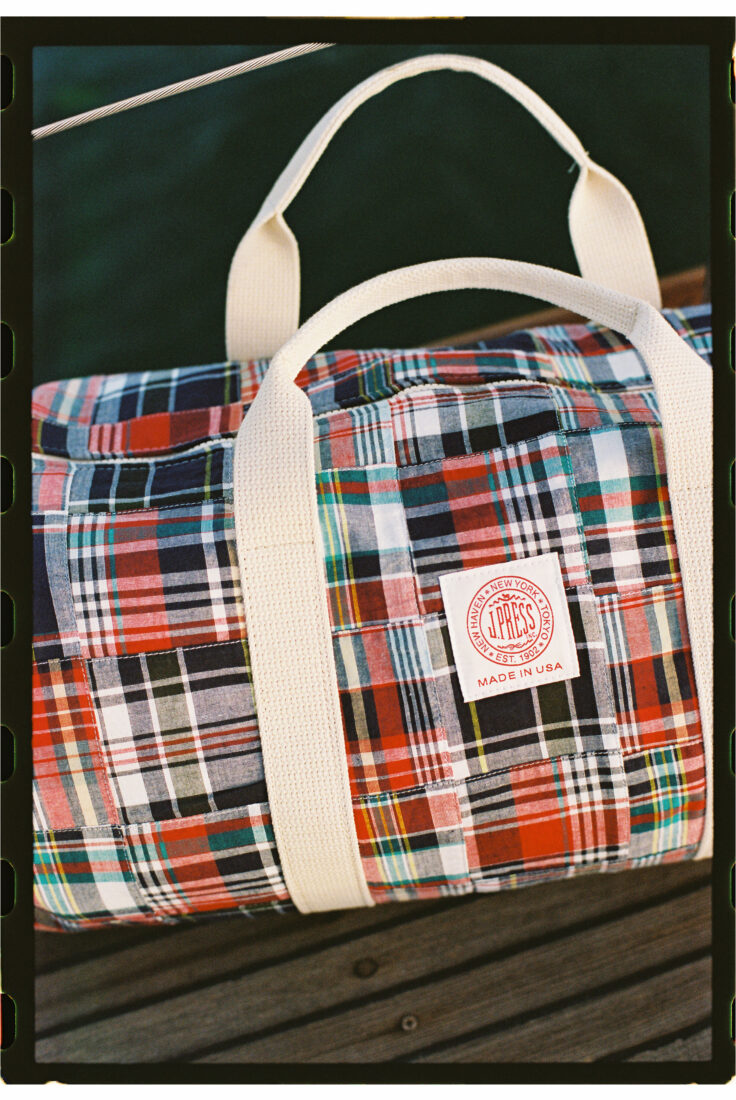
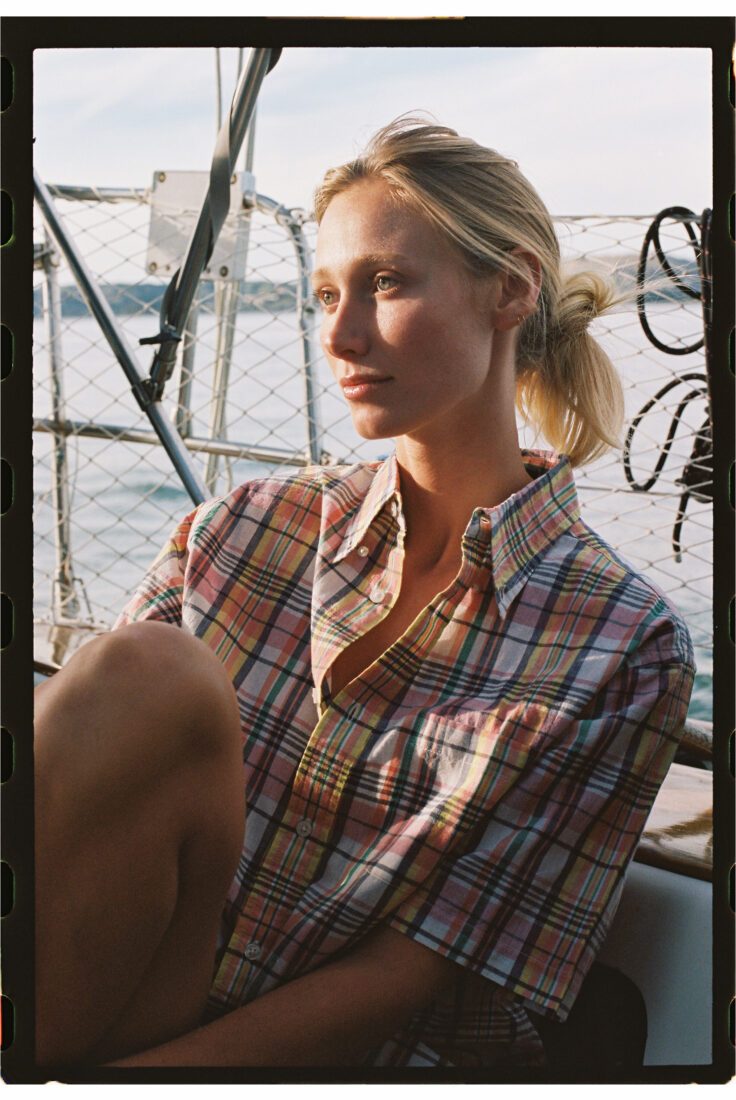
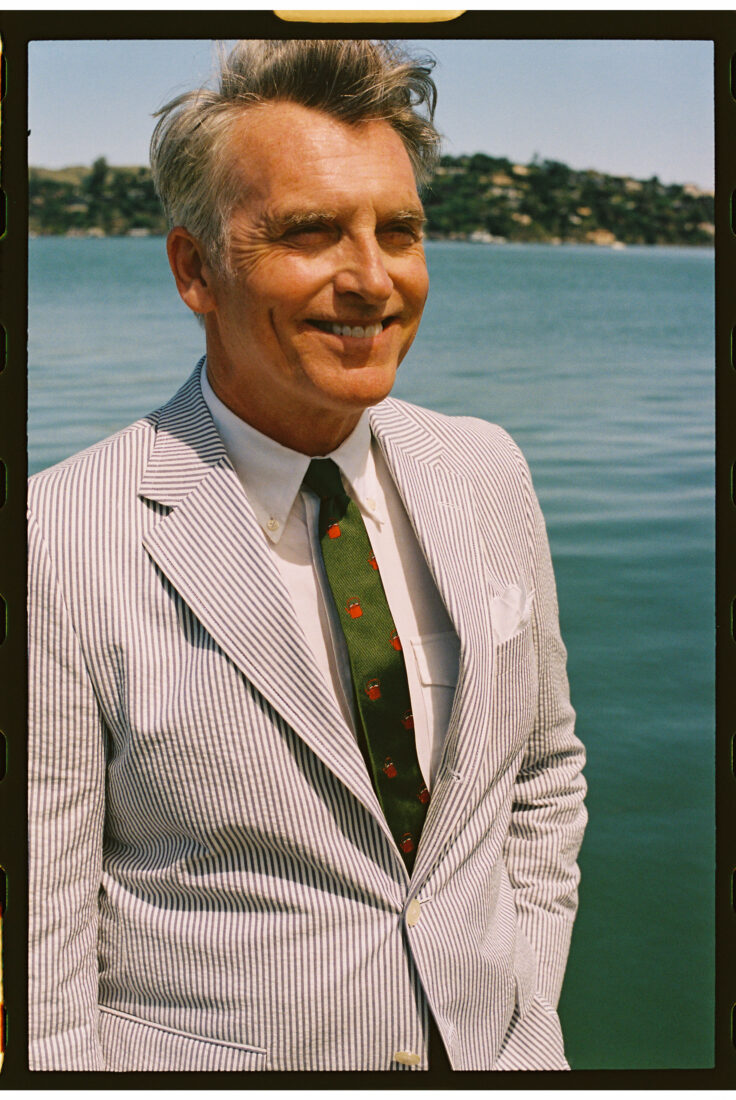
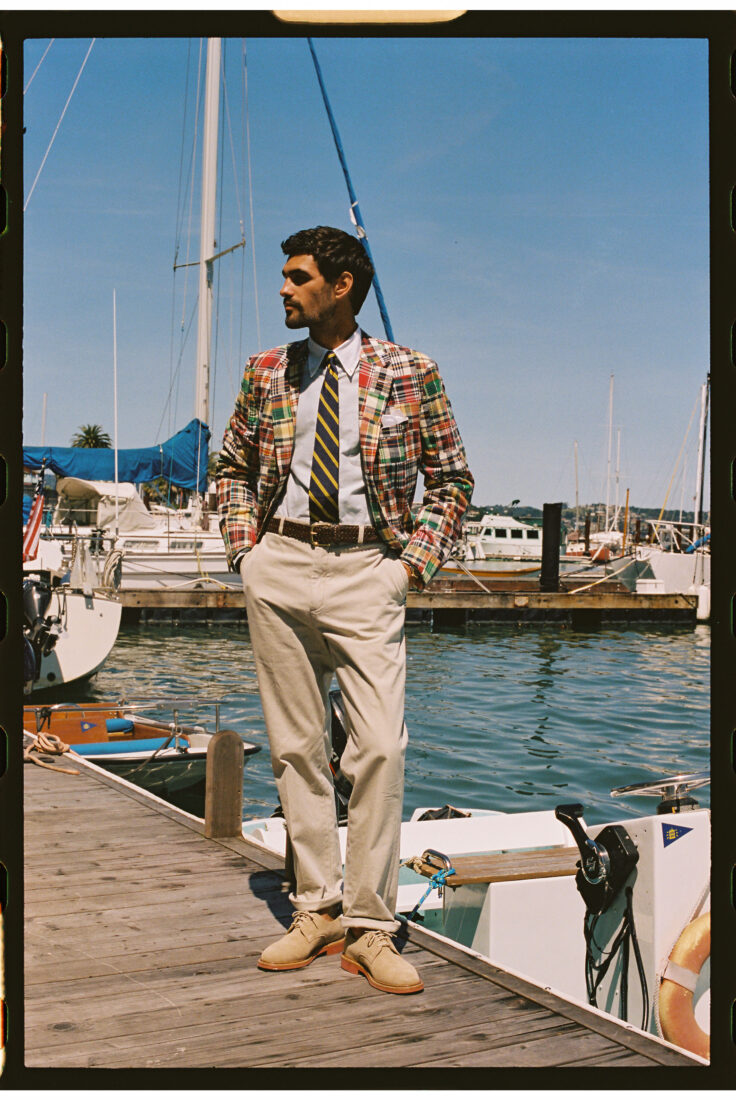
Beyond the core product offering, I spend a lot of my time thinking about how we tell the story of the brand. If you look at J. Press photoshoots from a couple years ago before I joined, you’ll see all kinds of things… Guys holding grapes and bouquets of flowers in front of blankets and sheets strung up in the background, styling that looks anything but Ivy. Some good stuff too, of course. While our casting might be broader than it’s been in the past, I’ve worked to bring the styling back to Ivy, especially for our campaigns. (The runway is always a time to color outside the lines a little more; but my belief is that anytime you break a rule, you should do so in a way that reflects an underlying understanding of what the rules are in the first place.) But look at the shoots we’ve done – last Fall at Yale with a large ensemble cast, and lots of tweed, Shaggy Dogs, rugby shirts, corduroys, navy blazers, repp ties, camelhair, and schoolboy mufflers; or this Summer, on a sailboat with lots of linen, seersucker, Oxford cloth, and madras. It’s about getting back to what J. Press is all about at its core. So I would say that’s another big change, but again, I’d say it’s a change that actually takes J. Press back to its roots.
There are other changes, like the website. No website works perfectly, but I think where we are now is a massive upgrade from where we were in terms of user experience and functionality, while staying true (getting closer than before, I’d say) to the brand’s history and DNA. And the video series we are doing on the makers behind our clothes. Celebrating the things that make J. Press special in this way is a big change, and it’s been a very rewarding project for me. In my first week, I met Walter, who has been making ties for J. Press in New York City for over half a century and who survived Auschwitz. The first video in the Makers Series we did featured Walter. Now, I’ve just returned from two weeks in Scotland and England. I visited our factories there, climbed Ben Nevis with some friends while I was in the neighborhood, and spent a solid four or five days in Shetland, which is now one of my favorite places in the world and where we just filmed a new installment of the Makers Series which will air this autumn. I spent my birthday in Shetland, and in the evening joined the cast of the British murder mystery television show Shetland and a sizable chunk of the island’s population for karaoke in the island’s main pub.
The “changes” that are more perceptible to the casual observer are things like our casting, which just reflects my belief that Ivy is for everyone. This isn’t some “woke” thing; it’s just a reflection of my belief that this look, this style, is for everyone and looks good on everyone. But I know it upsets some people to see people who look different from themselves dressing Ivy. I know, because they write to me to say so. I received a letter in the mail the other day from someone complaining that there were too many Asian models in our runway show. (This same person also implored me to relocate our shirt manufacturing to Asia in order to achieve a lower retail price point!).. I looked this customer up in our system, to find, of course, that his entire history with the brand consists of buying one belt about twelve years ago. I find stuff like this disappointing and bizarre for obvious reasons, but I try not to let it distract me.
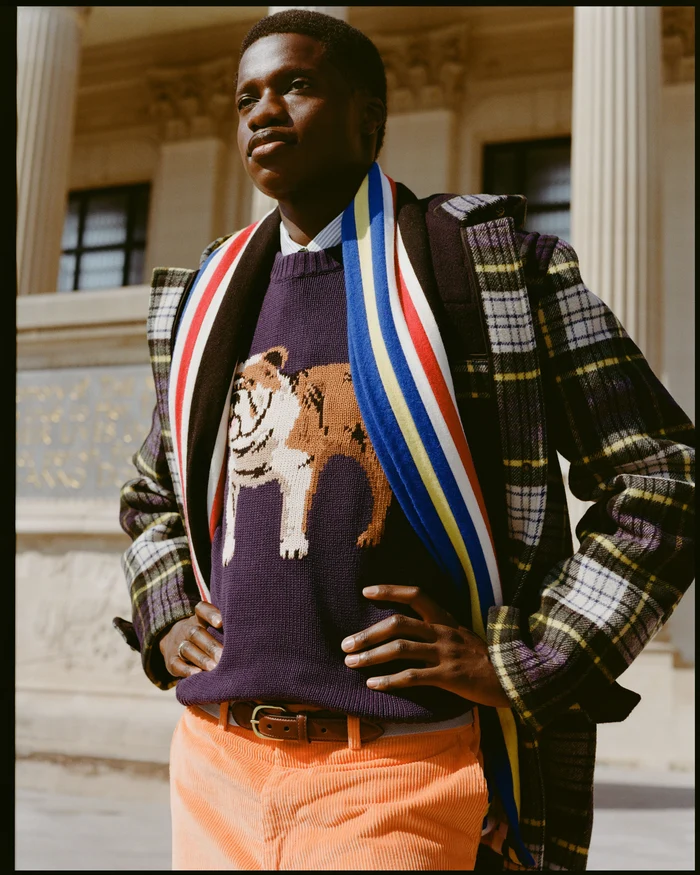
J. Press Bulldog Intarsia Sweater
Matthew Longcore:
I’ve noticed there are new items in the store that would not have been available at the old J. Press. I picked up a very Yale item – a bulldog Intarsia knit cotton sweater. Jim Fitzgerald told me that these sweaters sold fast with during the springtime graduation and reunion celebrations. What are some of the newer items and more recent collaborations in the J. Press collection?
Jack Carlson:
Yes! I know that some of these things – the collaborations and the slightly more editorial pieces that we do – tend to elicit a bit more of a reaction than all the work that goes on behind the scenes to keep American factories alive or to improve the way the shirt is constructed. Some people love our collaborations with Alex Mill, Only NY, Armor-Lux, Bamford, or Buck Mason; and some people might not care for them at all. These capsules aren’t designed to appeal to every single person. And they probably represent less than one percent of what we do. But part of being a living, breathing brand is being creative and being collaborative on the edges of our little Ivy world. In general, all of these have been very well received, though I always end up hearing from a handful of people who seem determined to be upset, and they’ll always find something. They’ll fixate on one or a handful of things they dislike and shoot it down by saying it’s “not Ivy” according to their own personal definition. Meanwhile, they might miss the areas where we actually focus 99% of our energy and attention to be the best (and in some ways the last) stewards of traditional Ivy.
J. Press Summer 2026 CampaignJ. Press Summer 2026 Campaign
A few people have had strong reactions to our Duke of Devonshire sweaters, for example. These are made-in-England sweaters based on the wool jumpers worn by the 11th Duke of Devonshire, emblazoned with embroidered phrases or witticisms, e.g. “Old Enough To Know Better.” (Humor is apparently lost on some!). They are made by a lady in England who donates part of her proceeds to school lunch programs; they are traditional, fun, British-made, and they sell extremely well. They are not in the assortment at the expense of any other item, and J. Press has a long and beautiful history of coming up with products and programs, often with quirky or colorful names: think Donegal Mist, Reefer Twill, and, of course, Shaggy Dog sweaters. We can add to that list Duke of Devonshire sweaters, Cape Cod pants, and more. History doesn’t stop at an arbitrary moment in time. J. Press is a living, breathing brand; not a museum artifact. And I think that’s a good thing.
More often than not, when I hear from a customer that they don’t like a certain “change” that I’ve made or a certain piece I’ve created, the item in question is something that was developed and produced long before I even joined the company – which I had nothing to do with and sometimes don’t even like. Oh, the irony!
J. Press Summer 2026 CampaignJ. Press Summer 2026 Campaign
Matthew Longcore:
Comparisons to Rowing Blazers (which you founded and later sold) and to Ralph Lauren (who created an entire industry based on aspirational American style) seem to be frequent for J. Press. What makes J. Press different from those two brands, and from other Ivy Style brands generally?
Jack Carlson: J. Press is completely different from both of those brands in nearly every way except the most superficial. For one thing, it predates one of these brands by 65 years and the other by 115 years. But in some ways, J. Press is the ultimate source of inspiration for both brands.
I love Ralph Lauren, and Ralph and Jerry were wonderful mentors to me when I was beginning in the industry. They’ve created an empire. J. Press is a mom-and-pop shop compared to Ralph Lauren. J. Press is also much older and has stayed much more niche, much more “if you know you know.”
J. Press Summer 2026 Campaign
With Rowing Blazers, I think the only thing the two brands really have in common is me. Rowing Blazers began as a coffee table book, which I shot and wrote when I was in grad school at Oxford and launched in partnership with Ralph Lauren. It was literally about the blazers worn at rowing clubs around the world. Because the book had done quite well, I took the name and used it for the design studio and creative outlet I set up in 2017 with my co-founder, David Rosenzweig. I could do all sorts of eclectic things that I wanted to do – all vaguely rooted in the “preppy” look, of course, but I was the real common thread within the brand. It was a label and studio for me to design jackets, shirts, and ties inspired by the esoteric club gear I documented in my book — and a moniker I used to design watches for Seiko and Tag Heuer and rugby shirts for Barbour and J. Crew. That sort of thing. It was great fun, and I was making it up as I went along. As time went by, the brand grew, attracted investors, and eventually we sold it. And inevitably the feeling of the brand changed and developed. But that’s what it was about originally.
It didn’t have the history or the pedigree of J. Press, of course. Or the sense of tradition, or the robust “bread-and-butter” business of J. Press: the staples like O.C.B.D.s and Shaggy Dogs, and the sizable Made-to-Measure tailoring business. When you read the names of some of J. Press’ old customers – Roosevelts and Kennedys, Sinatra, Cary Grant, Miles Davis – it’s hard to compare that to something that you were making up as you went along!
One of the funniest things I sometimes hear, which I hear a little less now, is the belief that I’m going to turn J. Press into Rowing Blazers 2.0. I sold Rowing Blazers because I was ready for something different and a new adventure. I’m not interested in having the same adventure twice, and I’m not a one-trick pony.
Jack Carlson, J. Press President and Creative Director
I grew up with J. Press and in this milieu: I went to prep school – but a slightly unusual sort of prep school which was co-ed, with no boarding students, and located not out in the countryside, but in the city (Cambridge, Mass., to be precise). It was the amalgamation of two schools, a boys’ school and a girls’ school, originally founded for the children of Harvard faculty. The original Press location in Harvard Square was decked out with the rowing blades and old crew photos from the boys’ school, Browne & Nichols (nicknamed “Braun & Knuckles” back then), one of the oldest high school crews in America. (Perhaps having Harvard blades on the walls would have been a bridge too far for a New Haven institution like J. Press, even at their Cambridge location!) From there, I went to Georgetown’s School of Foreign Service (if anyone wants to question my Ivy bona fides, I can show them my admission letters to Princeton and Cornell!), where I was on the rowing team and made some money as a teaching assistant in the economics department (I was very good at economics, even though it was not a passion of mine). And then, with two scholarships, the Allbritton and the Clarendon, I went to Brasenose College, Oxford, first for a master’s and then a doctorate in archaeology. All of this by way of saying that I suspect I’m much more of a traditionalist than most people realize!
J. Press Summer 2026 CampaignJ. Press Summer 2026 Campaign
Matthew Longcore:
Americana in general – especially America 250 this year – has become a popular theme for heritage brands. Is there anything especially patriotic from J. Press that customers should know about?
Jack Carlson:
We don’t celebrate just once per year, or dust off the flag for milestones like America’s 250th. We champion Made-in-U.S.A. every day. There’s an irony in seeing these brands that largely walked away from Made-in-U.S.A. going all in on the Stars and Stripes for the 250th. We quietly partnered with the America’s Jubilee Yacht Race in Newport, Rhode Island, which was great fun. But sometimes less is more.
A seersucker suit belongs in every gentleman’s wardrobe.Madras is another summer wardrobe staple.
Matthew Longcore:
Summer wardrobe staples – in your opinion, what items for warmer weather belong in every gentleman’s wardrobe?
Jack Carlson:
A seersucker suit, a linen shirt, White Bucks, Top-Siders, a J. Press tropical wool or Fox Air blazer, a pair of our Cape Cod shorts or pants, and lots of Madras!
Jack Carlson, J. Press President and Creative Director
Matthew Longcore:
Is there anything else about the future of J. Press that you would like to share?
Jack Carlson:
Next year will be our 125th year. Which, for any mathletes out there, means that J. Press has been around for nearly half of this country’s lifespan. To last that long without ever going bust, without ever abandoning Made-in-U.S.A. and all of the things at the heart of what makes us who we are is pretty impressive – and rare! Here’s to 125 more!
Three cheers and bully for Mr. Carlson. My loyalties have always been divided (clumsy phrasing) because of commitments to other store proprietors, but I’ve bought (and still wear) plenty of J. Press — and support, if I may, the “cause” that the store represents. There’s no small amount of nostalgia and even wistfulness vis a vis a longstanding retail bulwark like J. Press, and it’s reassuring indeed that the admiral of this fleet is tacking starboard — toward tradition, even if upwind. General Quarters!
If asked, I would gladly encourage a return to late 1950s-era styling(s), including full-fitting, 17-inch bottom pants; high button stanced, soft rolled 3/3, and, for odd coats, lapped seams — a model that’s even sportier, clubbier than the presently offered 3/2 high gorge sack. There are at least three or four vintage fabrics to which J. Press may lay exclusive claim, including a considerably larger version of the classic Prince of Wales glen, the bold steep-ribbed Reefer Twill (a reliable source informs that Fox Bros. and/or Lovat Mill can replicate) for blazers, and, of course, the vertically running “striped” tweeds — whether Shetland or Donegal.
Antique brass buttons (matte finish) for blazers and 3/8″ stitching serve as sacramental nods to the past, as does the notably steep hook vent. Other salutes to bygone traditionalism might include an extended range of Irish Poplin stripes (regiments, schools and universities, clubs) — and, for the heck-and-fun of it, a book of 10-11 oz. worsted flannel (unfinished) suitings that’s unique to J. Press.
May the excavation-driven research, inspired by loyalties to quality and value, continue. And may Mr. Carlson persevere in his vocation.
I am in strong agreement. As much as the pops of color loved by the prep phenomenon are enjoyed by many, the more sedate use of Madras, not patch Madras, is a welcome resurgence. It is marvelous for jackets and trousers and pretty close to mandatory for swim trunks.
Loved this! I studied Anthropology/Archaeology at Alabama and UAB. Became a firefighter/paramedic,lol. I admire you both and follow closely. I am a bit more Brooks Brothers but really am embracing JPress now. Thank you for all you both do!!
Great interview. I am very happy to hear that J. Press will continue to make the traditional stuff that so many of us have loved for decades, and it sounds like Mr. Carlson is committed to the natural shoulder 3/2 sack and perfect collar roll. All good news. I also note that I have a darted 2-button gray flannel suit that I bought at J. Press at least 25 years ago, and old Press ads show double breasted blazers, so not all of the “innovations” we are seeing are actually unprecedented.
Having been a long(ish)-time patron of the Cambridge J Press, I’m pleased to read that it may be returning. The old shop on Mt. Auburn Street was always an enriching experience.
Mr. Carlson seems to be steering the ship wisely, and I’ve very much enjoyed my more recent Press purchases. The “Ivy Model” jackets are exceptional.
Here’s to 125 more years!
May I share my recent experience with J. Press? After some years, my first order were three OCBDs and a pair of khakis. One shirt arrived with different arm lenghts and the khakis had poor stitching all over the back buttonholes and the finishing seemed “off”. Customer service was extremely helpful and I was very satisfied with their resolution. Happy to hear that Jack is aware of these quality control issues and that there is something planned for the future! I cannot count how many buttons I already had to saw back on.
As for the rise on the traditional khakis, a question for the experts here in the room. The rise currently is 11 inches, so I would say a mid-rise khaki. Were the original Ivy khakis always of a significantly higher rise? The Armoury’s sport chino, albeit a more modern interpretation, has about the same rise and the extreme rises (say e.g. Buck Mason) seem a bit too “fashion forward” to be ground in Ivy heritage. Happy to be educated on this.
@ Charlottesville — I actually have one of their “new” double-breasted suits hanging in the spare closet across the hall in the TV room that I need to take in for the usual alterations before the fall semester kicks off on the 31st.
Enjoy the new double-breasted suit, H-U. I have a few DB suits, including a grey and white seersucker and a navy chalk stripe, as well as a doe-skin flannel navy blazer. I need to wear them more often.
In this case, being a one trick pony seems to me to be a good thing. I really wish the few well known purveyors of Ivy Style would stick to their one extremely good trick. I worry when they try to move into new areas, even if those areas seem somehow adjacent. Worse still is when they pretend they are still doing what they have always done but changing cuts, patterns, and materials and off-shoring.
Tim you are so right. When BB changed their OCBD shirt and cut corners and also went to the no-iron. What a mistake.
“Dance with the girl that brought you there”
My mentor since 1959 Charlie Davidson would never cut corners. My father who would wear nothing but Chipp clothes asked Sid Winston owner of Clipp,when I was going off to MA for boarding school ( 14 yrs old)from Rochester,ny,”who was the BEST TAILOR in Boston for my son to get his clothes “and he said “go see Charlie” and Charlie and the Andover Shop have taken care of me ever since with out changing much.
Enjoy the new double-breasted suit, H-U. I have a few DB suits, including a grey and white seersucker and a navy chalk stripe, as well as a doe-skin flannel navy blazer. I need to wear them more often.










Three cheers and bully for Mr. Carlson. My loyalties have always been divided (clumsy phrasing) because of commitments to other store proprietors, but I’ve bought (and still wear) plenty of J. Press — and support, if I may, the “cause” that the store represents. There’s no small amount of nostalgia and even wistfulness vis a vis a longstanding retail bulwark like J. Press, and it’s reassuring indeed that the admiral of this fleet is tacking starboard — toward tradition, even if upwind. General Quarters!
If asked, I would gladly encourage a return to late 1950s-era styling(s), including full-fitting, 17-inch bottom pants; high button stanced, soft rolled 3/3, and, for odd coats, lapped seams — a model that’s even sportier, clubbier than the presently offered 3/2 high gorge sack. There are at least three or four vintage fabrics to which J. Press may lay exclusive claim, including a considerably larger version of the classic Prince of Wales glen, the bold steep-ribbed Reefer Twill (a reliable source informs that Fox Bros. and/or Lovat Mill can replicate) for blazers, and, of course, the vertically running “striped” tweeds — whether Shetland or Donegal.
Antique brass buttons (matte finish) for blazers and 3/8″ stitching serve as sacramental nods to the past, as does the notably steep hook vent. Other salutes to bygone traditionalism might include an extended range of Irish Poplin stripes (regiments, schools and universities, clubs) — and, for the heck-and-fun of it, a book of 10-11 oz. worsted flannel (unfinished) suitings that’s unique to J. Press.
May the excavation-driven research, inspired by loyalties to quality and value, continue. And may Mr. Carlson persevere in his vocation.
I am in strong agreement. As much as the pops of color loved by the prep phenomenon are enjoyed by many, the more sedate use of Madras, not patch Madras, is a welcome resurgence. It is marvelous for jackets and trousers and pretty close to mandatory for swim trunks.
Jack has been a great steward of the J.Press brand.
Loved this! I studied Anthropology/Archaeology at Alabama and UAB. Became a firefighter/paramedic,lol. I admire you both and follow closely. I am a bit more Brooks Brothers but really am embracing JPress now. Thank you for all you both do!!
Great interview. I am very happy to hear that J. Press will continue to make the traditional stuff that so many of us have loved for decades, and it sounds like Mr. Carlson is committed to the natural shoulder 3/2 sack and perfect collar roll. All good news. I also note that I have a darted 2-button gray flannel suit that I bought at J. Press at least 25 years ago, and old Press ads show double breasted blazers, so not all of the “innovations” we are seeing are actually unprecedented.
Having been a long(ish)-time patron of the Cambridge J Press, I’m pleased to read that it may be returning. The old shop on Mt. Auburn Street was always an enriching experience.
Mr. Carlson seems to be steering the ship wisely, and I’ve very much enjoyed my more recent Press purchases. The “Ivy Model” jackets are exceptional.
Here’s to 125 more years!
Vintage Jack.
A very interesting and thoughtful discussion/direction.
Kind Regards,
Heinz-Ulrich
any idea what glasses manufacture Mr Carlson is wearing in the last photo? Very sharp looking!
Jack is wearing Oliver Peoples glasses. They look very sharp and perfectly Ivy Style!
The glasses that he is wearing look like the 406 Anglo American.
This interview is such a great read, thank you!
May I share my recent experience with J. Press? After some years, my first order were three OCBDs and a pair of khakis. One shirt arrived with different arm lenghts and the khakis had poor stitching all over the back buttonholes and the finishing seemed “off”. Customer service was extremely helpful and I was very satisfied with their resolution. Happy to hear that Jack is aware of these quality control issues and that there is something planned for the future! I cannot count how many buttons I already had to saw back on.
As for the rise on the traditional khakis, a question for the experts here in the room. The rise currently is 11 inches, so I would say a mid-rise khaki. Were the original Ivy khakis always of a significantly higher rise? The Armoury’s sport chino, albeit a more modern interpretation, has about the same rise and the extreme rises (say e.g. Buck Mason) seem a bit too “fashion forward” to be ground in Ivy heritage. Happy to be educated on this.
Thank you and go J. Press!
@ Charlottesville — I actually have one of their “new” double-breasted suits hanging in the spare closet across the hall in the TV room that I need to take in for the usual alterations before the fall semester kicks off on the 31st.
Kind Regards,
H-U
Enjoy the new double-breasted suit, H-U. I have a few DB suits, including a grey and white seersucker and a navy chalk stripe, as well as a doe-skin flannel navy blazer. I need to wear them more often.
absolutely a one-trick pony…
In this case, being a one trick pony seems to me to be a good thing. I really wish the few well known purveyors of Ivy Style would stick to their one extremely good trick. I worry when they try to move into new areas, even if those areas seem somehow adjacent. Worse still is when they pretend they are still doing what they have always done but changing cuts, patterns, and materials and off-shoring.
Tim you are so right. When BB changed their OCBD shirt and cut corners and also went to the no-iron. What a mistake.
“Dance with the girl that brought you there”
My mentor since 1959 Charlie Davidson would never cut corners. My father who would wear nothing but Chipp clothes asked Sid Winston owner of Clipp,when I was going off to MA for boarding school ( 14 yrs old)from Rochester,ny,”who was the BEST TAILOR in Boston for my son to get his clothes “and he said “go see Charlie” and Charlie and the Andover Shop have taken care of me ever since with out changing much.
Enjoy the new double-breasted suit, H-U. I have a few DB suits, including a grey and white seersucker and a navy chalk stripe, as well as a doe-skin flannel navy blazer. I need to wear them more often.